
Eastern Switzerland University of Applied Sciences: Contactless measurement of flow curves in temperature range of -80°C bis +250°C
Case Study
- Customer: OST – Eastern Switzerland University of Applied Sciences, Buchs SG campus
- Location: Buchs, Switzerland
- Industry: Research Institute & Academia
- Topic: Tensile test on metals at low temperatures

May 2026
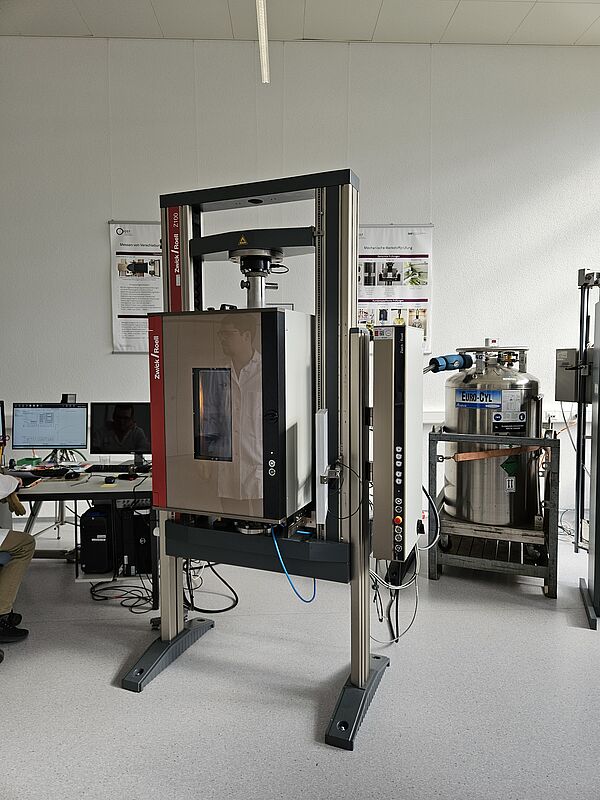
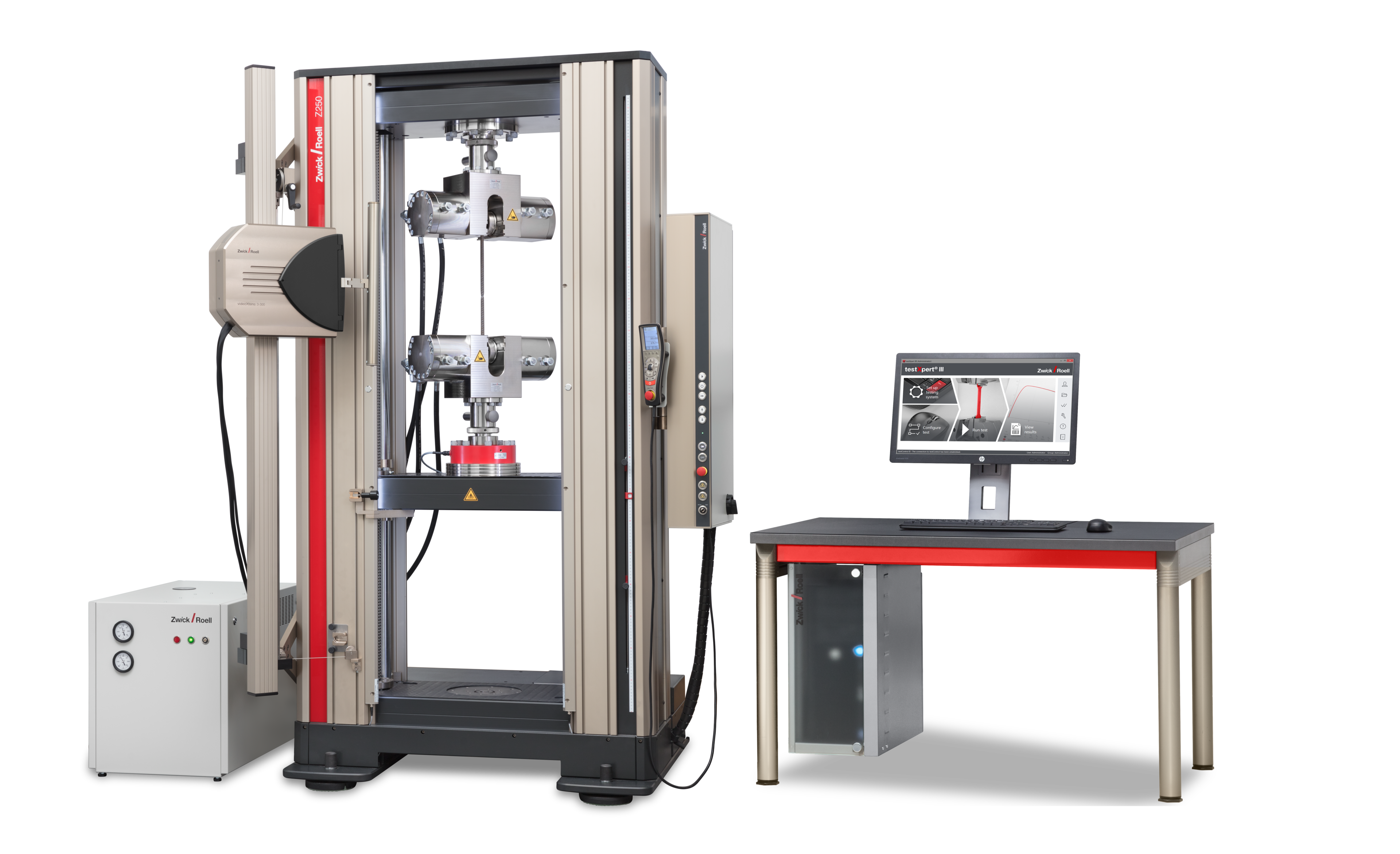
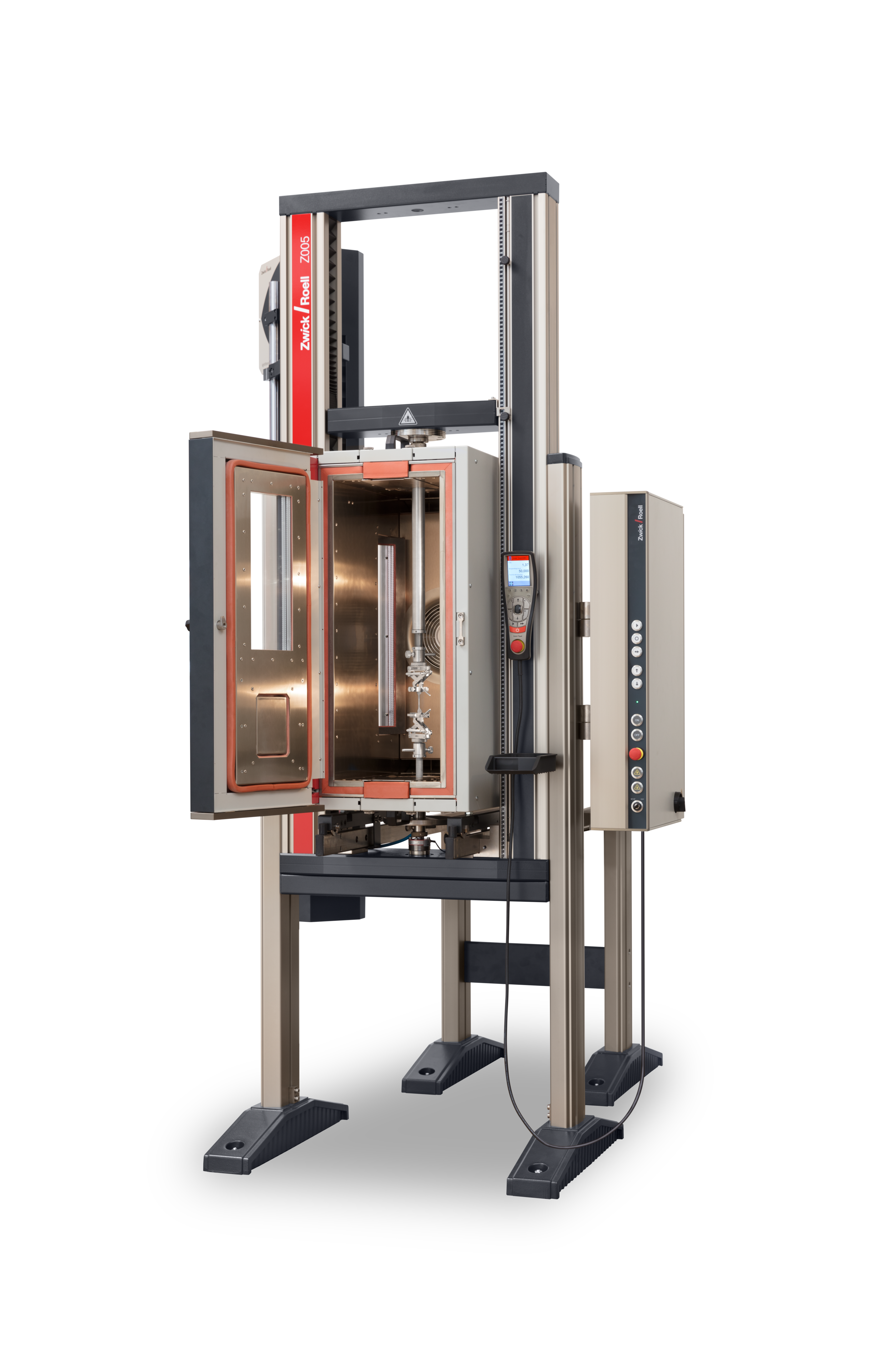
To characterize metallic sheet metal in the temperature range from -80°C to +250°C, the Eastern Switzerland University of Applied Sciences uses an AllroundLine Z100 testing machine with a temperature chamber. It is used to determine temperature-dependent flow curves and r-values as a basis for finite element simulation of forming processes.
Practical research and industrial materials analysis
The OST – Eastern Switzerland University of Applied Sciences at the Buchs SG campus combines teaching, research, and industrial collaboration. In addition to educating students and trainees, the university supports companies from Switzerland and Liechtenstein with measurement services and application-oriented research projects.
In the field of mechanical component analysis, the Eastern Switzerland University of Applied Sciences offers simulation and material characterization from a single source. In addition to traditional component design, the focus is particularly on realistically mapping forming processes using finite element simulation.
The goal is to accurately record material behavior and reliably represent it in numerical models.


Temperature-dependent material data for simulations
Finite element simulations of forming processes require detailed, temperature-dependent material properties that go beyond the standard information found in test certificates. These include complete flow curves, r-values to describe the anisotropic behavior of thin sheet metals, and failure criteria under extreme temperature conditions.
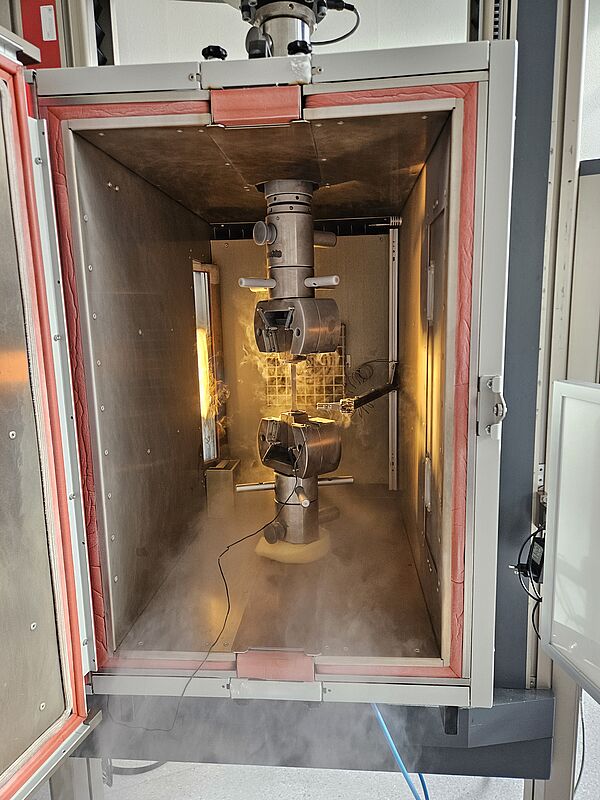
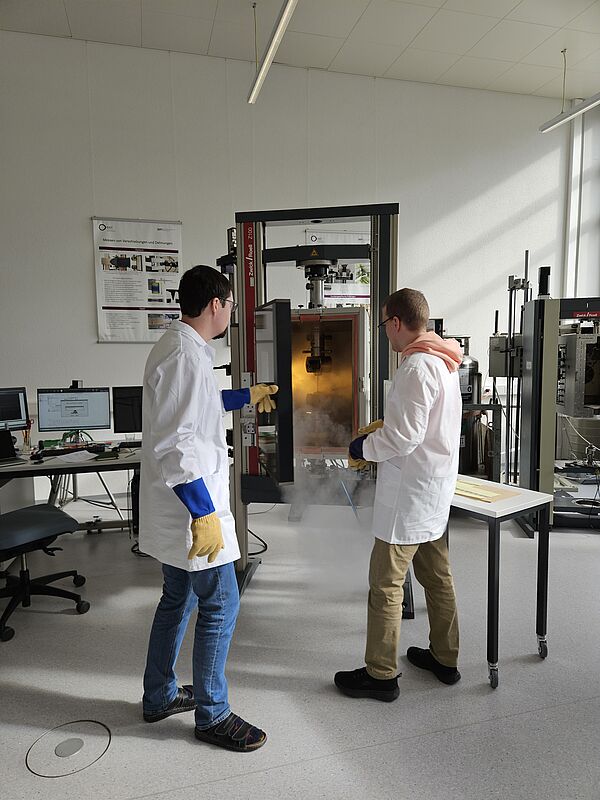
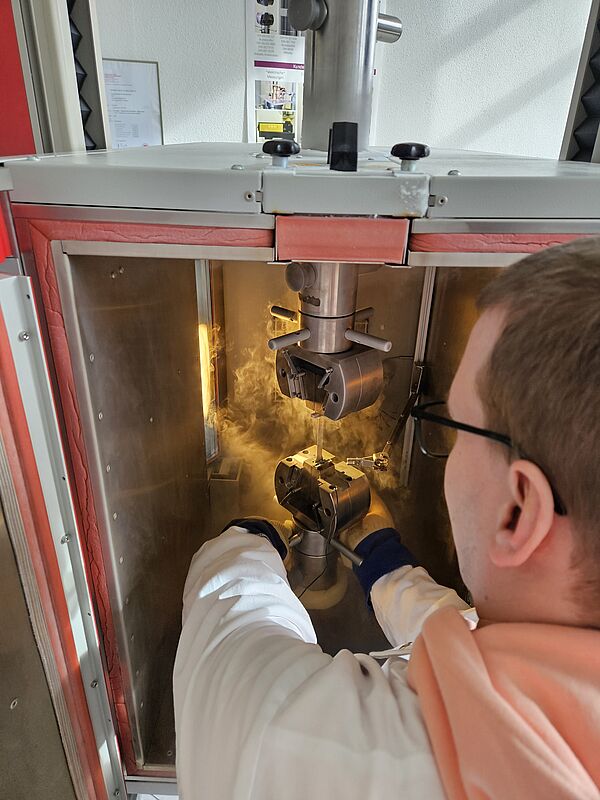
At the Buchs SG campus, metallic materials are tested across a temperature range of -80°C to +250°C. The basis is the tensile test to ISO 6892-3 for low temperatures. The tests are performed using an AllroundLine Z100 universal testing machine in combination with a temperature chamber. Contactless strain measurement using a video extensometer offers significant advantages, especially in the low-temperature range. Digital image correlation (2D DIC) can be used to visualize the strain distribution on the specimen surface. At the same time, the temperature chamber remains closed during the measurement, which reduces icing in the test area and on the specimen grips. This increases measurement stability and improves the reproducibility of the results.
The material properties obtained serve as the foundation for reliable FEM models that simulate real forming processes.