
KRAIBURG TPE: Adhesion testing of thermoplastic elastomers to DIN ISO 813-2 with Z010 from ZwickRoell
Case Study
- Customer: KRAIBURG TPE GmbH & Co. KG
- Location: Waldkraiburg, Germany
- Industry: Plastics
- Topic: Haftungsprüfung nach DIN ISO 813-2

August 2026
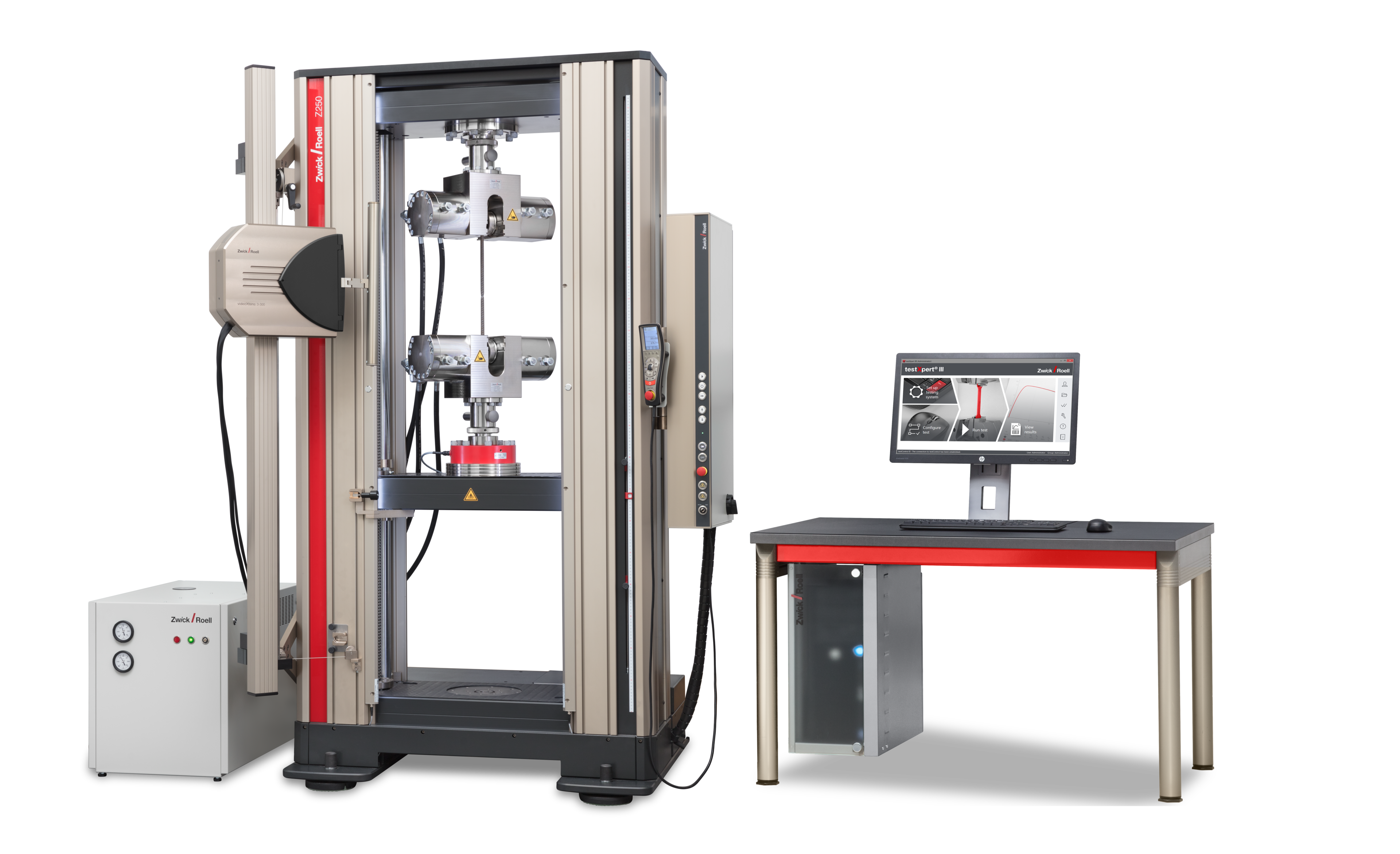
KRAIBURG TPE uses a ZwickRoell Z010 tensile testing machine and testXpert to test the adhesion of thermoplastic elastomers (TPE) to hard substrates to DIN ISO 813-2. The solution combines the 90° peel test with flexible measurement value logging and comprehensive test report documentation. This allows for the comprehensible evaluation of peel resistance, fracture pattern, specimen photos, and manufacturing parameters, and for the comparison of material combinations.
Tasks Areas of competence Solution Result Products
KRAIBURG TPE develops TPE compounds for various applications
KRAIBURG TPE GmbH & Co. KG based in Waldkraiburg, is a global manufacturer of thermoplastic elastomers. The company was founded in 2001 as an independent business unit of the KRAIBURG Group and develops custom-made TPE compounds for various applications. The materials are used, among other things, in the automotive industry, in the industrial and consumer goods sectors, and in the regulated medical sector. KRAIBURG TPE employs more than 700 people worldwide and has production sites in Germany, the USA and Malaysia.


ZwickRoell top competences
- Flexible integration of hardware components into the tensile testing machine
- Integration of additional measurement signals, such as the carriage displacement, into the control system and software
- Direct, friendly, and competent contact for application-specific adjustments
- testXpert as flexible testing software for standards-compliant processes and evaluations
- Test reports with measured values, parameters, photos, and visual fracture pattern evaluation
- Evaluation functions for assessing the measurement graph to DIN ISO 6133
The task
Reproducible testing of the adhesion of TPE to hard substrates
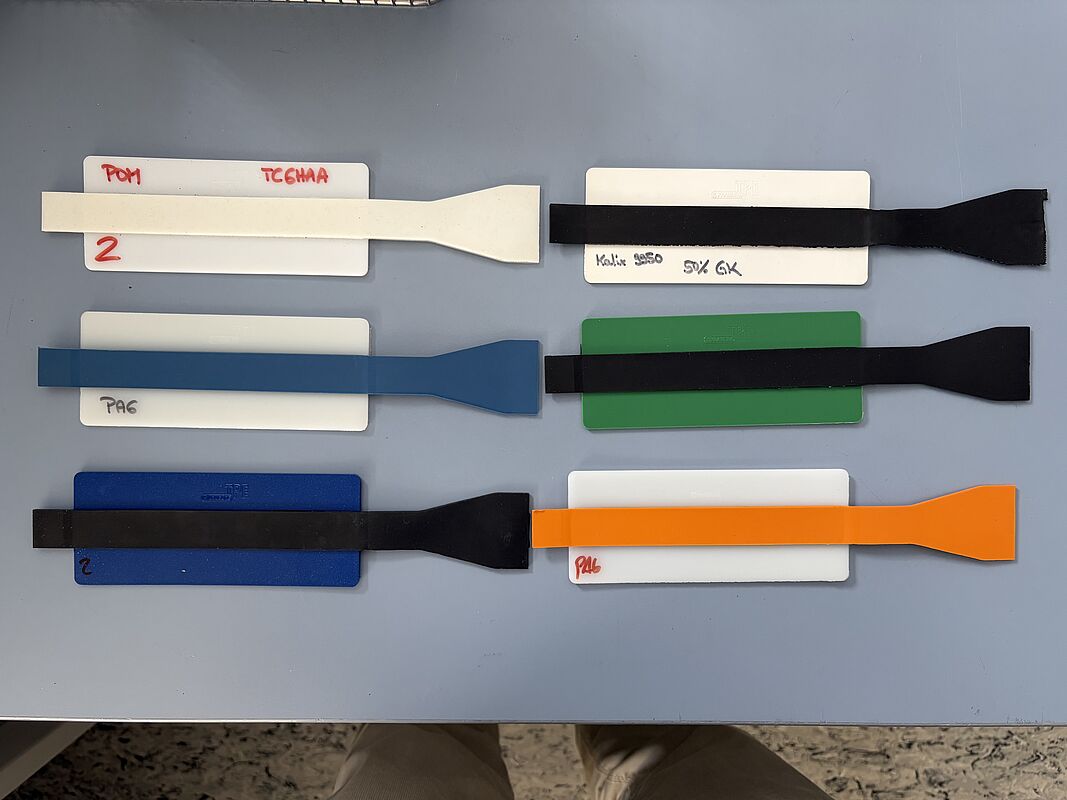
When bonding thermoplastic elastomers to hard substrates, adhesion is an essential quality characteristic. KRAIBURG TPE needed a test sequence with which the peel resistance in the 90° peel test to DIN ISO 813-2 could be reproducibly determined and documented.
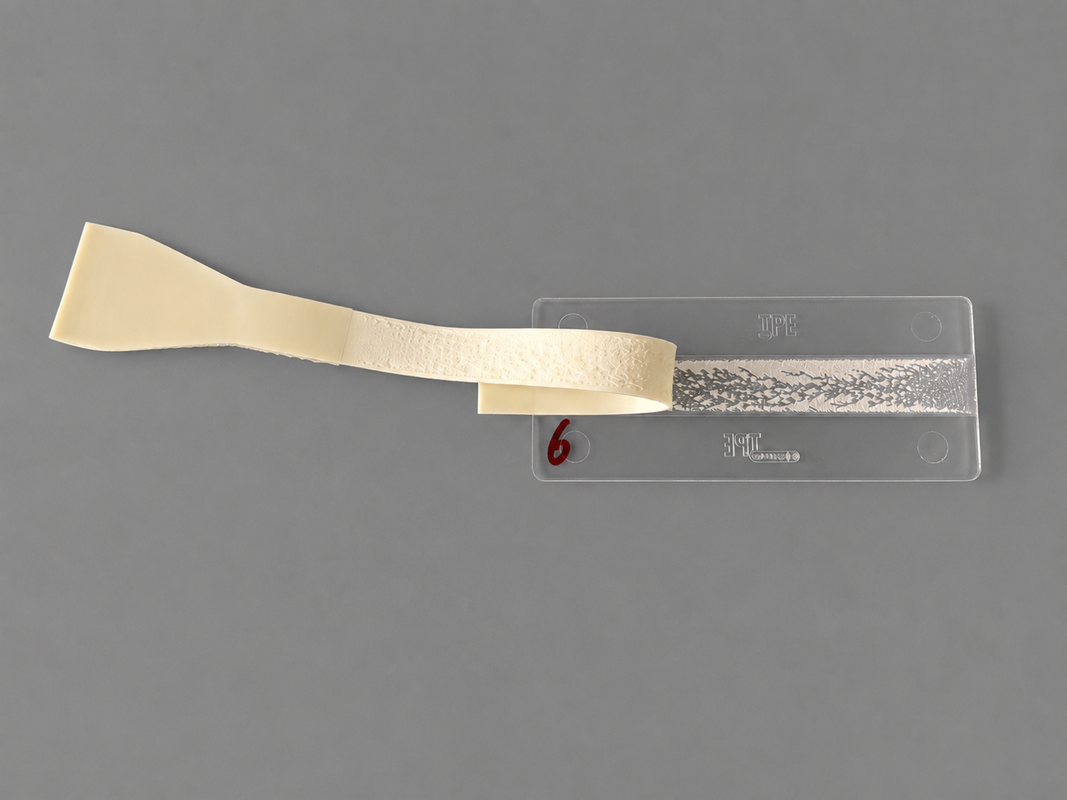
For this purpose, an existing test carriage was to be integrated into the materials testing machine and the test software. In addition to force and travel, the actual carriage displacement, specimen photos, the fracture pattern with the specified letter code, and relevant manufacturing parameters also had to be recorded in the test report.
The ZwickRoell solution
Z010 and testXpert integrate test carriage and measurement data
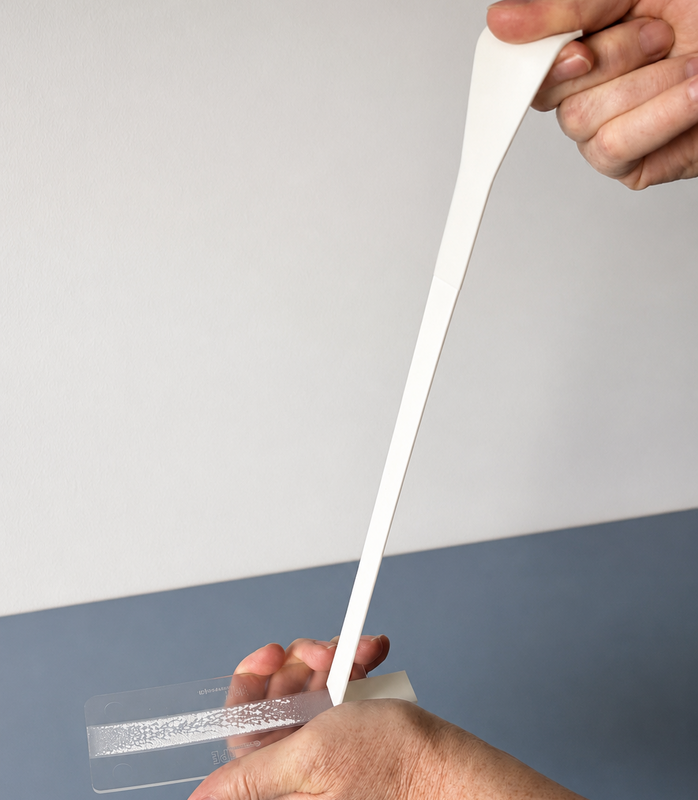
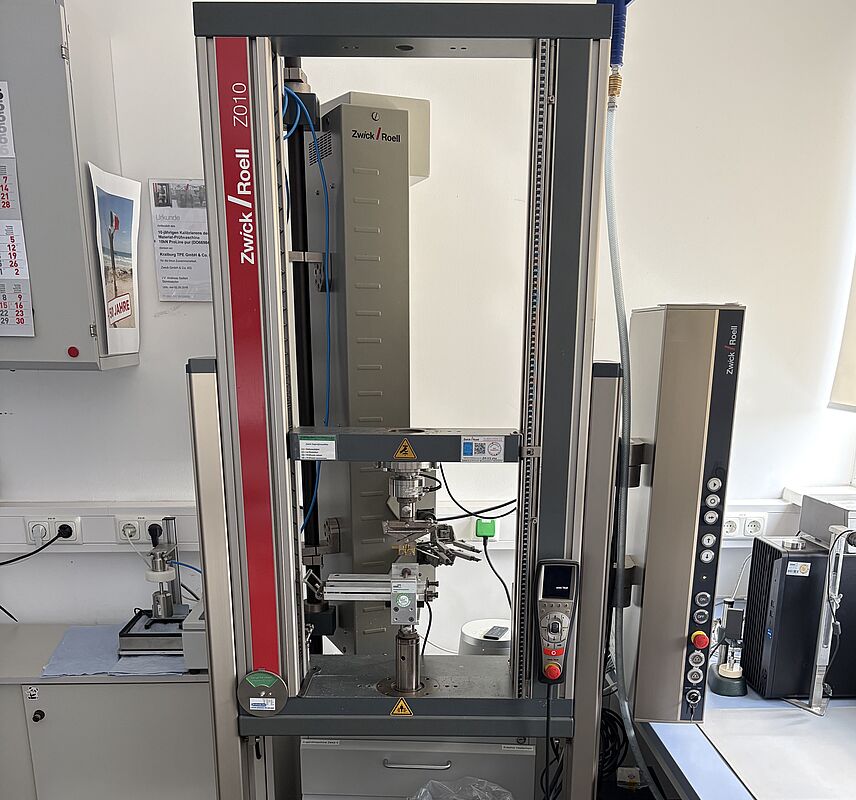
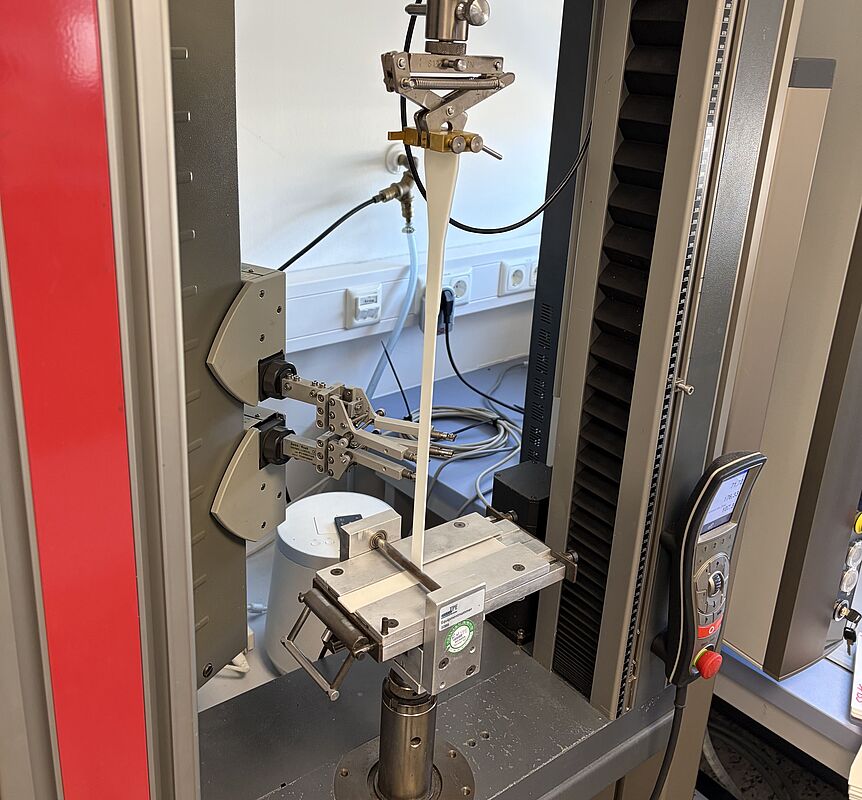
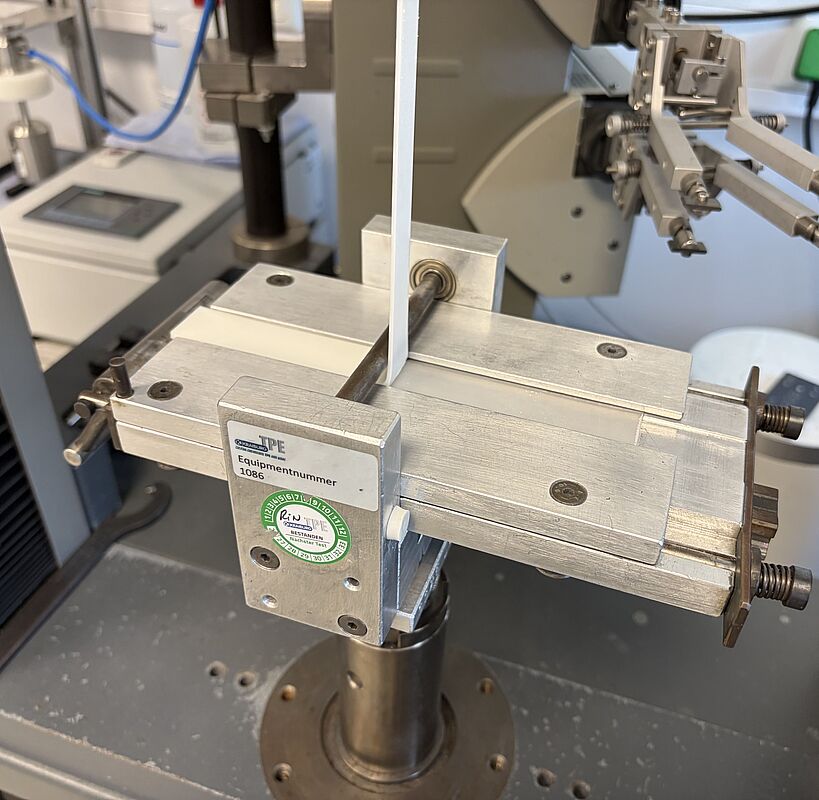
For the 90° peel test, KRAIBURG TPE uses a ZwickRoell AllroundLine in the Z010 version. The specimen is fixed in the test carriage. During the test, the machine pulls the TPE layer off the hard substrate and records the force-displacement curve.
ZwickRoell also equipped the test carriage with a displacement sensor and integrated its signal into the machine control system and into testXpert. As a result, in addition to the crosshead travel, the actual path of the test carriage is also recorded. The software evaluates the measuring graph according to the specifications stored for the test sequence to DIN ISO 6133 and compiles measured values, test parameters, specimen photos, fracture pattern evaluation, and manufacturing information in the test report.

“ZwickRoell – a medium-sized family business like us. That suits us! With the Z010 and testXpert, we record the relevant test and manufacturing information in a single document. This makes it easier for us to comprehensibly assess different material combinations."
Dipl. Ing. Dieter Pauler, Head of Testing Laboratory, KRAIBURG TPE GmbH & Co. KG
The result
Document peel resistance and fracture pattern in a traceable manner
With the ZwickRoell solution, KRAIBURG TPE performs the adhesion test to DIN ISO 813-2 flawlessly and according to standard. The peel resistance is determined in N/mm as the central characteristic value. In addition, the actual fracture pattern is documented by photo, and the letter code specified by the standard, relevant manufacturing parameters, and the other result values are documented in the test report. This creates a reliable basis for comparing materials and material combinations and for meaningfully interpreting the adhesion of thermoplastic elastomers to hard substrates.