
Dynamic fatigue tests on dental implants to ISO 14801
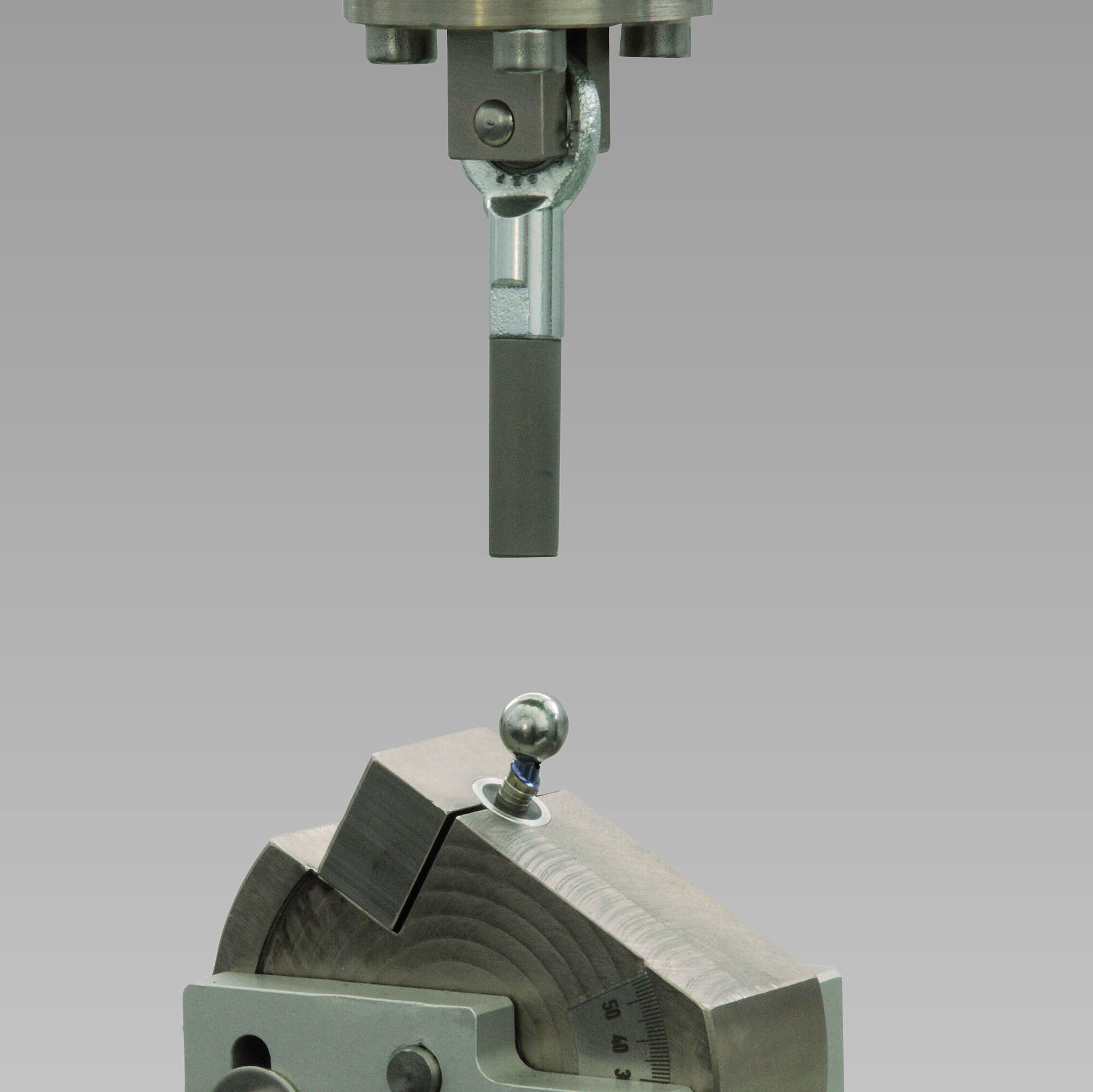
- Dental implants are used to replace teeth. The implant is embedded in the bone, acting as the root of the missing tooth. The test fixture meets the requirements specified in ISO 14801:2007 and applies an oscillating pressure threshold load. This test enables a comparison of dental implants of different designs or sizes.
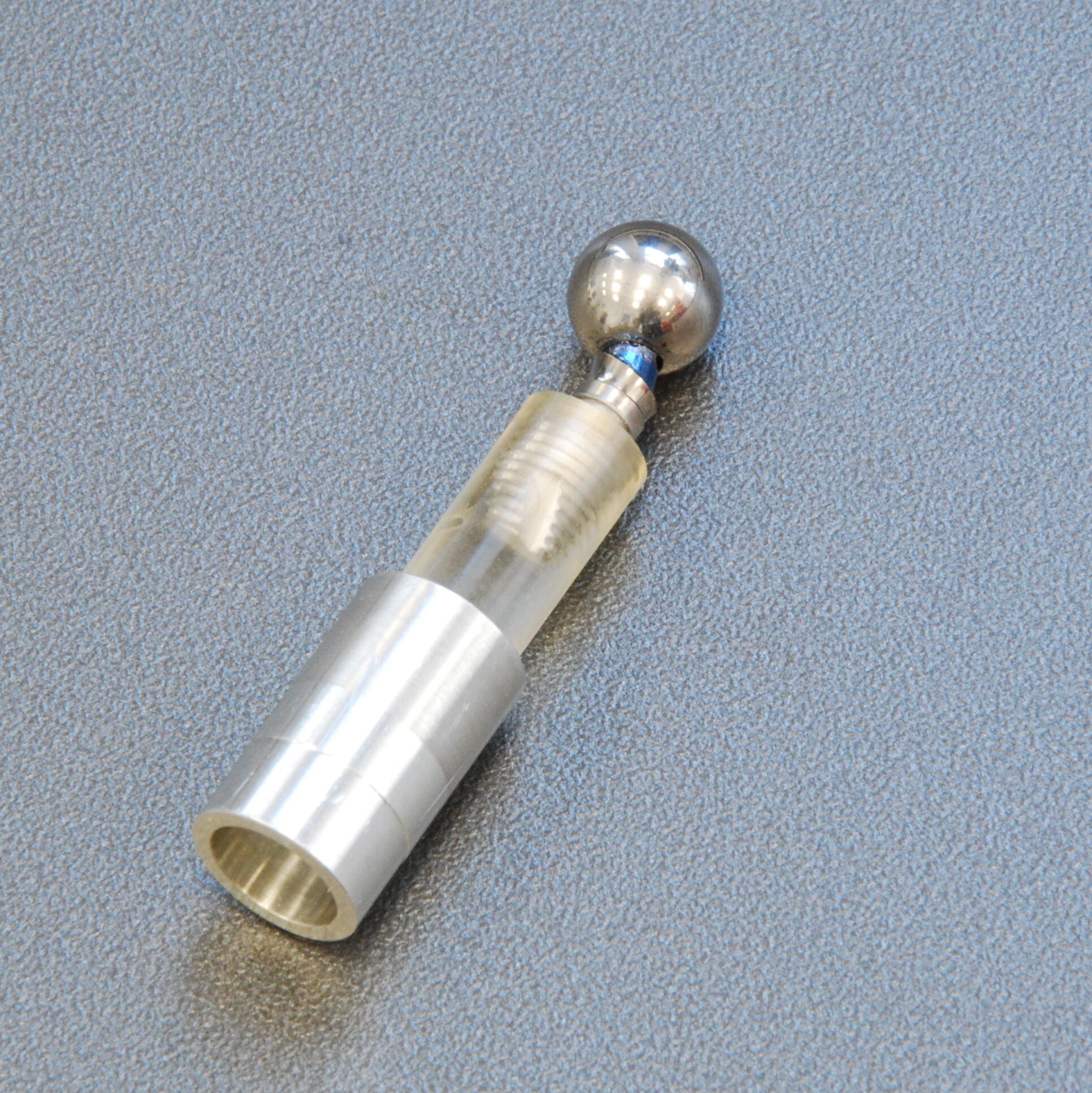
- Flexible adjustment (between 0° and 50°) of the angle of the implant axis to the test axis, together with a quick-adjust 30° setting, allow this device to be used for testing dental implant systems with and without angled connectors. Embedding the dental implants in a pot allows differences in thread designs to be compensated for and implant lever ratios to be adjusted. The pot with the implant is fixed in the test device with the aid of a clamping device.
The tests can optionally be performed under physiological (in vivo) conditions using the ZwickRoell temperature-conditioning bath. Also available from ZwickRoell is the SAFD (Statistical Analysis of Fatigue Data) program. This technical/scientific software enables practical statistical evaluation of tests in the high-cycle fatigue and long-life fatigue ranges.
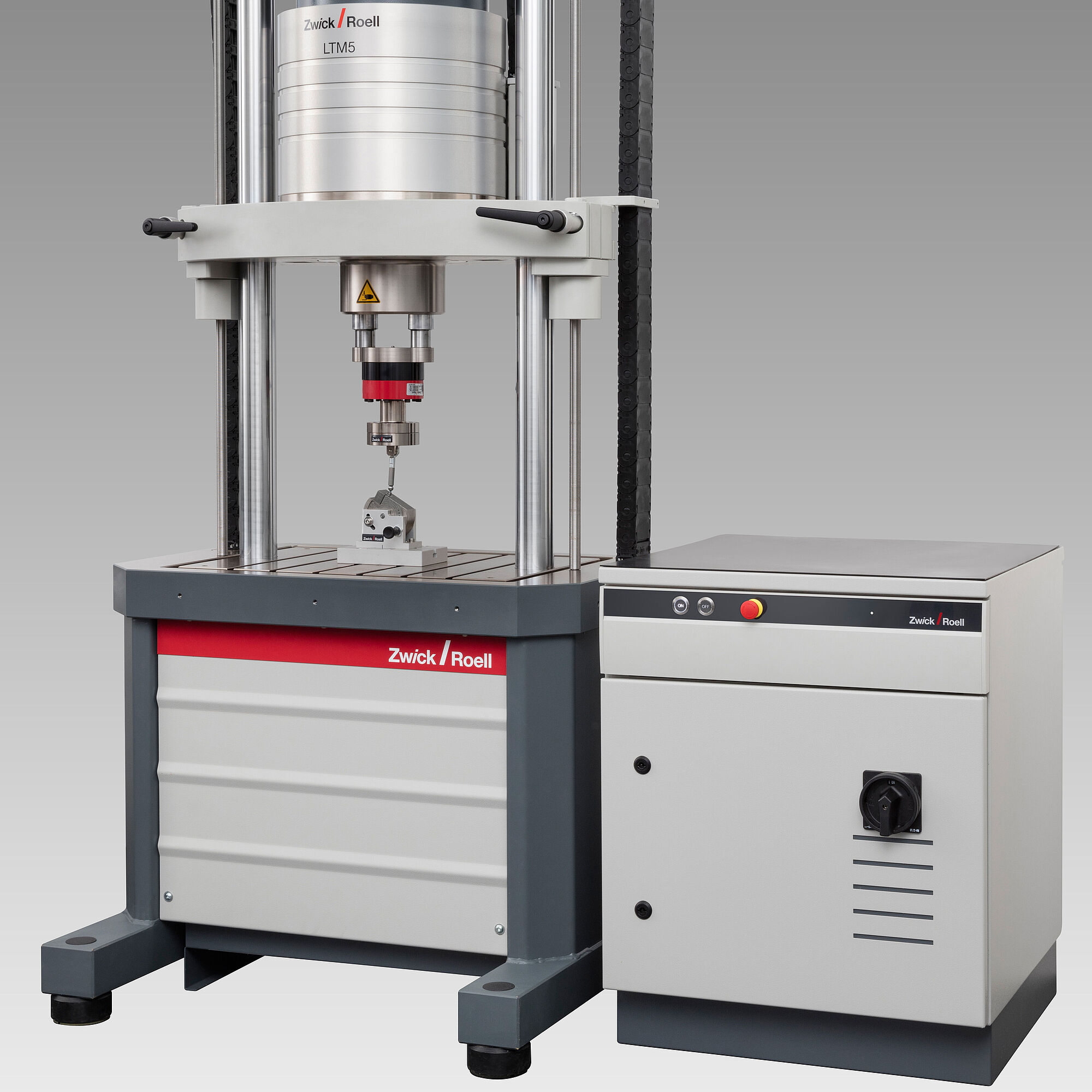
The Amsler HC Compact dynamic testing machine features a compact design and extremely low noise, providing an optimal solution for fatigue tests on dental implants in any laboratory when used in conjunction with the test fixture for dental implants (chewing simulator).
Method for compliance with ISO 14801 -07 – Fatigue tests on dental implants
Determination of an S-N curve with a minimum of eleven dental implants:
- Number of cycles: 5 million or 2 million
- Test frequency up to 15 Hz or 2 Hz
- Signal shape: Sine

Benefits of the test fixture for dental implants to ISO 14801
Complete fulfillment of standard ISO 14801-07 Dynamic fatigue testing for endosseous dental implants (fatigue tests on dental implants/chewing simulation), for simplest operation. The fatigue tests on dental implants can be implemented under physiological environmental conditions (for example, temperature-conditioned saline solution) with the use of the ZwickRoell temperature conditioning vessel.
Head and foot flange assembly for simple and durable installation, taking into consideration the necessary degrees of freedom for the fatigue test on dental implants (chewing simulation).