

Rear part testing: Reliably test the mechanics of pens and autoinjectors – without medication
Manufacturers of pens and autoinjectors must test the mechanical function of their systems before expensive or sensitive components such as medication, cartridges, needles or syringes enter the process. Classic tests on the complete system are often too late, too complex, and too costly for this. Rear part testing creates an earlier, reproducible test step: The mechanics are specifically tested – without the active ingredient, but under defined and realistic conditions.
Why mechanical testing early in the process is crucial
Pens and autoinjectors are key systems for self-medication. With increasing quantities, the pressure on manufacturers to reliably ensure mechanical functions not only in development but also in quality assurance and production is growing.
The testing problem is clear: The mechanics must work before the complete system is setup. With the pen, the set dose must be mechanically prepared and dispensed correctly. With the autoinjector, the automated process must start reliably and show the intended spring profile.
The challenge: Manufacturers want to test the mechanics without having to obtain, store, assemble and dispose of the cartridge, needle, syringe and medication each time.
Between necessity and efficiency: classic tests in the context of mechanics
A complete test with medication, cartridge and needle remains important for the final system. However, it is not always the appropriate first test step.
This creates typical bottlenecks in development, series start-up, and production: Components are not yet available, active ingredients are expensive, additional assembly processes delay testing, and the results are determined by more influencing factors than are necessary at that time.
If a mechanical deviation only becomes visible on the complete system, the error has usually already moved on: to later process steps, to rework, or to a delayed release.
Rear part testing starts earlier. It deliberately reduces the test to the mechanical function making it possible to evaluate that aspect in isolation.

Standards that set the framework
The test is based on the ISO 11608 series of standards. For pens, ISO 11608-1 is particularly relevant, and for autoinjectors, ISO 11608-5.
It's important to classify them accurately: Rear part testing is not an independent standard test that replaces the complete testing of the final system. The method is based on the normative requirements. With pens, the primary focus is typically on dosing accuracy. This depends directly on whether the pen mechanism reliably doses and dispenses axially.
With autoinjectors, the automated process is also crucial. The key here is whether activation, spring behavior, and internal movement work together as intended.

Where it gets difficult in practice
The difficulty lies not only in the measurement of individual values. The decisive factor is the interaction of the specimen, the fixture, the movement, the speed, and the evaluation.
Pens and autoinjectors differ fundamentally in their mechanics. While pens work with a combination of rotational movement and axial feed, autoinjectors operate automatically – often via spring-driven mechanisms.
There are also typical everyday topics:
- Different geometries
- Different diameters and lengths
- Different cap shapes
- Product-specific grippers
- Interchangeable parts and test programs
- Cycle times in production
- Limited space in the laboratory and production
The procedural consequence is clear: If the test is not consistently reproduced, there are repetitions, delays, and results that are difficult to compare.
Solution logic: Test the mechanics in isolation, but realistically
Rear part testing does not fully simulate the later function, but focuses on the mechanical core of the application. The test is intended to show whether the mechanics function reproducibly under defined conditions.
For this purpose, real loads are simulated, movements are controlled, and measured quantities such as force, travel, torque, or spring profile are recorded.
Rear part testing for pens
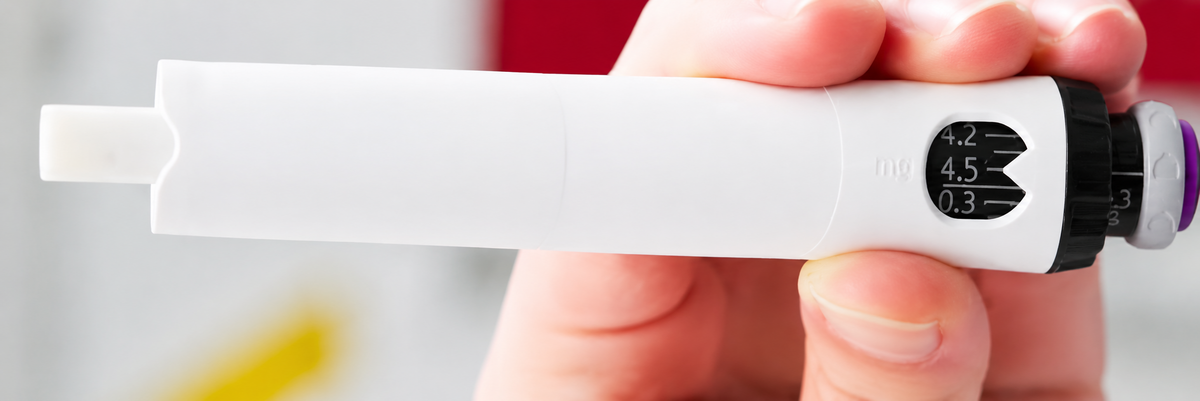
For pens, the dosing setting is indicated by a rotary movement. This is followed by the axial dispensing movement. It is checked whether the torque, force, and travel match.
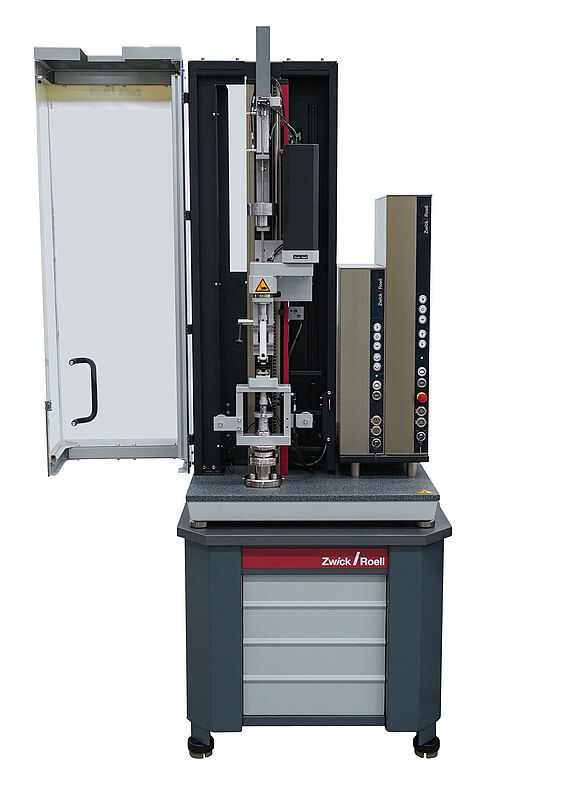
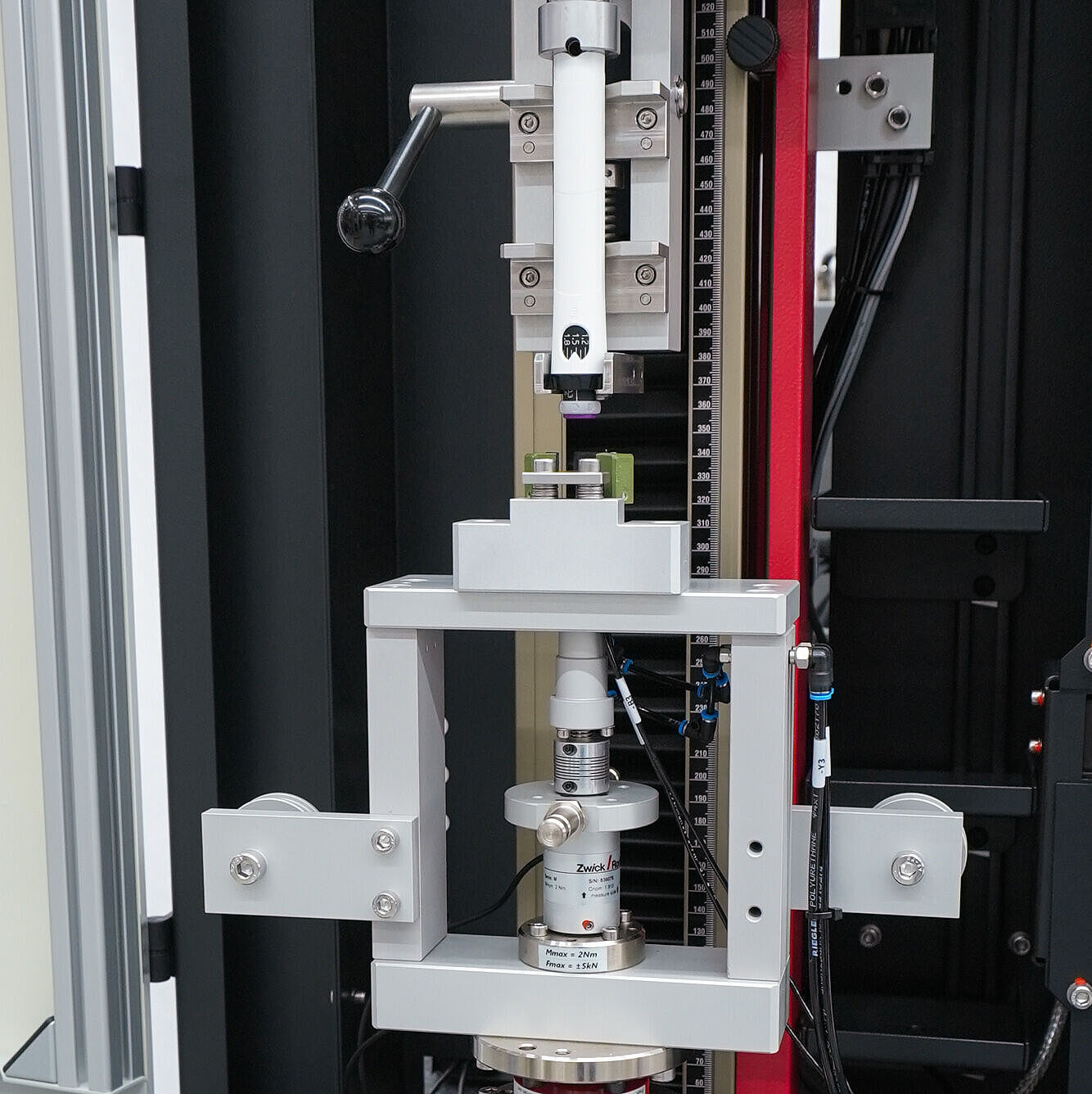
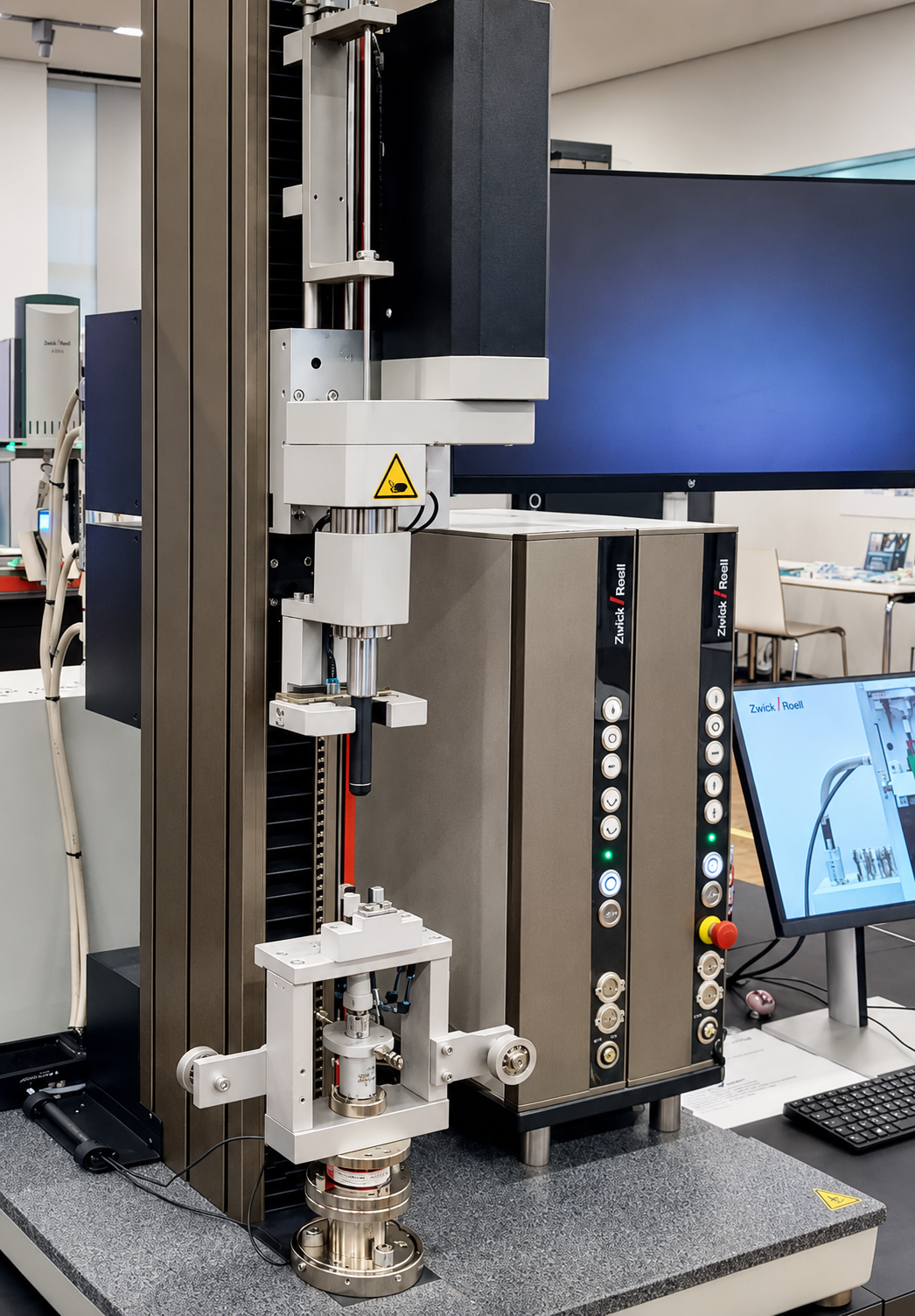
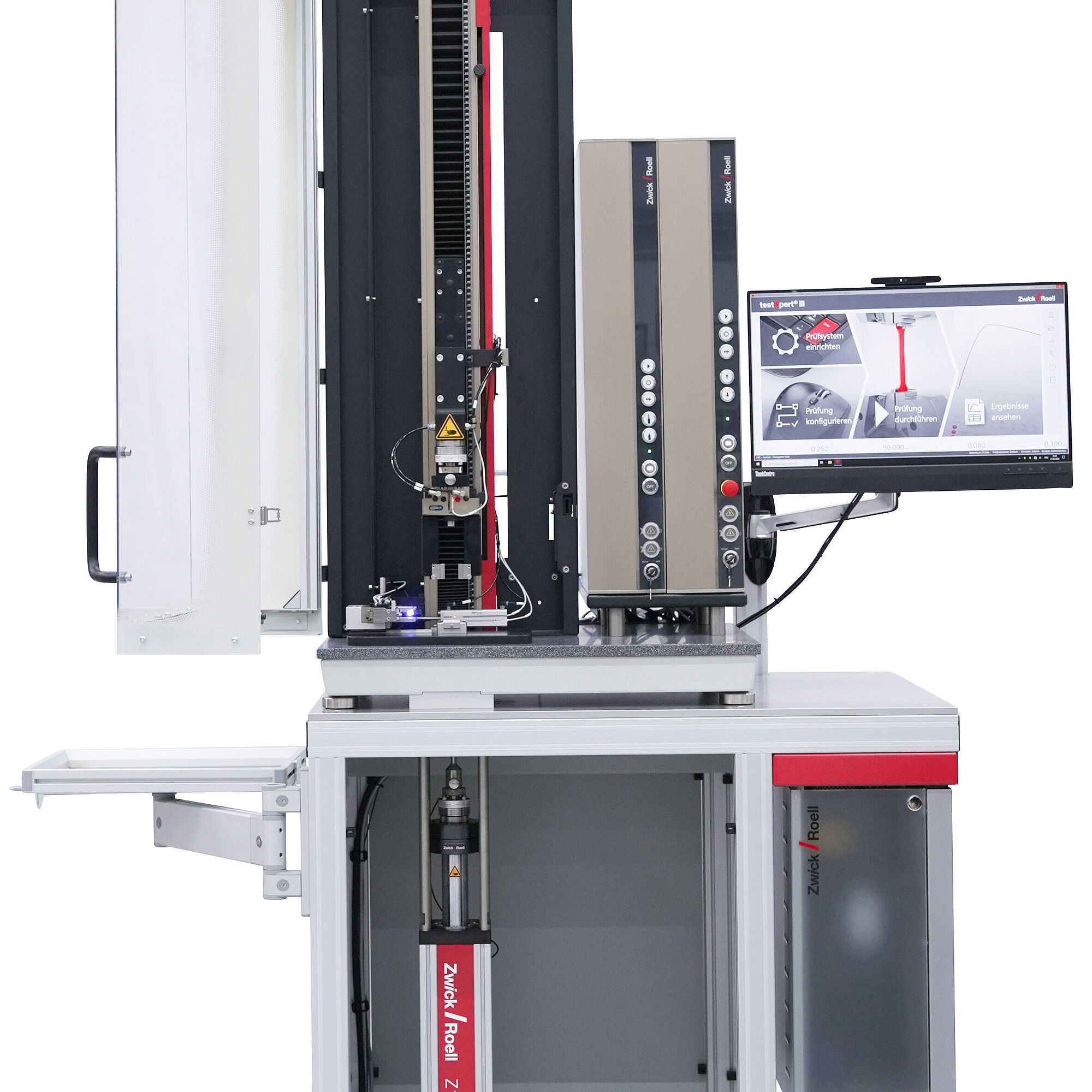
The test arrangement is based on a zwickiLine with a laterally offset torsion drive. Defined dead weights are used to simulate the internal resistance that is created in the complete system by the cartridge, medication, and other components. Among other things, the torque, force and travel of the plunger rod are measured.
The sequence follows a clear logic: Insert the pen, grip it, apply load, dispense, eject axially and evaluate.
Rear part testing for autoinjectors
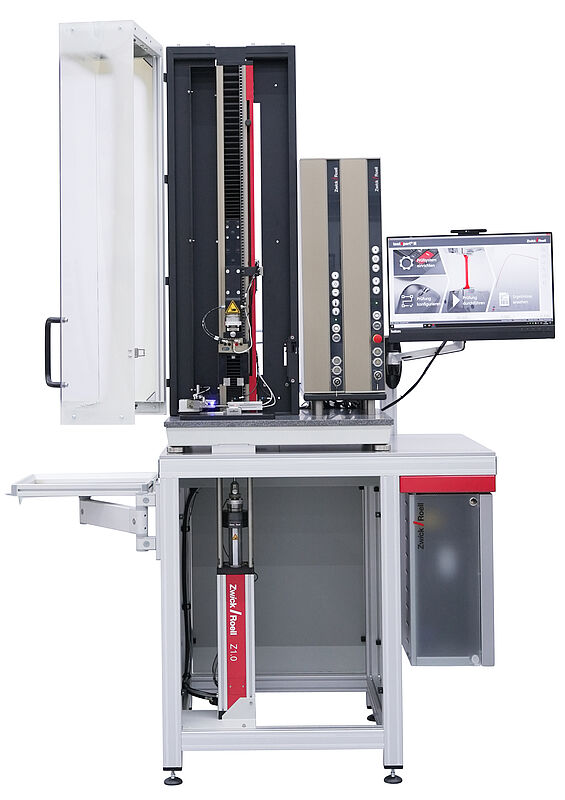
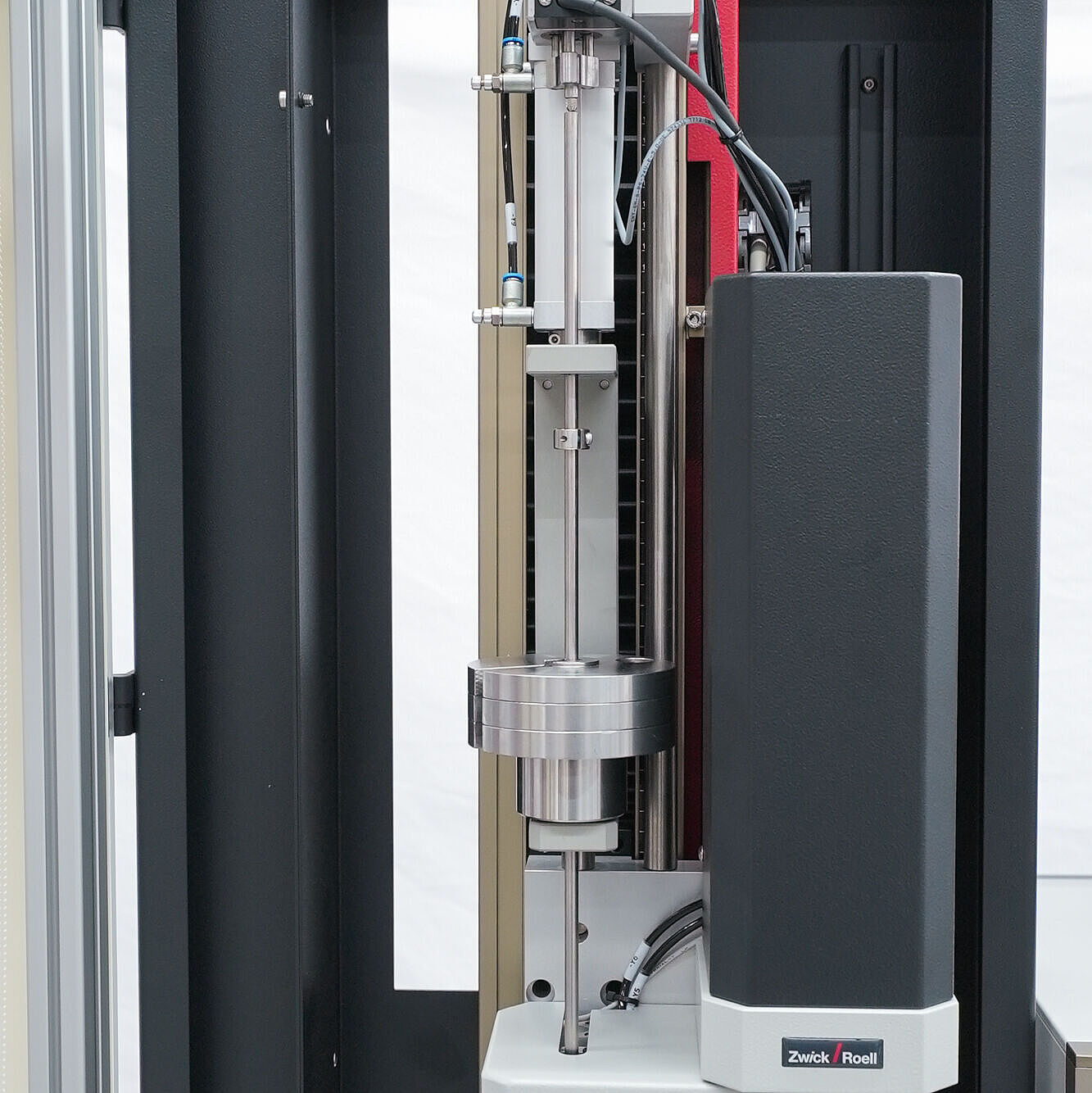
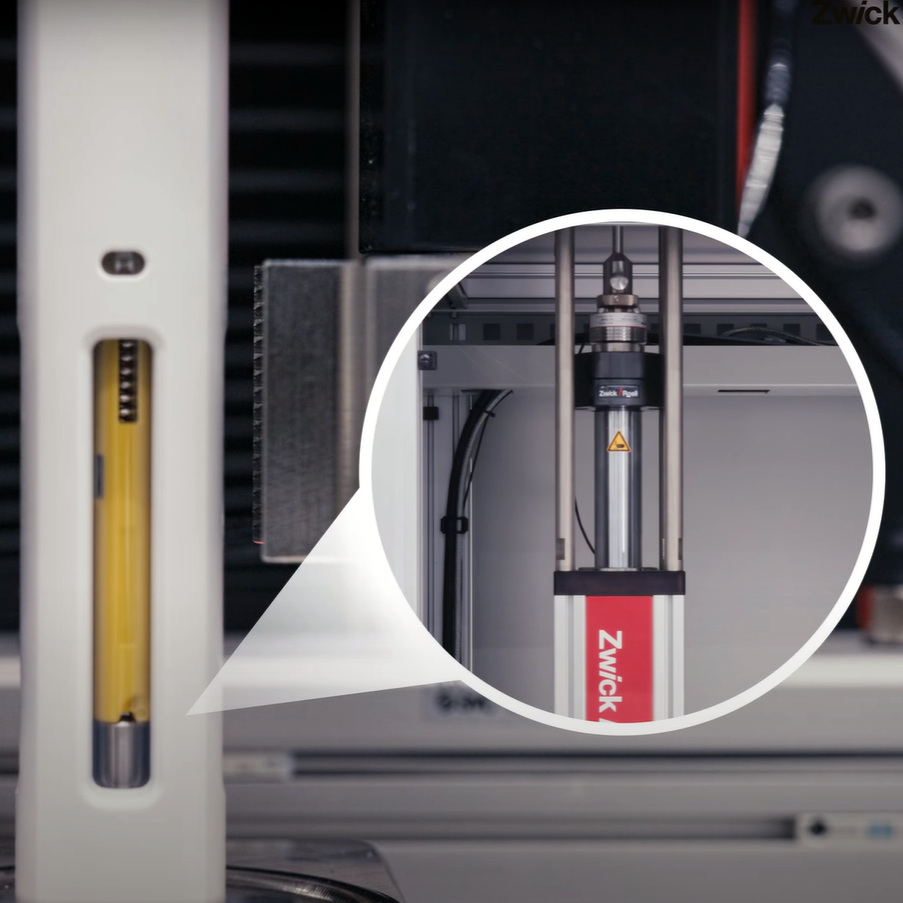
Autoinjectors require a different testing principle. Here, the focus is on the automated process. The specimen is inserted, gripped, prepared, the cap is removed (optionally ejected via a chute), and the internal mechanism is loaded and activated. To do this, a zwickiLine is combined with an electro-mechanical testing actuator. The testing actuator drives into the autoinjector, loads the inner plunger, and enables the measurement of the spring profile at defined speeds.
This makes not only a single force zero-point visible, but also the progression of the mechanical function. The machine has a modular design and can be operated manually or automatically depending on the customer's requirements – for example, with the roboTest N robotic testing system, a robotic arm that independently loads, tests, and removes specimens from the test area. When automating the process, it is essential to remove the cap from the testing system using a chute.

How to reliably map the test task
ZwickRoell supports this test task with application-specific system and process solutions for pens and autoinjectors that are adapted to the specimen. The decisive factor is not a single machine component, but the coordinated overall system consisting of a test frame, sensors, gripping technology, mounts, software, and optional automation.
In practice, this means: The test arrangement is designed for the respective mechanics. Grippers, interchangeable parts and test programs must match the geometry, motion sequence and measurement task. When switching between variants, the system's adaptability can help integrate new products more efficiently into existing testing processes.
Automation is also possible, but must always be evaluated based on the specimen, mount, and process environment.
What improves on a daily basis
For users in the laboratory and quality assurance, the test becomes more reproducible. The same settings, defined speeds, and stable recordings make minor deviations visible – for example, after servicing, process changes, a second production line, or in the event of variations in plastic parts.
The testing process becomes leaner for production. The mechanics can be tested earlier without having to first set up a complete system with medication, cartridge, and needle. This saves process steps, reduces dependencies, and can improve throughput times.
For decision-makers, the primary benefit is planning security. When test tasks are standardized, customizable, and can be automated as needed, it's easier to handle increasing volumes and new variants.
The practical benefit can therefore be summarized in five points:
- Less effort due to the elimination of additional components in the mechanical test step
- Reproducible results due to defined test conditions
- Earlier detection of mechanical deviations
- Greater reproducibility of variants
- More stable processes in development, quality assurance and production

Conclusion
Rear part testing closes an important gap in the testing process for pens and autoinjectors. The method makes mechanical functions measurable before the complete system with medication, cartridge, needle or syringe is assembled. In short: Rear part testing tests the mechanics where later functional problems can arise – early, reproducibly and without unnecessary additional components.
It does not replace the complete final test of the final product. However, it ensures that mechanical risks can be identified earlier and that test processes can be more tightly controlled. For manufacturers, this means less unnecessary complexity, better reproducibility, and a more reliable basis for development, quality, and production decisions.

Frequently asked questions about rear part testing
Rear part testing is the mechanical functional testing of pens or autoinjectors without a complete assembly with medication, cartridge, needle, or syringe. Depending on the system, force, travel, torque and motion sequence are tested.
The test is based on ISO 11608-1 for pens and ISO 11608-5 for autoinjectors. However, it does not automatically replace the complete, standards-compliant testing of the final system.
Because the mechanics often have to be evaluated earlier in the process. Without medication and other additional components, the test becomes simpler, more reproducible, and more independent of external influencing factors.
Pens work with torque and axial feed. Autoinjectors work with automated, often spring-driven processes. That is why the measured variables, motion sequences and system concepts differ.


