

Needle Testing to ISO 11608-2: Reproducible and efficient testing of large quantities
In needle testing to ISO 11608-2, a single standard test is often not sufficient when high production volumes, batch-specific approvals, and additional quality requirements come together. Manual test sequences with tool changes then quickly become time-consuming, operator-dependent, and difficult to scale. A customized testing process combines normative and product-specific test requirements in a continuous process – they can be reproducible, documented and are closer to the real application.
Batch testing of pen needles as part of quality control
Pen needles are produced in large quantities and released in defined batch sizes. For quality assurance, this means: Specimens are taken from a batch, tested and evaluated. The decisive factor here is not only whether the standard requirements are met. In addition, manufacturers often define their own tolerances to ensure the function and handling of the product in later use. This makes needle testing an integral part of quality control during production and batch processing. If a defined test scope does not meet the approval criteria, this can have an impact on post testing, batch release or production flow.
Where manual test sequences reach their limits
Manual test processes are often sufficient for small test scopes. In series production, however, a bottleneck quickly arises. Specimens must be inserted, tools changed, test steps performed one after the other, and results documented. Each additional step takes time and increases operator influence. This becomes particularly critical as soon as several values have to be checked on a pen needle. These include, for example, screwing onto a reference gauge, the screwing and unscrewing torque, the extraction of the cannula from the hub, the removal of the container, the removal of the needle cap, or the needle base depth.
Individual tests can be performed separately. However, this approach is only suitable to a limited extent for large quantities: The throughput remains low, reconfigurations increase the process time, and repeatability depends more on handling. As production volumes increase, the available testing capacity itself becomes a quality factor. If several tests have to be performed in succession or reconfigurations are required between individual test steps, the possible throughput decreases. At the same time, the risk increases that tests will become a bottleneck within the release process. For production, this means: It is not only the measurement accuracy that is crucial. Equally important is a testing process that can reliably produce the required quantities within the available time.
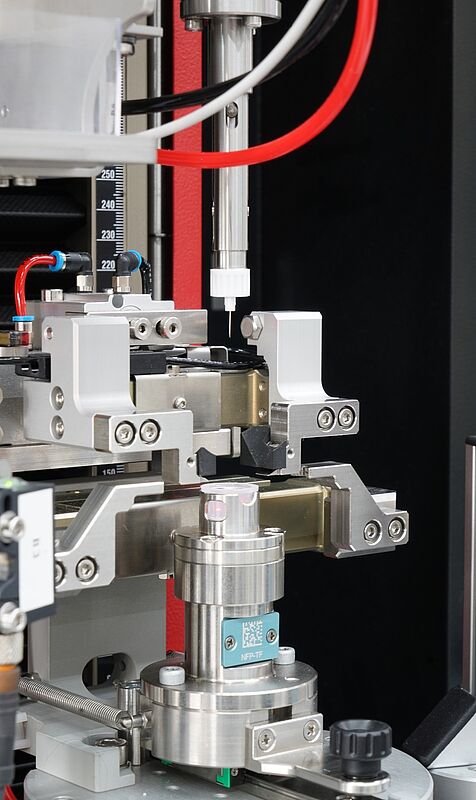
ISO 11608-2 as normative framework for pen needles
ISO 11608-2 is the key normative reference for testing pen needles. Among other things, the standard outlines the mechanical requirements and test methods, such as those for the needle-hub connection, secure screwing and unscrewing, and the functional interaction between the pen, needle, and cartridge. For practical classification, the following is crucial: The standard outlines the procedure and the relevant test methods. The specific tolerances a product must meet are often additionally defined by the manufacturer. This results in a combined task for quality assurance: conducting testing according to the standard and providing additional internal quality assurance.
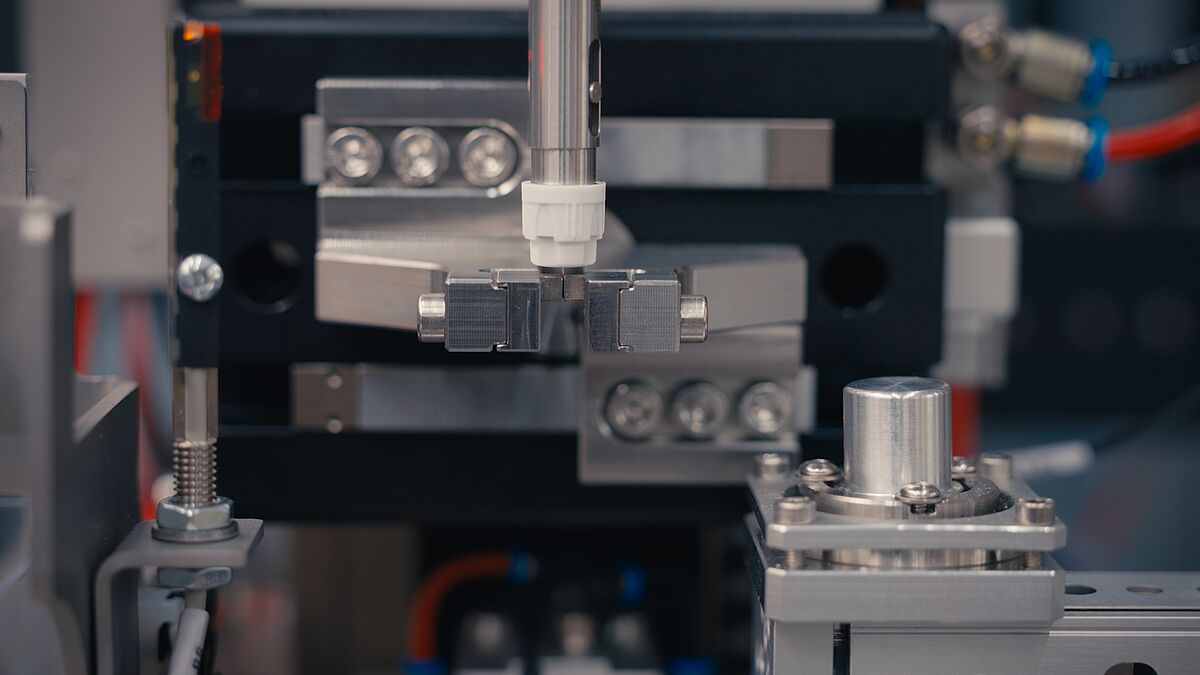
When standard testing alone isn't enough
ISO 11608-2 defines the normative framework for testing pen needles. In practice, however, the test task often goes beyond the standard's requirements, as many manufacturers supplement standard-relevant tests with additional quality features that are important for functionality, handling, or internal release processes. This results in test sequences that must assess both normative requirements and product-specific criteria.
The challenge lies not only in the performances of individual tests. The key is to bring both levels together in a reproducible process. Only then can results be achieved that meet both the standard requirements and a manufacturer's individual quality goals.
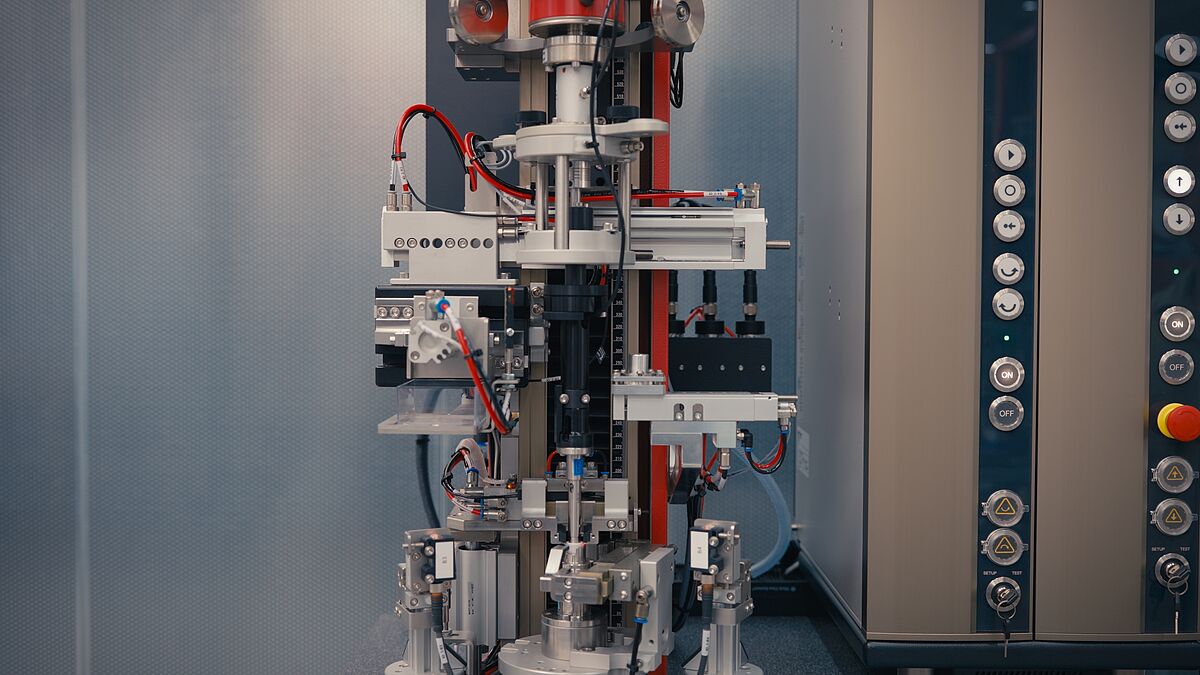
When standard requirements and additional test values come together
In practice, manufacturers don't just check what's required by the standards. Additional values are often recorded because they are relevant for later use. One example is the removal of the protective cap. The cap must fit securely to keep the needle protected. At the same time, it shouldn't require excessive force to remove, as this could cause difficulties for users with limited hand strength. Therefore, testing this force curve isn't just an additional technical value; it also contributes to the device's usability. The same applies to the needle cap removal.
Pulling the needle out of the hub checks that the components are correctly connected. These values help ensure the product's quality goes beyond mere compliance with standards. This makes the test task significantly more complex for quality assurance. The more values that need to be tested, the more important it becomes to have a testing process that combines these requirements in a reproducible manner with minimal manual effort.

Reference gauge and needle base depth: small distances, big impact
A particularly relevant test step is screwing the pen needle onto a reference gauge. Among other things, this allows you to check the torque required to screw the needle on or off. Additionally, the needle base depth can be measured. The reason for this is the design of the pen needle: One side of the needle extends outward for use on the patient, while the other side points inward toward the septum of the medication container.
When screwing it on, make sure the inner needle penetrates deeply enough so that the liquid can be reliably drawn in. For the testing process, this means: It's not just about forces or torque; it's also about defined geometry, reproducible positioning, and ensuring functionality later on.

Customizing as the answer to complex test tasks
To merge multiple test requirements into a single process, force and torque tests must be combined. Integrating a torsion drive is a key requirement for this. This allows tests like screw-on and screw-off torque to be integrated directly into the overall process. At the same time, this creates additional space for more testing stations. This allows different test tasks – from torque testing to measuring needle base depth or pull-off forces – to be performed in a single test environment. This reduces the effort required for reconfigurations and supports a continuous test sequence.
When dealing with large quantities and multiple test requirements, a standard test alone is often not enough. Through application-specific customization, both standard-relevant and customer-specific test values can be combined in a continuous process. This reduces manual reconfigurations, decreases operator influence, and improves reproducibility. At the same time, both standard-relevant and customer-specific tests can be considered together. ZwickRoell supports such tasks not through a single, isolated machine, but by implementing a stable testing process. This includes suitable specimen holders, torsion and force measurement, reference gauges, motion control, software, documentation, and, if needed, additional protective and monitoring elements.
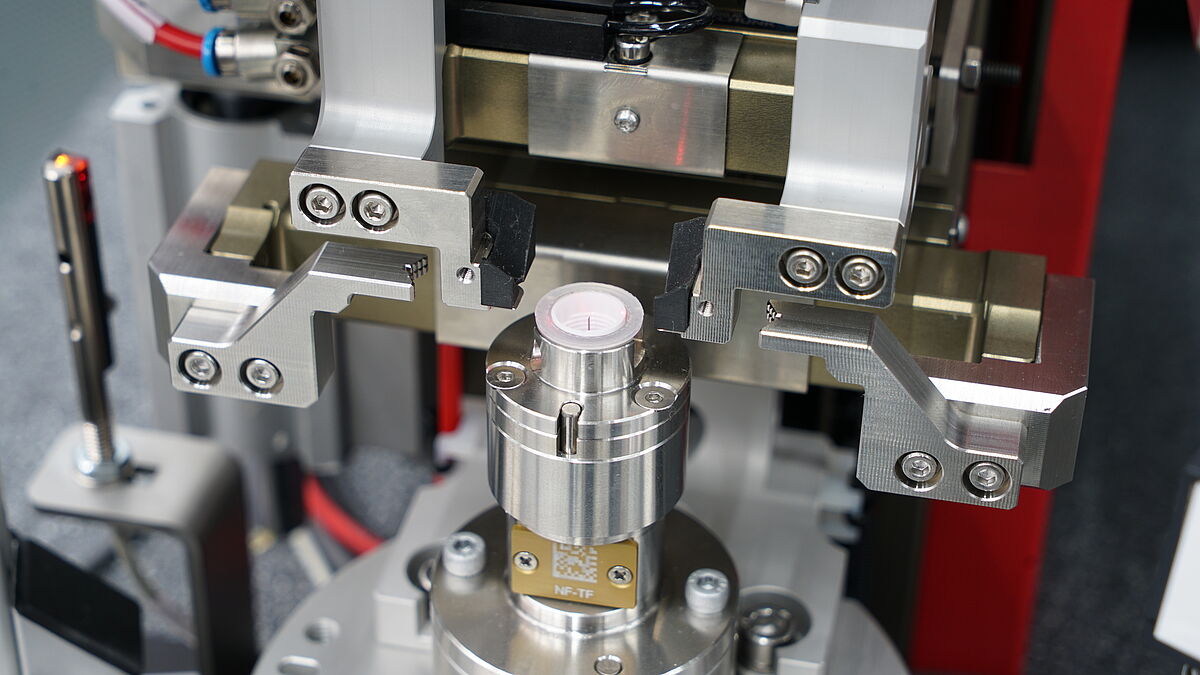
Process reliability is also achieved through operator and machine guarding
With delicate needles and small measured values, the test arrangement is sensitive. Incorrect insertion, improper positioning, or unexpected contact can affect test results or disrupt the test sequence. That's why security features are also part of process reliability. Sensory monitoring, such as laser systems or proximity switches, can help ensure the correct position of the specimen and safe machine conditions. This reduces operator errors and supports a stable process, especially for recurring series testing.
Digital traceability parallel to production
As production volumes increase, the need for digital traceability grows. Test values must not only be generated, but also assigned to the correct specimen, and test sequence. Digital testing processes help capture and share results in parallel with the production process. Interfaces to higher-level systems like LIMS or other data environments can help make testing and approval processes more traceable.
At the same time, digitally documented test sequences lay the groundwork for improved reproducibility of results across different production and QA sites. For regulated environments, it is also important to document changes, test parameters, and responsibilities. This makes digitalization not just an add-on, but an integral part of quality assurance: It simplifies deviation analyses, supports approvals, and improves traceability.
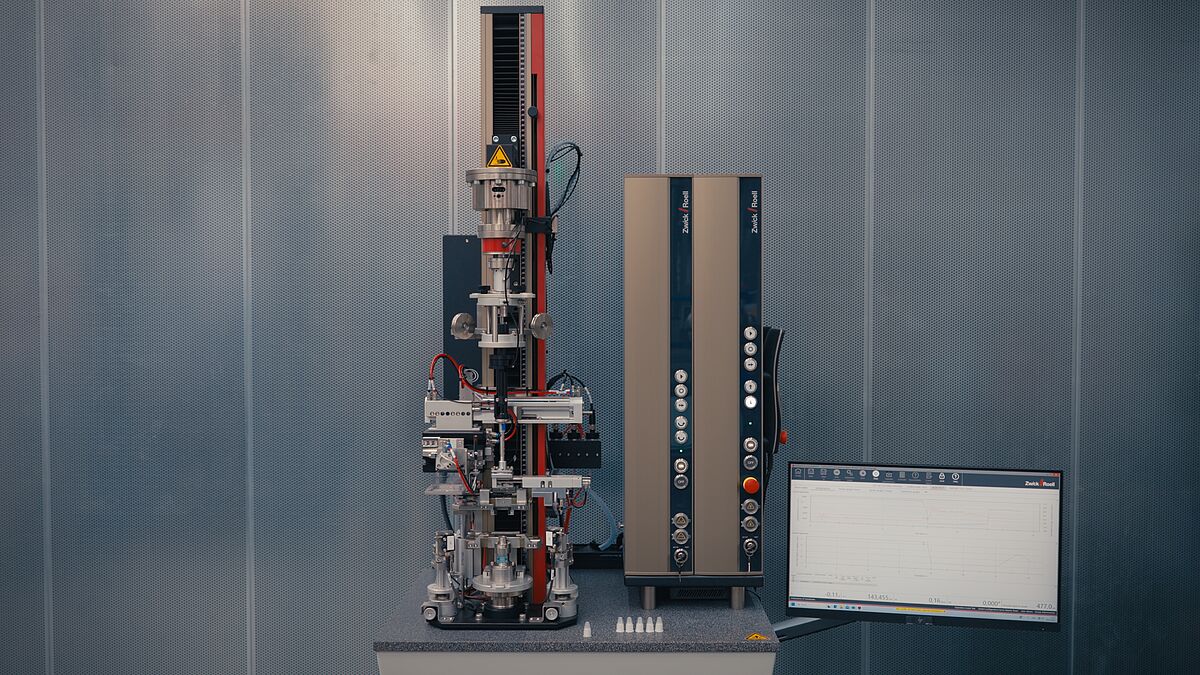
What's improving for quality assurance and production
For quality assurance, the primary benefit is reliability in the evaluation. When multiple test values are recorded in a defined process, results are easier to compare, and deviations can be identified more quickly. For production, throughput improves. Fewer manual reconfigurations and automated processes help better align testing capacities with increased production volumes. At the same time, a reproducible process reduces the influence of individual operators.
For decision-makers, scalability is also important. A testing solution that combines both standard-relevant and customer-specific requirements can adapt to changing needs – such as higher production volumes, additional test values, or new documentation requirements.
Conclusion
In series production, the needle test to ISO 11608-2 is more than just a single test step. It is part of quality control, batch release, and production reliability. As production volumes increase, manual processes quickly reach their limits. Tool changes, separate individual tests, and manual documentation take time and make it harder to get reproducible results. At the same time, manufacturers want to capture additional quality features alongside normative requirements to better ensure functionality and application safety.
A customized testing process combines these requirements into a seamless, continuous process. The key isn't maximum automation at any cost, but a solution that aligns with the product, the standard, and the realities of production. ZwickRoell supports manufacturers in implementing such test tasks in a reproducible, documentable, and scalable manner – from standard-compliant methods to application-specific process solutions.

Seamlessly integrate needle testing into the production process.
When standard tests are no longer sufficient, a testing process is needed that aligns with the product, the standard, and the production process. ZwickRoell helps you implement needle tests to ISO 11608-2, as well as additional quality requirements, in a reproducible, traceable, and scalable manner.
Learn more about the right testing solution for your needle test
Frequently asked questions about needle testing to ISO 11608-2
ISO 11608-2 outlines requirements and test methods for pen needles, specifically double-ended pen needles.
Because tool changes, manual specimen handling, and separate individual tests take time and increase operator influence.
Manufacturers often set their own tolerances and quality specifications to better ensure functionality, ease of handling, and approval processes.
Customizing allows you to map multiple standard-relevant and customer-specific test values in a consistent, reproducible process.


