
Testing Humanoid Robots and their Components
Humanoid robots are increasingly leaving research labs and are being developed for industrial, logistics, and service-oriented applications, as well as for future uses in care-related settings. Unlike traditional industrial robots, they operate in dynamic environments, interact with people, and integrate mechanics, electronics, sensors, software, and energy systems into a highly integrated overall system. This results in demanding testing tasks throughout the entire value chain.
Each assembly group must function reliably under real-world operating conditions. Loads from movement, load change, environmental factors, and potential falls place high demands on safety, reliability, and fatigue life.
ZwickRoell supports manufacturers, suppliers, research institutions, and development teams with the testing of materials, components, and functions for humanoid robot systems. From material development to quality assurance, testing solutions are created that are tailored to the application, the test task, and the development phase.
Key challenges Actuators & force transmission elements Housing & structural components Hands & end effectors Sensors Data & energy systems Safety & standards Request a consultation

Key facts at a glance
- Humanoid robots bring together test requirements from robotics, the automotive industry, electronics, battery technology, lightweight construction, biomechanics/orthopedics, and materials testing.
- Critical testing requirements arise from wear, load change, falls and impacts, vibrations, environmental factors, and safety-critical interactions between humans and robots.
- Key areas of testing include actuators, joints, force transmission, structural components, end effectors, sensors, and data and energy systems.
- Fatigue life, fatigue, material, functional, and safety tests help identify potential failure mechanisms early on.
- New standards for humanoid robotics are currently being developed. At the same time, existing standards for robotics and machine safety provide important guidance.
- ZwickRoell supports test tasks throughout the entire product life cycle – from research and development, through validation, to quality assurance in production.
Why do humanoid robots need to be tested?
Humanoid robot systems should move safely, operate reliably, and perform consistently over long periods of time. At the same time, they are exposed to high levels of mechanical, thermal, and environmental loads. Tests provide the basis for demonstrating material behavior, component reliability, and compliance with safety requirements under realistic operating conditions.
Key challenges:
- Safety in the human-robot environments: Humanoid robots are increasingly being used in places where people work, live, or receive care. As a result, the ability to control forces, movements, and potential failure scenarios is becoming increasingly important.
- Reliability over long service life: Joints, gearboxes, sensors, and actuators must function reliably over the long term and retain their properties even after millions of load changes.
- Fatigue and durability: Walking, carrying, gripping, and balancing create continuous, cyclical loads that can lead to material fatigue and wear.
- Falls and impacts: Unlike stationary systems, humanoid robots are exposed to the risk of falling. Structural components and connections must be able to withstand the corresponding loads.
- Environmental and temperature influences: Temperature fluctuations caused by environmental conditions, as well as the heat generated by actuators and electronic components during operation, affect materials, electronics, and mechanical components. In addition, moisture, dust, corrosive substances, or radiation can further impair functionality, fatigue life, and reliability.
- Standards that are missing or being developed: Standardization for humanoid robotics is currently being developed. Manufacturers already need to provide robust evidence of safety and durability today.
Actuators and force transmission elements
Actuators and force transmission elements form the foundation of every movement in humanoid robots. Electric motors, pneumatic actuators, gearboxes, bearings, joints, spring-damper systems, and structural extensions convert electrical energy into motion and transmit forces within the system. In terms of their function, they mirror the interplay of muscles, tendons, ligaments, and the skeleton in the human body. They must enable precise movements, transmit high forces, and, at the same time, operate reliably through millions of load changes. What makes this particularly challenging is the combination of lightweight construction, limited installation space, high loads, and the need for consistently reproducible function.
Typical challenges:
- High cyclic loads on joints, bearings, and gears
- Wear caused by constant movement and load changes
- High forces and torques, combined with limited installation space and low weight
- Temperature-related stress on drives, bearings, and structural components
- A wide range of requirements, from highly sensitive end effectors to heavily loaded hip and knee joints
- Durability of lightweight materials and connectors
Typical test tasks
ZwickRoell supports the development and validation of actuator and force transmission components through material, wear, fatigue, and fatigue life testing. This makes it possible to assess critical loads at an early stage and to generate reliable evidence for development, validation, and later series production applications:
- Temperature and environmental tests to evaluate components under thermal loading, as well as when the materials used have different expansion coefficients.
- Testing of ropes and force transmission elements for maximum force, abrasion, and wear.
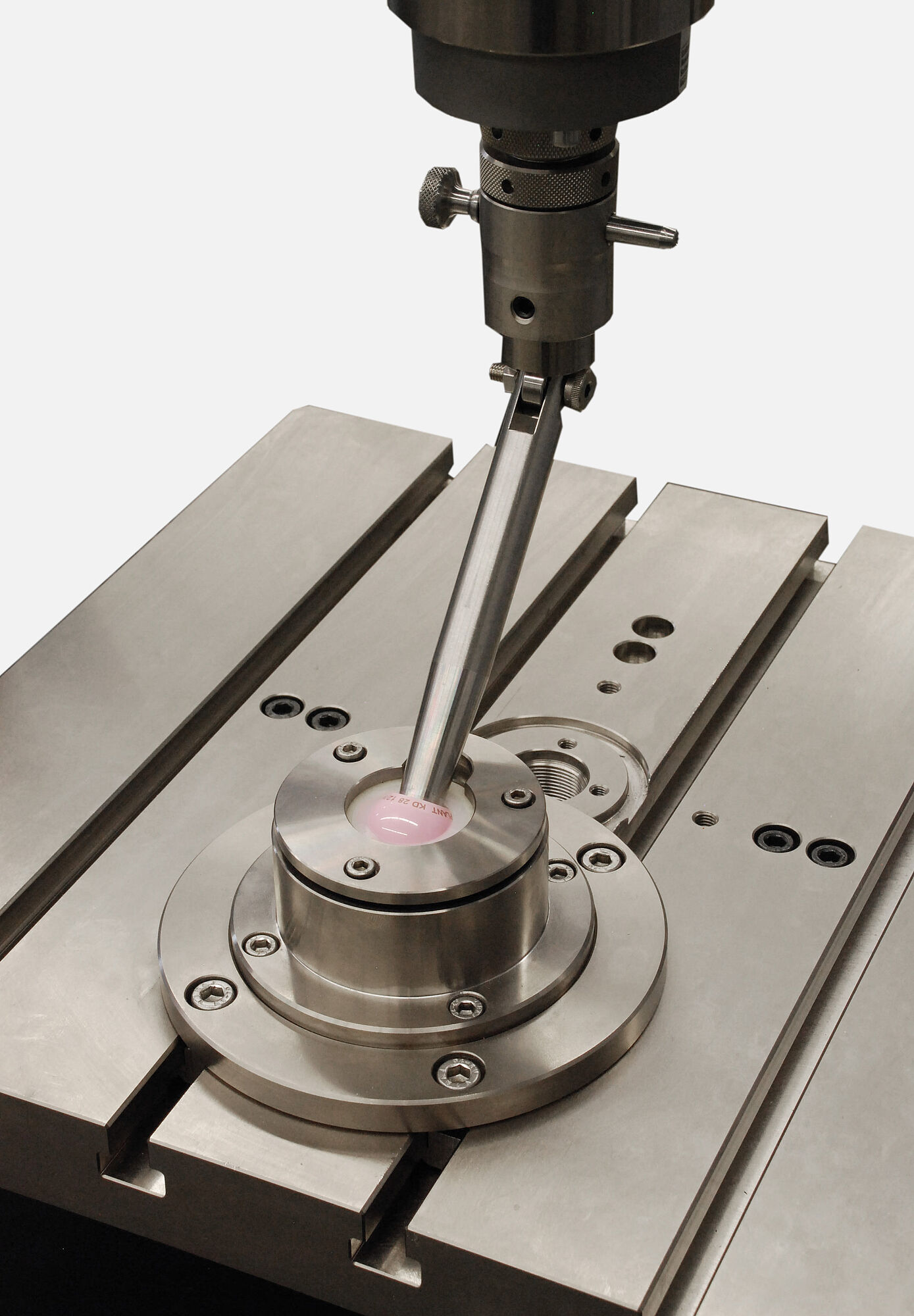
- Tests on bearings, joints, and gears to test wear, fatigue life, and behavior under cyclic loading.
- Biomechanically testing concepts as a foundation for humanoid robot systems
- Actuator tests ranging from high-precision drives in hands and end effectors to heavily loaded hip and knee joints, with a focus on load-bearing capacity and fatigue life.
- Spring tests to evaluate force–displacement behavior and endurance limit.
- Materials testing used in heavily loaded drive and structural components:
- Aluminum alloys for the support structure and torso
- Titanium alloys for components subjected to high cyclic loads, such as hip blocks or joint shafts
- Stainless steel for shafts, bolts, and components exposed to wear
- PEEK and CFRP materials for lightweight, rigid structural and support components
- Surface and wear protection systems, such as PTFE sliding layers, solid lubricants, and DLC coatings, to minimize friction and wear in moving contact pairs.
- Shape-memory alloys for future actuator concepts
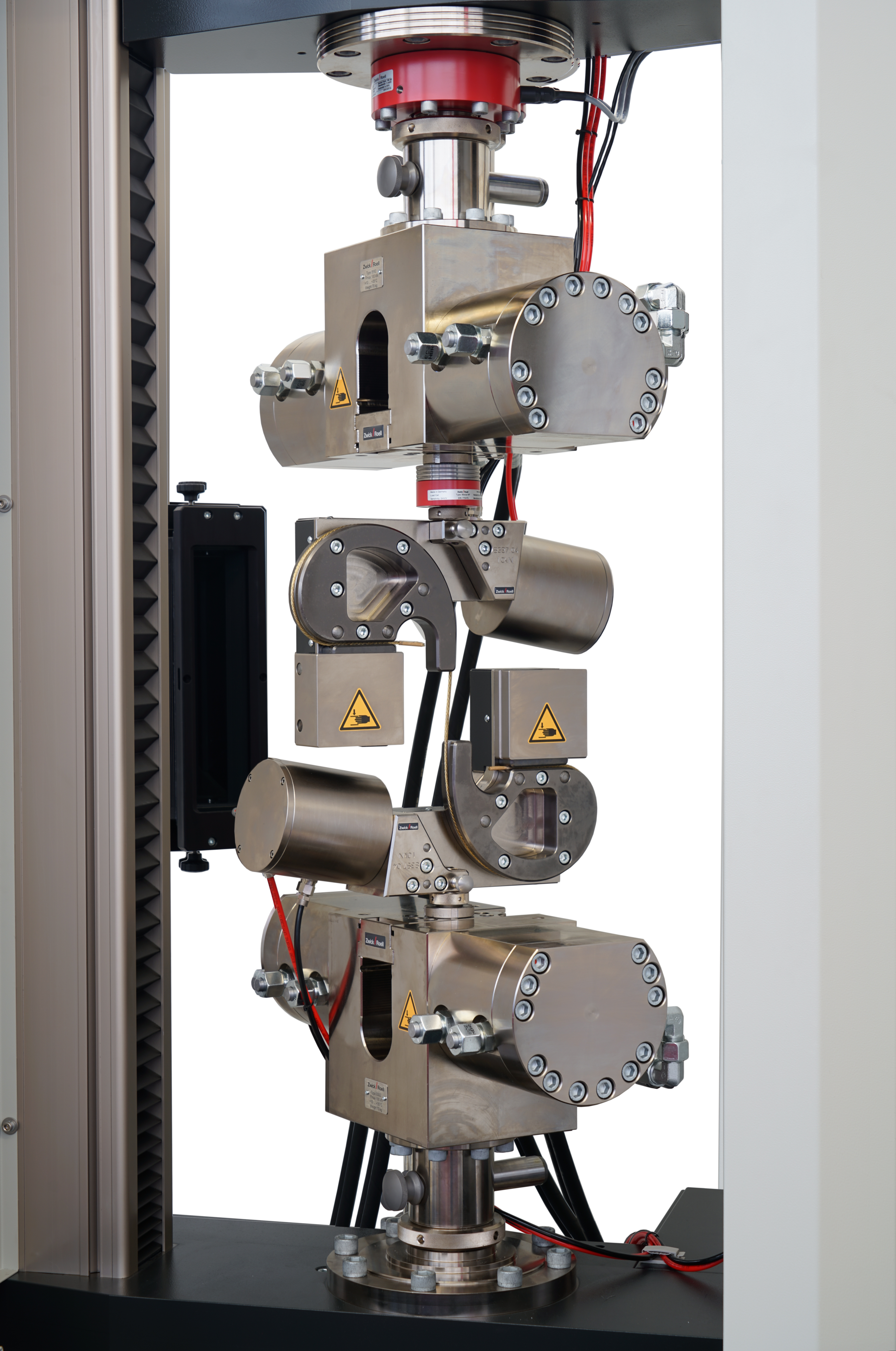
Rope tensile tests
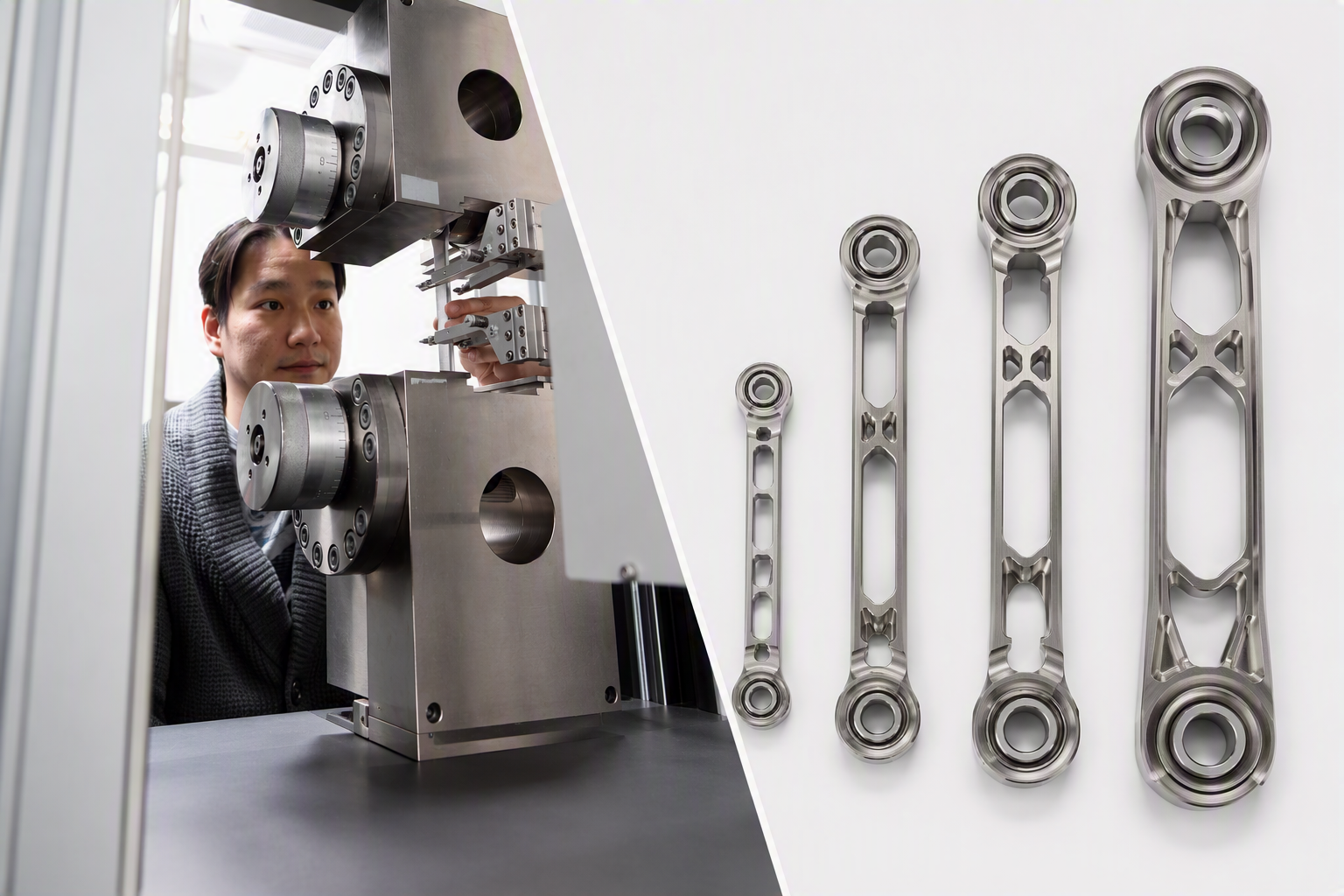
Tensile strength and material properties
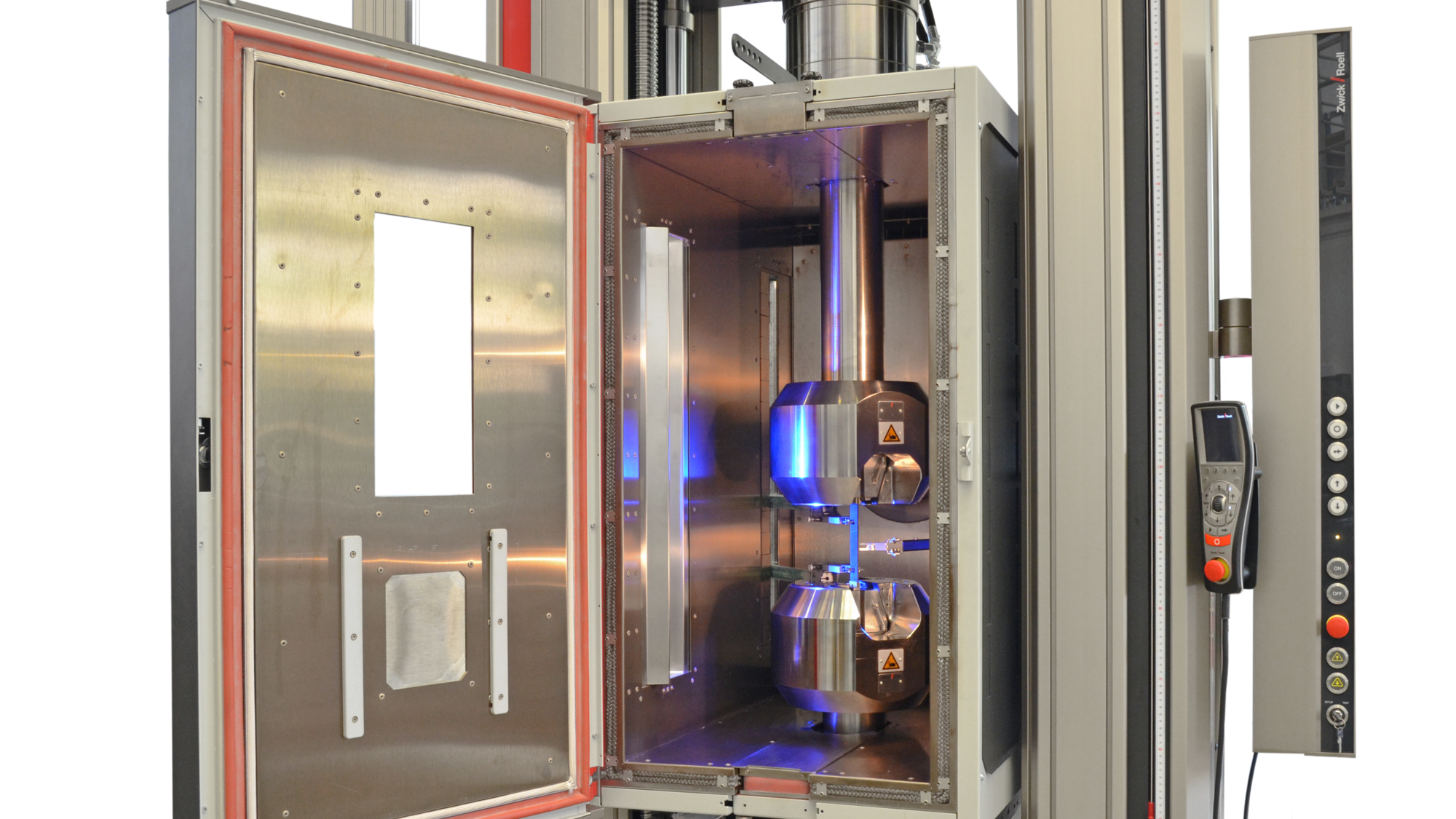
Testing under thermal loading
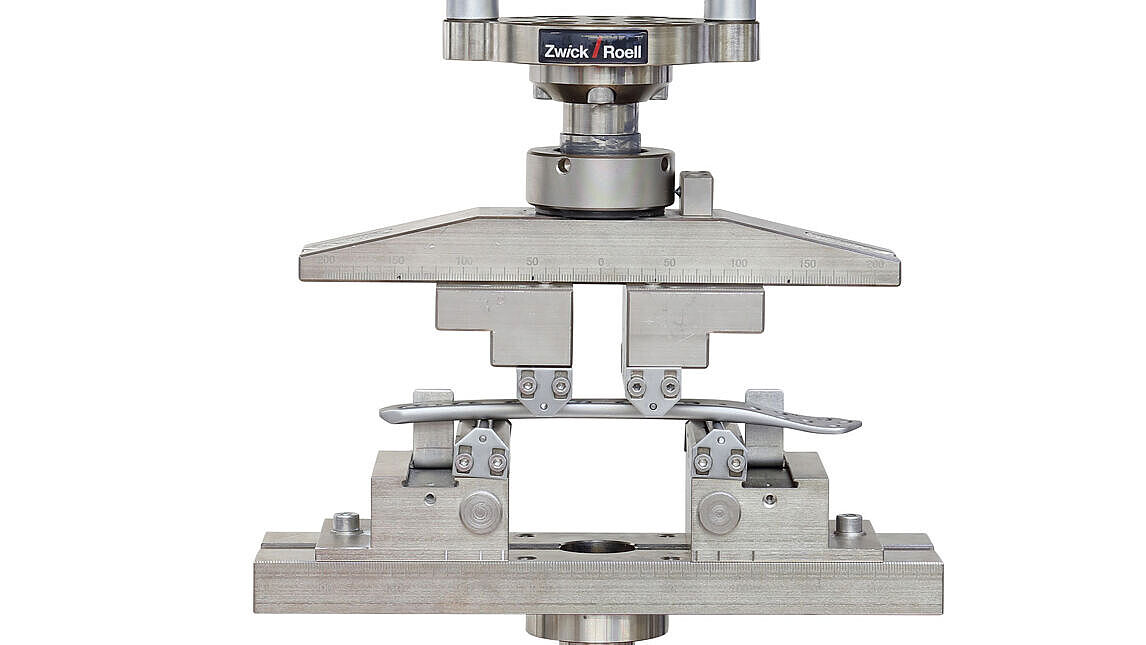
Housing and structural components
Housing and structural components protect the internal systems of humanoid robots while also forming their load-bearing structure. Frames made of aluminum, steel or fiber composites must ensure high stiffness with the lowest possible weight. In addition, there are requirements for interaction with humans, for example, through skin-like surfaces, textile outer shells or protective layers for demanding environments.
Typical challenges:
- High stiffness and load-bearing capacity with the lowest possible weight
- Protection against temperature, moisture, chemicals and other environmental influences
- Long-term durability of coatings, outer skins and protective materials
- Safe human-robot interaction through suitable surface and soft-skin materials
Typical test tasks
ZwickRoell supports the development and validation of body and structural components with material, coating, lightweight construction, crash, and function tests. Tests help to demonstrate the load-bearing capacity of structural components, surfaces and protective materials under realistic operating conditions:
- Testing of coatings and surfaces for adhesion strength and durability, for example, by means of 90°/180° peel tests or Z-direction tests.
- Testing textile outer skins and protective materials for abrasion behavior, strength, and elongation. This includes both textile coverings and functional materials for special application environments.
- Testing of fiber-reinforced composite structural components to evaluate lightweight construction concepts under mechanical stress.
- Characterization of plastics as raw materials for components and surfaces through melt index tests
- Characterization of metallic materials for structural and housing components, for example for strength, deformation behavior or processing properties.
- Crash and impact tests to simulate fall or collision events and to investigate possible failure mechanisms.
- Testing of soft-skin materials such as silicone or TPU for applications involving direct human-robot interaction.
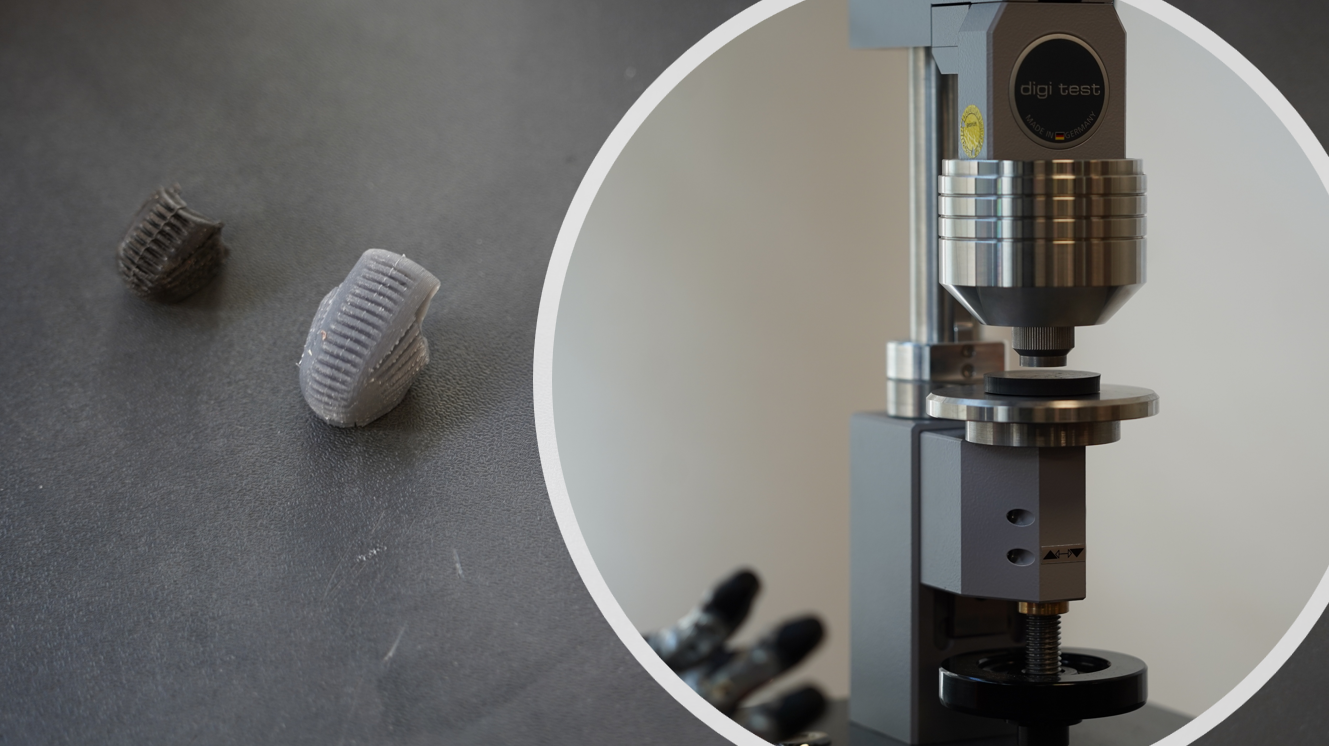
Shore hardness testing on rubber parts
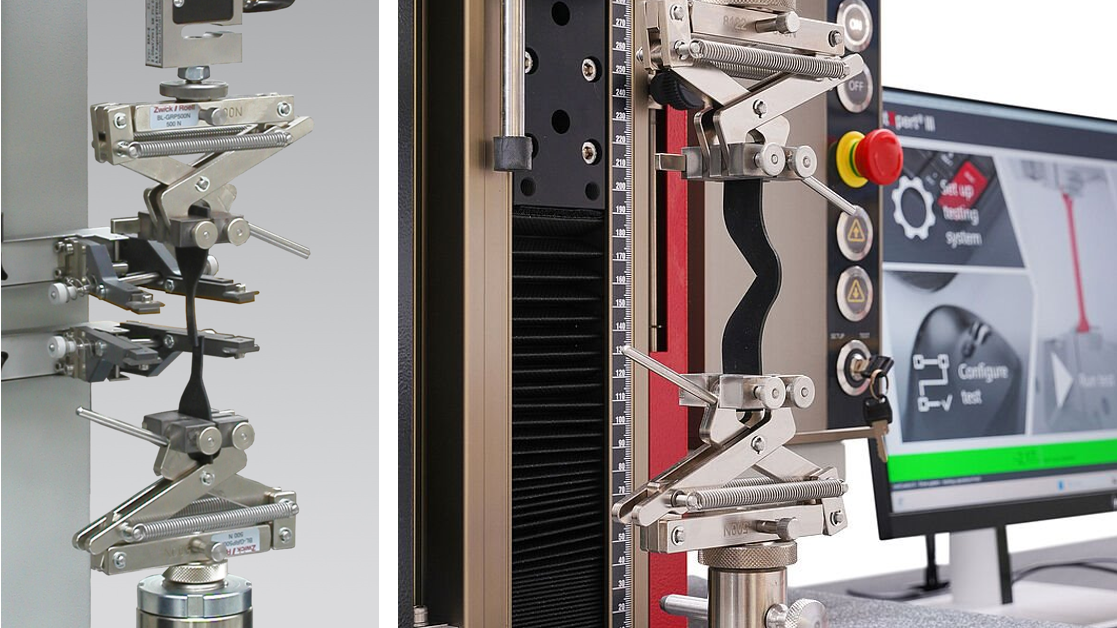
Tensile and tear growth tests
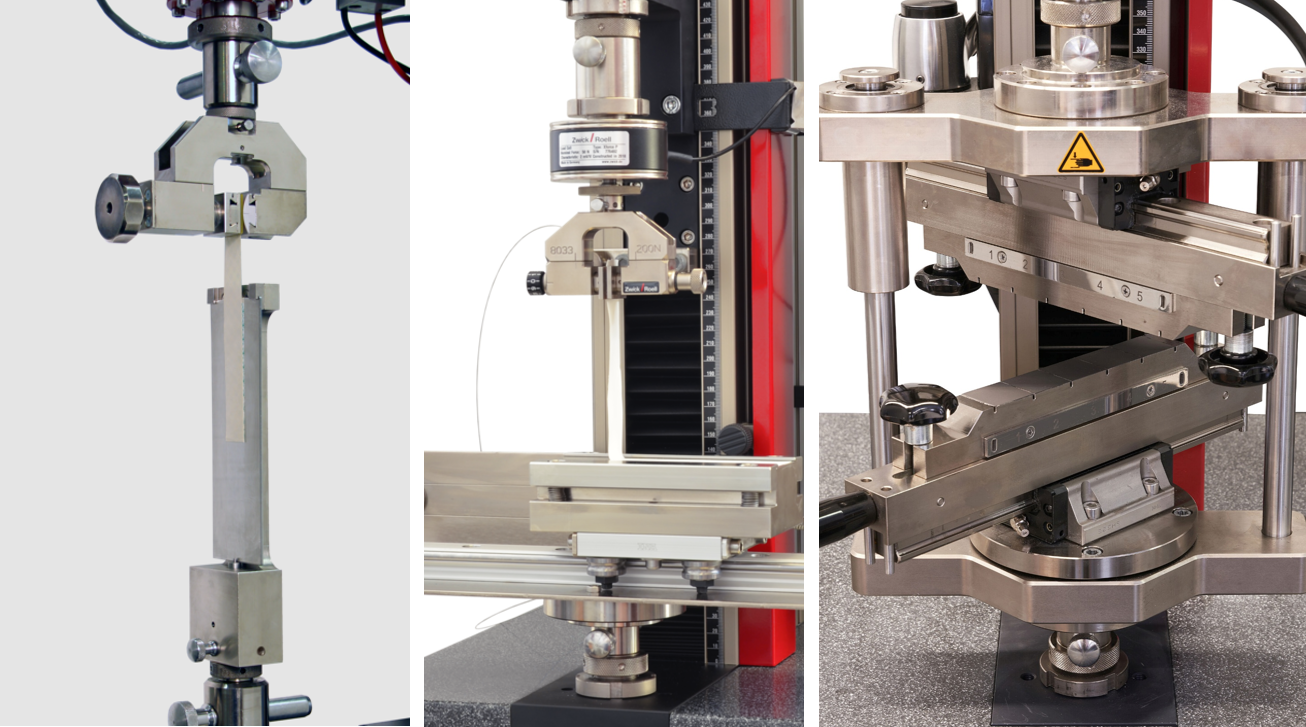
90°/180° Peel tests and Z direction tests
Hands and end effectors
Hands and end effectors enable humanoid robots to interact with their environment. They must be able to grip objects securely, apply precise forces and, at the same time, handle both sensitive and heavy objects. High demands in terms of precision, repeatability and fatigue strength meet an often limited installation space.
Typical challenges:
- Precise force transmission and motion control in a confined installation space
- Reliable gripping of a wide variety of objects
- High repeatability with continuous use
- Wear due to continuous movement and load cycles
Typical test tasks
ZwickRoell supports the development and validation of hands and end effectors with force, function and fatigue life tests. This allows gripping functions to be evaluated reproducibly and critical loads to be identified as early as during development:
- Grip force measurements to evaluate safe handling and force transmission when gripping different objects.
- Finger force measurements to analyze individual gripping and manipulation movements as well as the load-bearing capacity of delicate actuators.
- Functional and fatigue tests on hands and end effectors to evaluate wear, repeatability and endurance limit under cyclic loading. These tests are particularly relevant for applications in which repetitive gripping and manipulation operations are performed over long periods of time.
Sensors
Sensors enable humanoid robots to perceive their surroundings and to interact safely with people and objects. Force and pressure sensors, as well as sensors that are directly integrated into components or surfaces, are used, among other things.
Typical challenges:
- Reliable measurement of forces and compressive loads
- Permanent functionality of integrated sensors under mechanical load
- Secure adhesion strength of sensors in components and on surfaces
Typical test tasks
- Testing of tactile force and pressure sensors to evaluate accuracy and load-bearing capacity.
- Testing of integrated sensors, for example, sensor skins on hands or other components, with regard to adhesion strength, peeling behavior and endurance limit.

Data & energy systems
Data and energy systems supply humanoid robots with energy and enable communication between sensors, controllers and actuators. In addition to battery systems, cables, connectors and electronic assemblies, in particular, must withstand mechanical stresses over the long term.
Typical challenges:
- Reliable power supply over the entire fatigue life
- Mechanical stresses on cables and connectors due to permanent movement
- Endurance limit of electronic components and connections
Typical test tasks
- Battery tests to evaluate the material properties, mechanical load capacity and reliability of battery systems.
- Testing of power and fiber optic cables for maximum force, flexure and torsion load.
- Testing of connectors to determine retention and pull-out forces.
- Testing of electronic assembly groups (PCBs) for flexural load, peel behavior and adhesive joints.

We support manufacturers, suppliers, research institutions and development teams in identifying critical loads, selecting suitable test methods and establishing reproducible test processes.
Which components of your humanoid robot need to be tested?
Talk to our experts about materials testing, fatigue life studies, component validation and safety-related verification for humanoid robot systems.
Safety and standards for humanoid robot systems
The development of humanoid robotics is currently progressing faster than standardization. That is why many manufacturers are already guided by existing sets of rules from the fields of robotics and machine safety. At the same time, ISO 25875, a specific safety standard for humanoid robot systems, is currently being developed.
Relevant reference points include:
- ISO 13482 for service robots in the immediate vicinity of people
- ISO 10218 for industrial robot systems
- ISO 12100 for risk assessment and risk reduction
- IEC 62061 for the functional safety of safety-related control systems
- ANSI RIA R15.08 for mobile robot systems
- ISO/CD 25785-1 for dynamically stable mobile robots (under development)
What these standards have in common is their focus on endurance limit, wear behavior, material strength, environmental resistance and the verification of safe operation over the entire life cycle. As a result, materials testing, function tests and durability tests become more important even in the early stages of development.
