
Horizontal Catheter Testing in Simulated Use
Horizontal testing of catheters and guidewires is a demanding task. In the context of ISO 25539-1/-2, testing is based on the simulated-use principle, meaning that test conditions must replicate real clinical scenarios as closely as possible. At the same time, testing must account for numerous catheter types, application scenarios, and vessel geometries. The test setup must be able to accommodate this variability without sacrificing precision.
For example, catheters used in minimally invasive cardiac procedures must be navigated through vessel bends and branches until they reach the target site. To achieve this, the catheter is advanced through the vascular system using a combination of advancement, rotation, and withdrawal movements. Testing simulates this exact sequence by moving the catheter or guidewire through artificial vessel structures with similar bends and branches. The same combined movements are used, such as push-and-twizzle (simultaneous pushing and rotation). During the test, parameters such as push forces, friction behavior, and motion transfer are measured with a high degree of accuracy.
Meaningful and comparable test results therefore require three key factors: a realistic test procedure , a modular testing system , and precise measurement.
What matters in practice ISO 25539-1/-2 Test procedure Testing solution Areas of application FAQs Downloads Request a consultation

Key points
- Meaningful test results are only obtained when clinical procedures are realistically simulated (simulated use).
- Key performance indicators such as trackability or torqueability depend directly on motion sequences such as push & twizzle.
- A common problem: Frictional forces caused by weight or guidance are also measured and distort the results.
- Without modular adaptability, changing vessel geometries and application scenarios cannot be represented, because the test setup varies.
- The test setup must be reproducibly reconfigured for identical scenarios to ensure comparable results.
- Reproducibility also depends on stable boundary conditions: defined clamping forces, precise guidance, constant temperature and reduced operator influences.
Realistic: Simulated Use – Accurately replicating clinical procedures
In simulated-use testing, real-world clinical procedures are replicated under laboratory conditions by moving catheters or guidewires through defined vessel geometries. The decisive factor is not linear advancement alone, but rather the combination of feed and rotational motion (push & twizzle), which reveals device behavior in vessel curves and bifurcations. Without suitable testing mechanics, the specimen may slip back uncontrollably or forces may not be transmitted correctly.
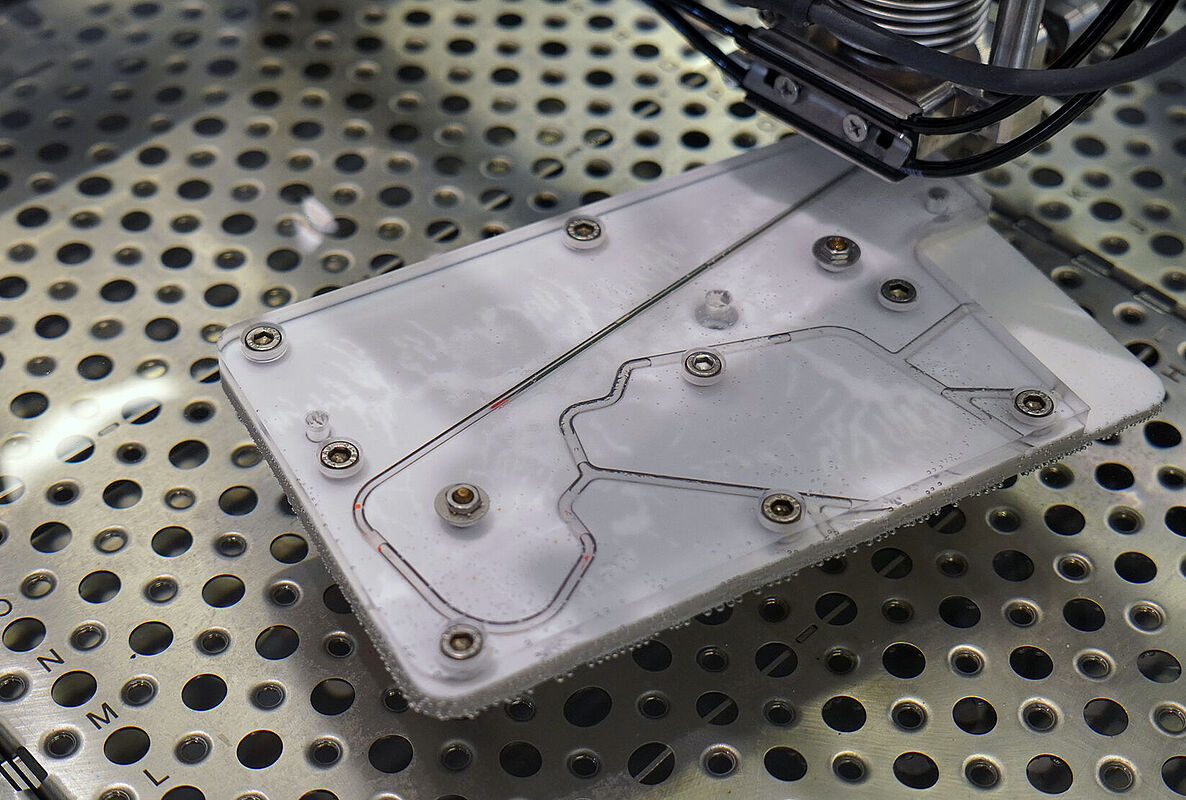
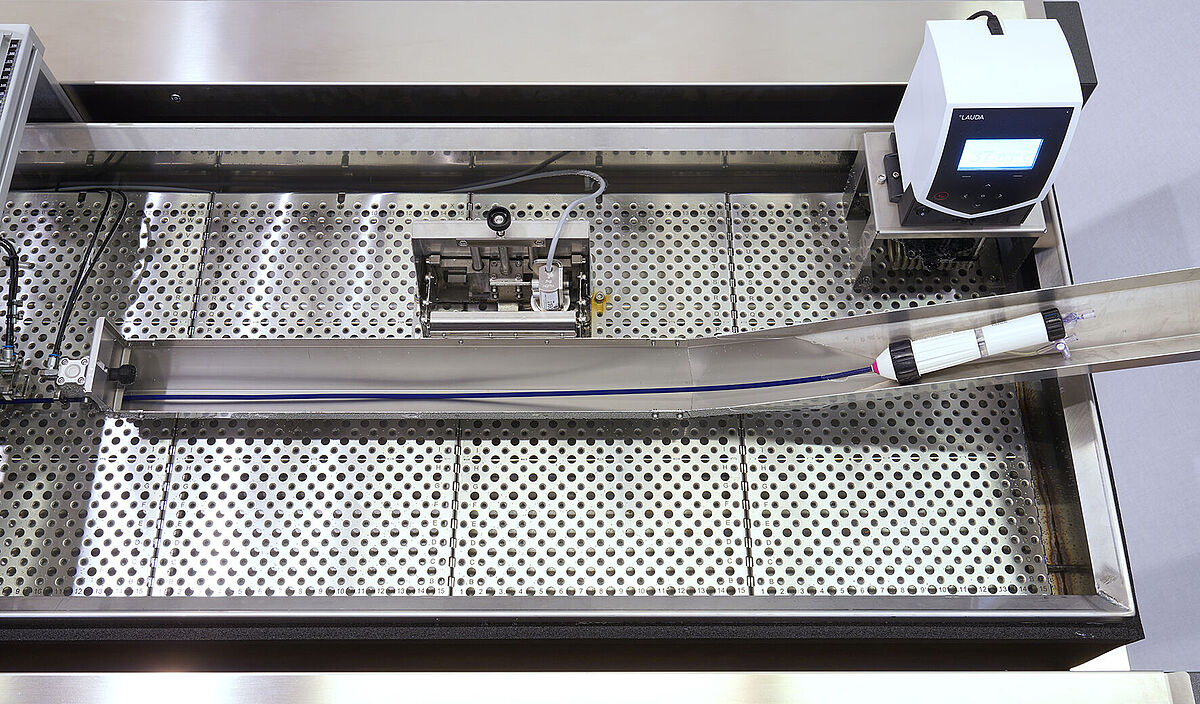
A realistic test setup also includes horizontal positioning in accordance with the patient’s body position, a true-to-scale setup, and testing under fluid-based conditions, such as in a medium (fluid) bath or using fluid-filled tubing models.
What matters in practice:
- Feed and rotational motion must be synchronous and reproducible (push & twizzle).
- Backward slipping of the specimen must be reliably prevented, even when navigating curves.
- Different clinical scenarios must be flexibly represented by individually configurable test paths (feed sections).
- The setup should be realistically dimensioned and arranged horizontally to ensure transferability to clinical practice.
- Materials and environmental conditions must realistically simulate body-like influences, for example through a medium bath or fluid-filled tubing models.
- Mechanical and manual influences that do not correspond to clinical use must be avoided.
- The catheter or guidewire must be inserted without any damage by the gripping mechanism.
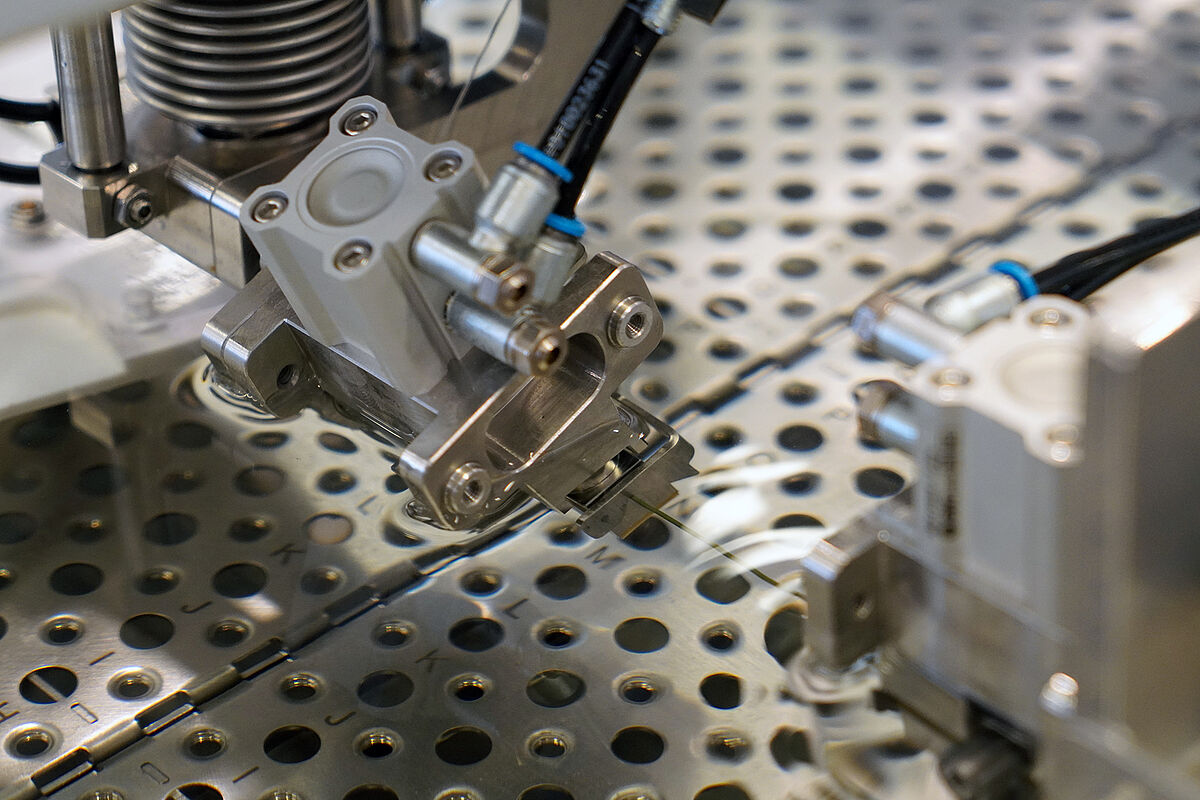
Modular: Test setup can be designed flexibly and reproducibly
Different catheters, guidewires, and applications require adapted test setups. Depending on the application, not only the test setup but also the test procedure itself changes. A rigid testing system can only accommodate these varying requirements to a limited extent.
A modular design allows for significantly better implementation of simulated use and targeted adaptation of test setups, for example, through configurable test steps (feed sections). However, this flexibility must not compromise reproducibility: If an application scenario is repeated later, the test setup must be able to be reproduced identically. Only then will results remain comparable, even across different tests, batches, or time periods.
What matters in practice:
- The test setup must be adaptable to the specific clinical scenario, including the required geometries, feed paths, and media conditions.
- Reconfigurations should be quick and straightforward.
- The test area must be large enough to accommodate the handling of larger models or the parallel testing of multiple models.
- The setup must be clearly defined and reproducibly reconfigurable, for example through precisely positionable components.
- Test sequences should be individually configurable and adaptable to different requirements.
- Testing software should save setups and processes and allow them to be retrieved to save time and avoid deviations.
- Good accessibility and ergonomic adjustability facilitate routine tasks and reduce operator influence.

Precise: Measurement without external influences
It is crucial that only the forces reflecting the behavior of the catheter or guidewire are measured. All other influences that systematically distort the results must be eliminated. These include mechanical influences, operator influences, and environmental conditions.
What matters in practice:
- Friction effects caused by gravity, guidance, or contact with the test medium must be consistently minimized or compensated for; see also friction force compensation.
- The specimen must be securely and reproducibly fixed without slipping or being damaged.
- Precise centering in the measurement axis is required to avoid incorrect loading.
- Temperature and environmental conditions must be kept constant and defined.
- Automated and standardized processes help to minimize operator influence and keep test conditions consistently constant.
- Settings such as clamping force, positioning, and process parameters must be reproducibly retrievable at all times.
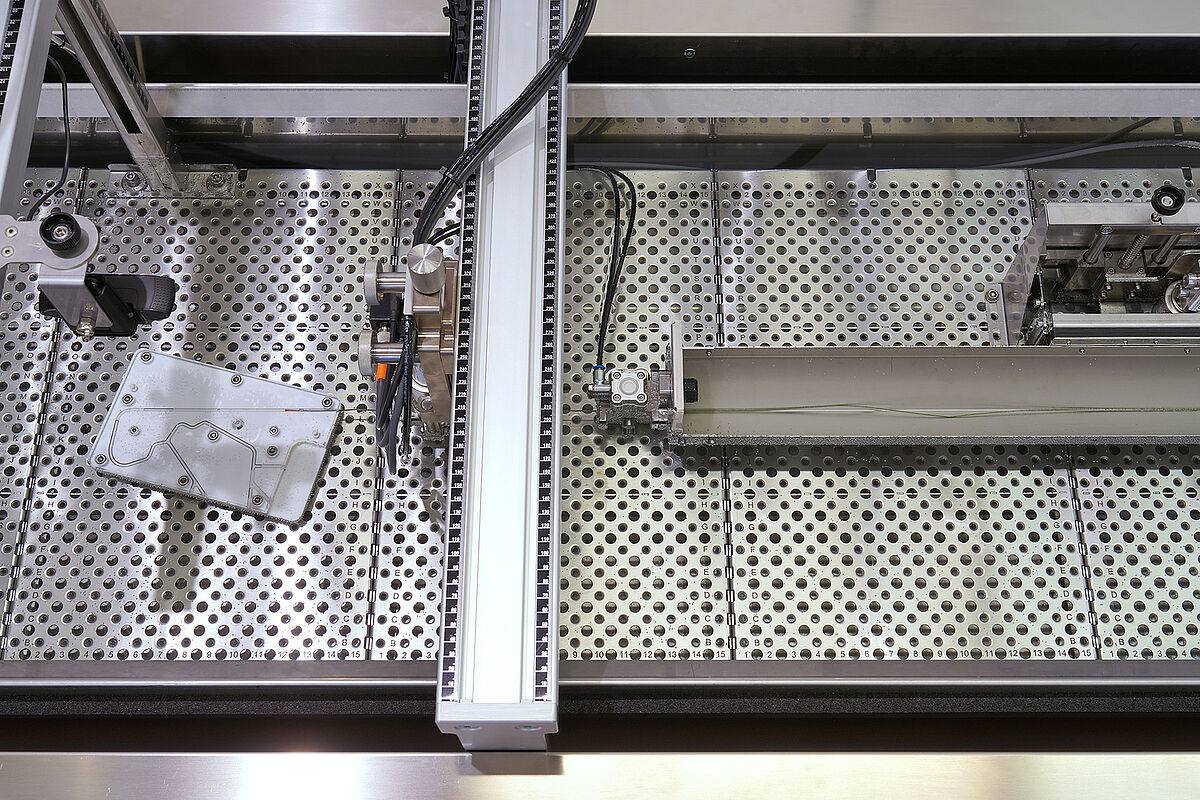
How simulated-use catheter testing according to ISO 25539-1/-2 is performed:
In horizontal simulated-use testing, a catheter, guidewire, or delivery system is advanced through a defined test setup that replicates its intended clinical use. Depending on the requirements, the test is performed in a medium (fluid) bath, in a dry environment, or using fluid-filled tubing models. Feed, withdrawal, and rotational movements are combined while the resulting forces acting on the device are recorded. Relevant performance characteristics according to ISO 25539-1/-2 include:
- Trackability
- Pushability
- Torqueability
- Crossability
- Withdrawability
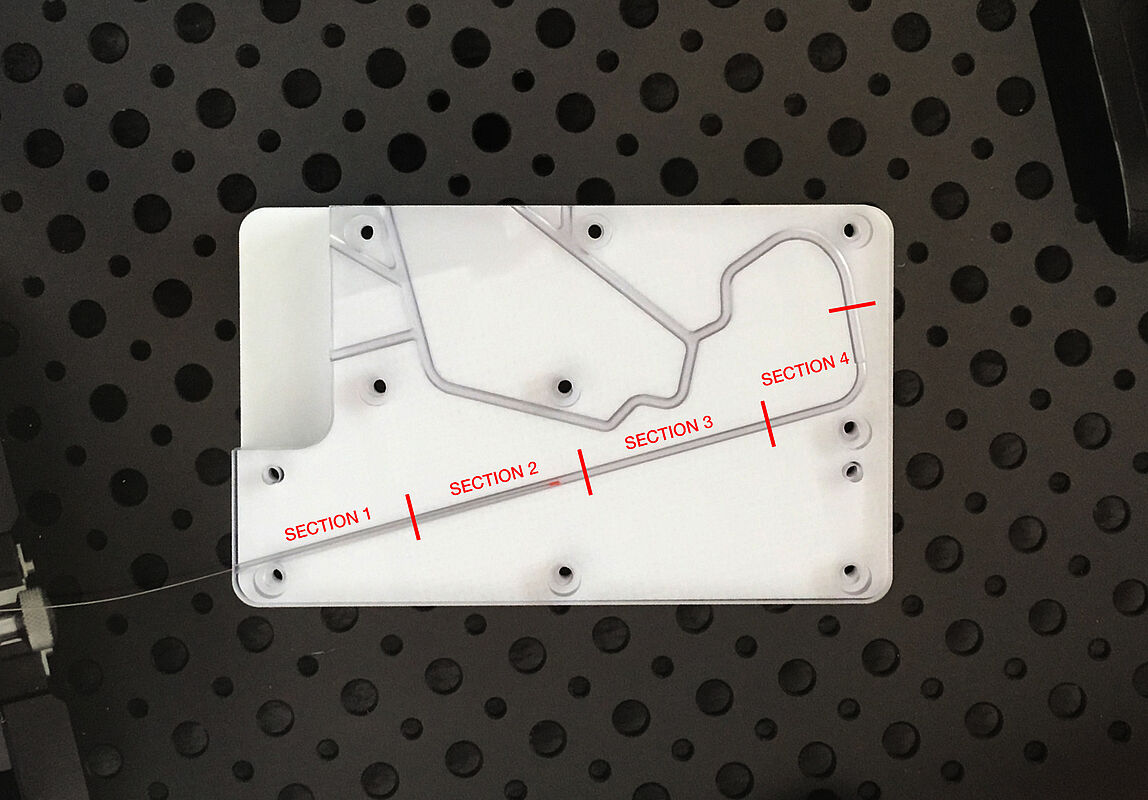
For this purpose, individual test paths referred to as feed sections, are defined through which the catheter or guidewire is fed sequentially. The parameters travel, direction of motion, time, angle, and twizzle rotation direction can be configured individually for each section.
Meaningful results require the medium, temperature, guidance, clamping, and motion profile to remain consistent between tests.

Key advantages & features
Modular system design
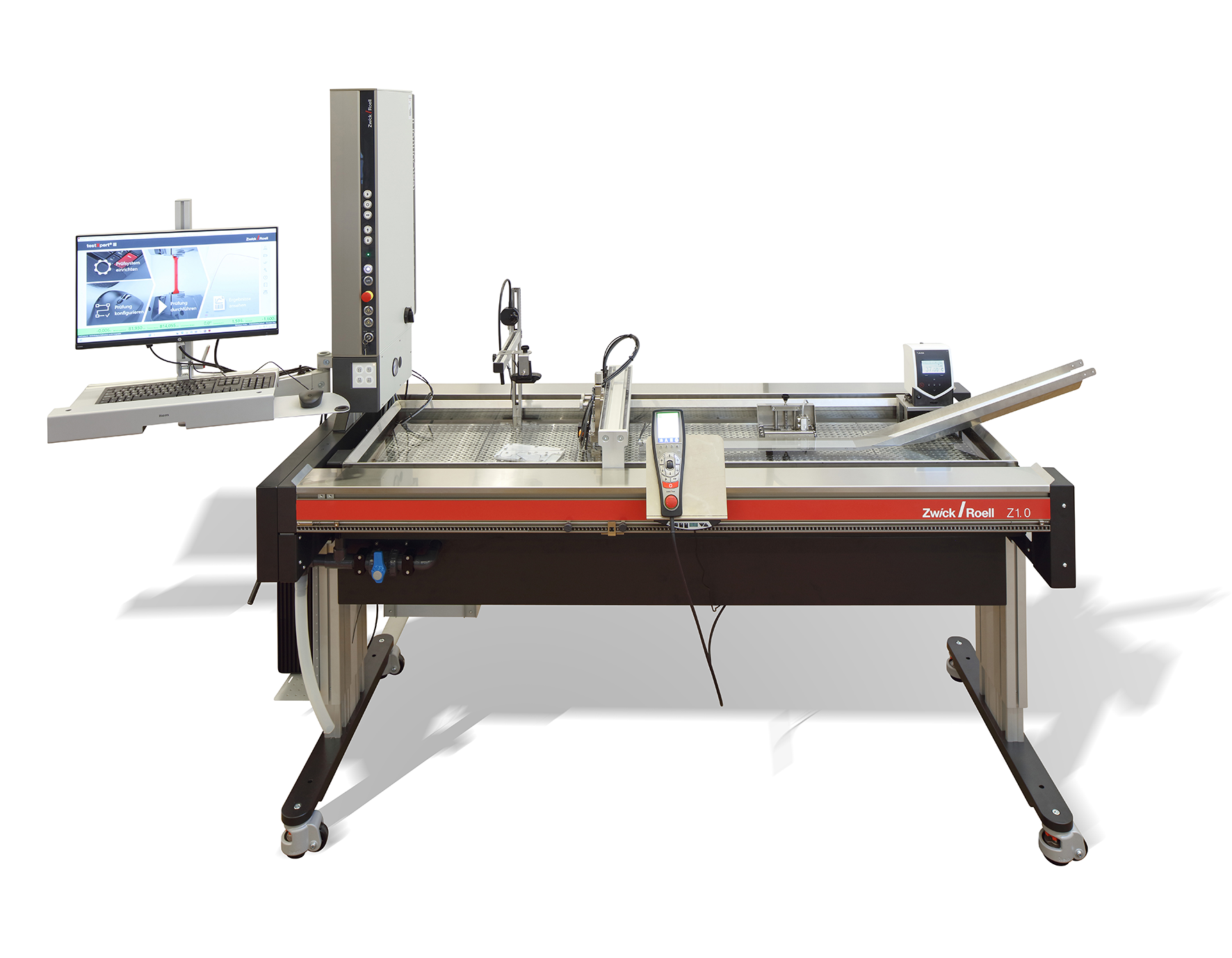
- Horizontal test frame with removable mounting plates for flexible and reproducible positioning of models (using rows and columns with alphanumeric labels)
- Flexibly adaptable holding and guidance system, optional medium bath and heating system
- Salt-resistant materials enable testing under conditions similar to those in the human body while providing high durability
- Feed sections individually configurable via software
- Easy retrofit capability for future testing tasks
Motion mechanics: Push & twizzle gripping system for simultaneous rotary and feed motion
- Accurately replicates real-world engagement
- Gripper mechanism prevents backward slipping
- Stable motion even in complex geometries
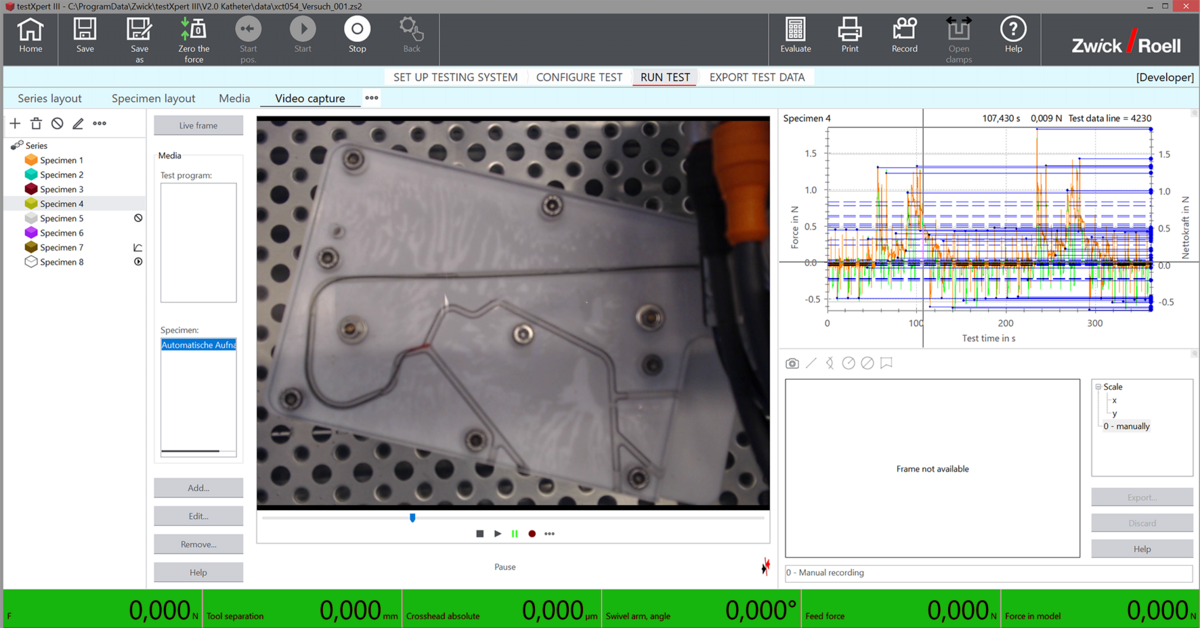
- Motion sequence can be monitored live in the testing software
Friction force compensation through innovative holding and feed unit
- Compensates for the effects of dead weight and friction, preventing measurement result distortion
- Enables reproducible and comparable test results
- Provides good accessibility and ease of operation
Clamping and guidance
- Secure, slip-resistant fixation
- Damage-free clamping
- Automatic centering for correct specimen feeding
- Defined and reproducible guidance
- Adjustable clamping forces for different diameters
- Height-adjustable specimen feed
Ergonomics and hygiene
- Electric height-adjustment for ergonomic operation
- Entire system is mobile thanks to swivel casters
- Easy-to-clean system
- Removable, corrosion-protected mounting plates
What else makes the difference
- When multiple operators are involved, the intuitive software ensures standardized workflows, reducing operator errors and training effort.
- Traceable documentation according to FDA 21 CFR Part 11 via the software supports certifications
- Time-synchronized video recordings increase transparency and traceability

testXpert testing software - reduces the workload in everyday testing and delivers reliable results
Predefined test programs and saved, sample-specific procedures significantly reduce manual effort in daily testing. This allows tests to be started more quickly and repeated reproducibly. As a result, consistent and traceable testing processes are easy to achieve.
- Quick start with the pre-parameterized test program for catheter testing according to ISO 25539-1/-2.
- All parameters, settings, and motion sequences are stored in sample-specific test programs, allowing identical test conditions to be reproduced quickly and reliably for recurring tests, saving valuable laboratory time.
- Individually configurable feed sections enable precise adaptation to different specimens and application scenarios.
- Automated processes reduce operator influence and ensure consistently high result quality.
- Structured presentation and evaluation of the test results facilitate comparison across multiple tests.
- Support with documentation and traceability according to FDA 21 CFR Part 11, for example in the GMP environment or for auditable processes.
- Time-synchronized video recording, even in the medium itself, enables complete traceability of the testing process.

Typical applications
The primary area of application is the testing of interventional medical devices under physiologically relevant conditions, where handling, force transmission, and device behavior in clinically relevant scenarios need to be evaluated.
- Development and optimization of catheters with regard to trackability, pushability, and withdrawability
- Comparison of different guidewires in defined vessel geometries
- Testing of delivery systems for transcatheter heart valve implantation under physiologically relevant conditions
- Verification of modified designs under different temperature and media conditions or with more complex feed paths
- Quality assurance for routine test tasks with reproducibly configured setup
Catheter testing FAQs
ISO 25539-1/-2 defines requirements for interventional devices such as catheter systems (ISO 25539-1) and stent systems (ISO 25539-2). In addition to design and safety requirements, the standard also specifies test methods under conditions that are as realistic as possible. The standard requires compliance with the instructions for use (IFU).
A key element is simulated use. To evaluate the actual behavior of a device in a clinical setting, the standard defines which characteristics must be assessed.
Simulated use describes laboratory testing under conditions that replicate real-world clinical use as closely as possible. This includes defined vessel geometries, realistic environmental conditions, and typical motion sequences during an intervention.
Catheters or guidewires are advanced through artificial vessel models and subjected to the same loads encountered in actual clinical use. This makes it possible to evaluate how the system responds to advancement, rotation, friction, and resistance.
The benefit: Rather than measuring individual properties in isolation, simulated use evaluates the interaction of all influencing factors, that is, the behavior that ultimately matters in clinical use.
Typical characteristics include:
- Trackability - Measurement of the feed forces required to safely guide a device through a vessel model.
- Pushability – Measurement of how effectively feed forces are transfered to the device tip.
- Crossability –Measurement of the forces acting on a device as it passes through narrowed or stenotic vessel lesions.
- Withdrawability – Forces required to withdraw a device in a controlled manner.
- Torqueability – Measurement of how precisely a rotational movement is transmitted from the handle end to the tip.
Push & twizzle describes the simultaneous combination of feed (push) and rotational (twizzle) motion. In clinical practice, this type of movement is used when catheters must be navigated through vessel curves, bifurcations, and narrow passages.
In simulated use, these real-world procedures are replicated under laboratory conditions. This demonstrates that linear advancement alone is not the decisive factor. Rather, it is the coordinated interaction of feed and rotation that is critical. This is exactly where the challenge lies in testing: Without suitable test mechanics, the specimen cannot be guided reliably, may slip back uncontrollably, and forces may be transmitted inaccurately. A test setup that securely holds, rotates, and advances the catheter simultaneously is therefore essential. This reliably prevents backward slipping while accurately replicating realistic motion sequences.
Clinically similar test conditions are created by the targeted replication of real-world application situations in the test setup:
- The test setup is implemented horizontally and in a realistic size to reflect the body position.
- Application-specific vessel models are used, incorporating typical geometries such as vessel curves, bifurcations, or stenoses, depending on the intended application.
- Media and temperature conditions are set in a defined manner, for example by means of a medium bath or fluid-filled tubing models.
- The measurement is designed to capture only clinically relevant forces. Interference from friction, dead weight, or components of the test setup is specifically reduced or compensated for.
- Different clinical scenarios are simulated through varying motion sequences such as advancement, rotation, and withdrawal, as well as combinations thereof. Individual feed sections can be defined within a test for this purpose.
Friction is a key measurement parameter because it reflects the catheter behavior within the vessel. It must therefore not be distorted by additional friction effects introduced by the test setup, for example by clamping and guidance components or by the dead weight of the catheter or guidewire.
The purpose of friction force compensation is to specifically reduce or compensate for these non-clinically relevant influences. This ensures that only the forces actually resulting from the interaction with the vessel model are measured. Only under these conditions can reproducible results be achieved that are transferable to clinical applications.
A reproducible test setup requires that both the test procedure and all relevant settings are clearly defined, documented, and readily accessible at any time. ZwickRoell achieves this through the following components:
- Test programs in the testXpert testing software save test sequences independently from the specimen and can be recalled and executed identically at any time.
- Machine parameters and settings are saved together with the test program and also automatically restored.
- The mounting plates with clearly labeled rows and columns enable the precise placement of models and components in the exact same position.
- Integrated video recordings enable the test setup to be visually verified at any time, ensuring consistency with previous tests.
Traceability is achieved when it is clear for each test "When does who do what, why, and who is responsible?" This information must also be available at any time afterwards.
The testXpert testing software supports this transparency by systematically recording and clearly assigning all relevant parameters, processes, and measurement results. Additionally, time-synchronized video recordings above and below water enable visual documentation of the entire testing process. This allows each step to be traced in chronological order with the measurement data.
Specifically for the pharmaceutical and medical engineering industries, this traceability is implemented through the "Traceability" software option, which is designed to meet requirements such as FDA 21 CFR Part 11. This allows testing processes to be not only transparently displayed internally, but also reliably documented for audits and regulatory requirements.


Downloads
- Industry Brochure: medical industry PDF 6 MB
- Product Information: Horizontal Testing Machine (Simulated Use) PDF 519 KB
- Product Information: Traceable and Reliable Test Results in Accordance with FDA 21 CFR Part 11 PDF 1 MB
- Product Information: Qualification of ZwickRoell Testing Systems PDF 1 MB
