
ISO 11608-1 Dose accuracy & functional safety of pen injectors
Dose accuracy determines effectiveness and patient safety.
In practice, however, ISO 11608-1-compliant testing places high demands on users: the last drop must be accurately measured, a wide variety of pen geometries must be reliably tested, reproducible results must be achieved over many cycles, and operator influence must be minimized. This applies both to determining the dose accuracy of the finished pen and to tests without medication during device manufacturing.
ZwickRoell offers comprehensive testing solutions for pen mechanics and dose accuracy – from high-precision volume measurement with medications and dose determination without an active ingredient to networked pen injectors with connectivity modules. Intelligent specimen grips, media bath interchangeable parts, optical and acoustic monitoring systems, and automated robotic solutions ensure maximum process reliability, scalability, and complete traceability with testXpert.
ISO 11608-1 – Manual testing ISO 11608-1 – Semi-automated Full automation ISO 11608-1 - without medicinal product Pen testing with connectivity module Request a consultation
ISO 11608-1 FAQs
ISO 11608-1 specifies the general requirements and test methods for injection systems that enable the dosing of liquid medications. It covers, among other things:
- Functional reliability
- Accuracy of dose delivery
- Mechanical strength
- Handling
- Temperature and drop tests
These tests assess functional stability, i.e., the pen's ability to maintain its primary functions (dose accuracy and mechanical performance) over a specific period or number of actuations. The necessary tests must be defined as part of the risk analysis.
The focus is on dose accuracy, which, as the primary performance function of a pen, significantly determines its clinical efficacy and patient safety. This is normally performed on the finished product, consisting of the pen, cartridge, and needle.
- For the test to determine the dose accuracy according to ISO 11608-1, the pen must be prepared for injection according to the operating instructions (e.g. screwing on the needle, removing the air bubble, priming).
- According to the standard, different dose amounts must be set on the pen, expelled, and weighed precisely in order to determine the volume. The standard specifies the statistical evaluation and also contains tables with the tolerance factors.
- The test to determine the dose accuracy is performed under ambient conditions immediately after removal from preconditioning.
- In addition, the pen must be subjected to a life cycle test for all functions. The number of tests must reach 1.5 times the maximum number of actuations expected during its lifetime.
Learn how ZwickRoell automates the lifecycle test according to ISO 11608-1, eliminates operator influence, and thus creates a robust basis for design verification and quality assurance testing in our blog post “Pen Lifecycle Test.”
Manual testing system – A cost-effective entry point for R&D and low-volume testing
Manual testing of dose accuracy according to ISO 11608-1 offers an economical and practical solution for evaluating injection pens. It is particularly suitable for applications where low investment costs, ease of use, and robust test results are priority – especially in the early development phase and for design comparisons, the system enables fast, reliable results.
The pen is manually prepared according to the operating instructions, and the desired dose is set. The specimen is then inserted into the holder, and the injection is triggered by the testing machine. The dispensed volume is determined with high precision and directly documented in testXpert. Simultaneously, the actuation force is recorded, allowing for the evaluation of both dose accuracy and mechanical performance.
According to the requirements of ISO 11608-1, the test must be repeated with different dosage strengths.


Checklist: What really matters when testing pen injectors
The following checklist shows the critical success factors of standards-compliant pen testing according to ISO 11608-1 – and how ZwickRoell systematically ensures these.
✅ Is operator influence minimized and operator error consistently eliminated?
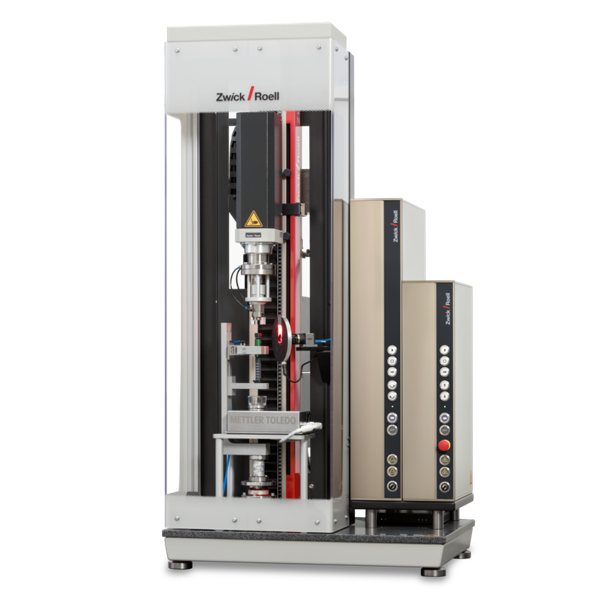
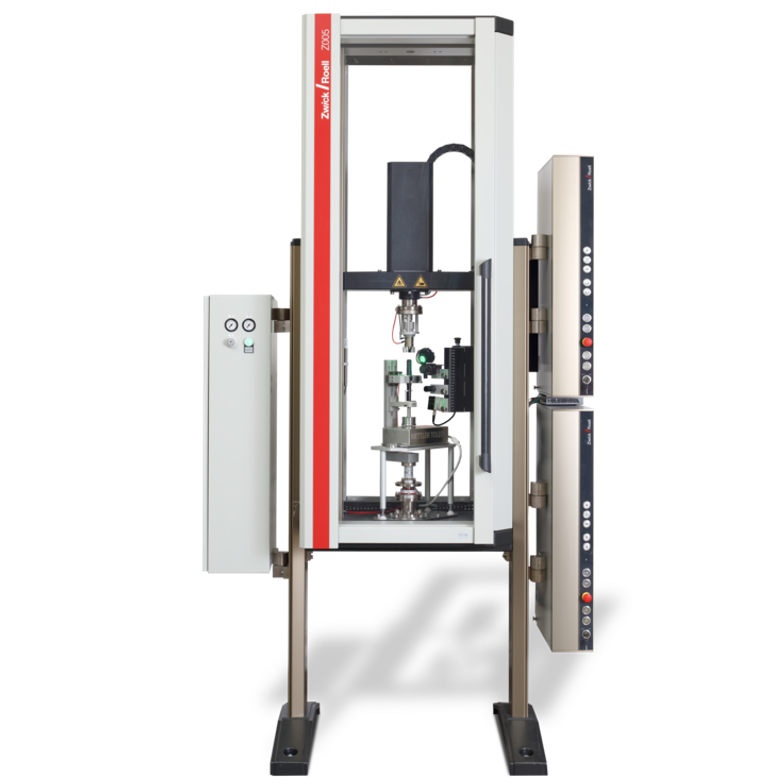
ZwickRoell pen testing system for tests to ISO 11608-1 –semiautomated
Yet, as specimen throughput increases, regulatory requirements grow, or operator influence must be further reduced, purely manual testing reaches its limits. Reproducible, standardized procedures are crucial, especially during validation, design freeze phases, or in ongoing quality control during production.
This is where the semi-automatic pen testing system based on the zwickiLine and AllroundLine with torsion drive comes into play.
It combines the flexibility of manual testing with significantly higher process reliability and efficiency. Dose setting, dose delivery, and volume measurement can all be performed on a single specimen in a single, continuous test sequence. This reduces the number of specimens required, accelerates the testing process, and ensures consistent, reliable test result.

Scope of services for the semi-automated pen testing system
- Measurement of the pull-off force or torque of the safety cap
- Measurement of the torque and angle progression during dose setting
- Measurement of actuation force / travel for dose delivery
- Measurement of the weight of the liquid and determination of the volume of the dispensedmedication, including the last drop
Optional:
- Measurement of the temperature and humidity in the test area
- Optical digit recognition in dose window
- Color recognition on specimen
- Handheld scanner and customized specimen jaws for higher process reliability against mix-ups according to Poka-Yoke
- Daily Check for torsion / scale / force
- Click detection via microphone
The testing procedures of the two test axes can be modified and combined as desired, and can therefore be flexibly adapted to their testing requirements according to risk analysis.
The result is:
More automation, higher reproducibility, and maximum process reliability – while maintaining a controlled level of investment.
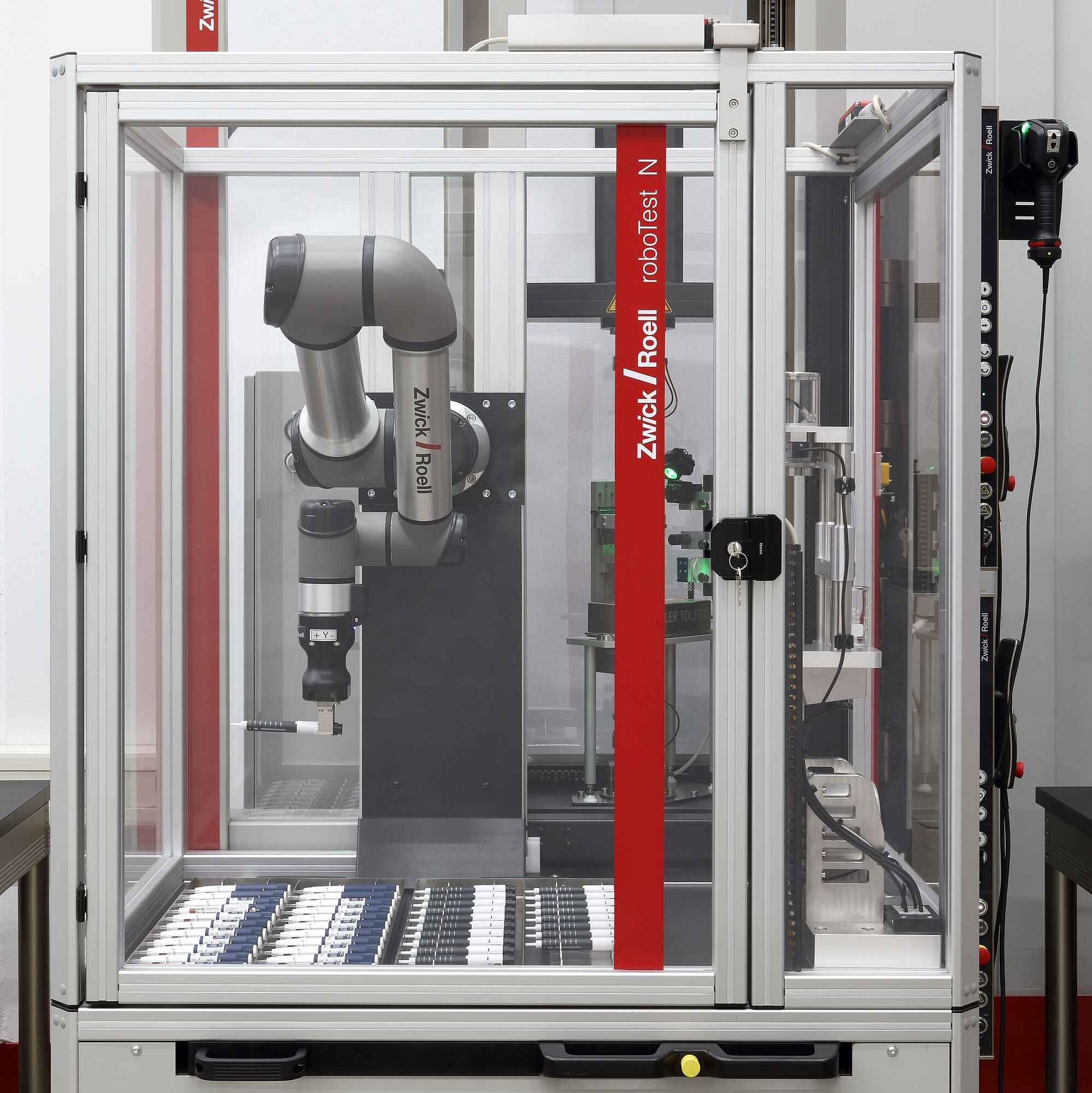
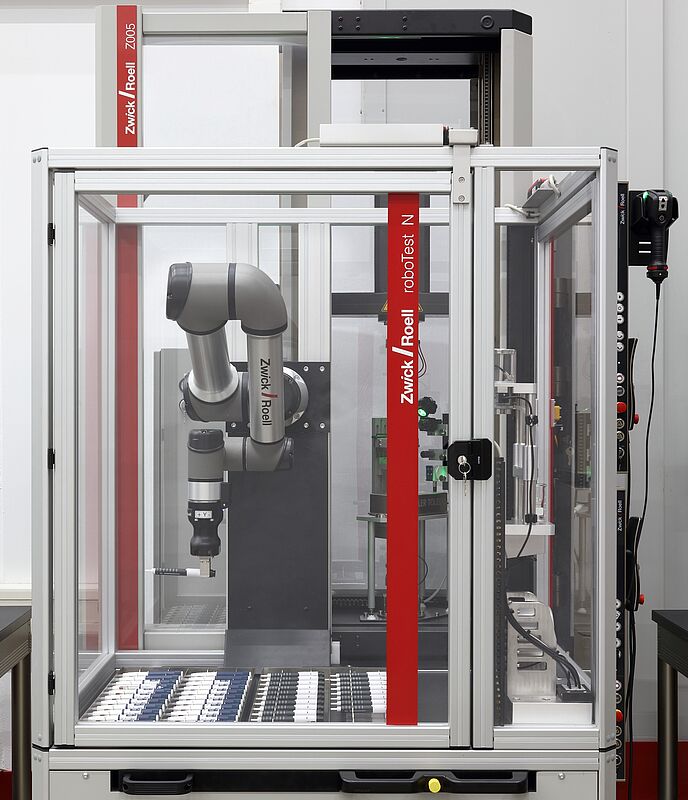
The time required to perform these tests, particularly in life cycle testing, combined with increased specimen volumes, can make full automation with our robot testing system roboTest N worthwhile.
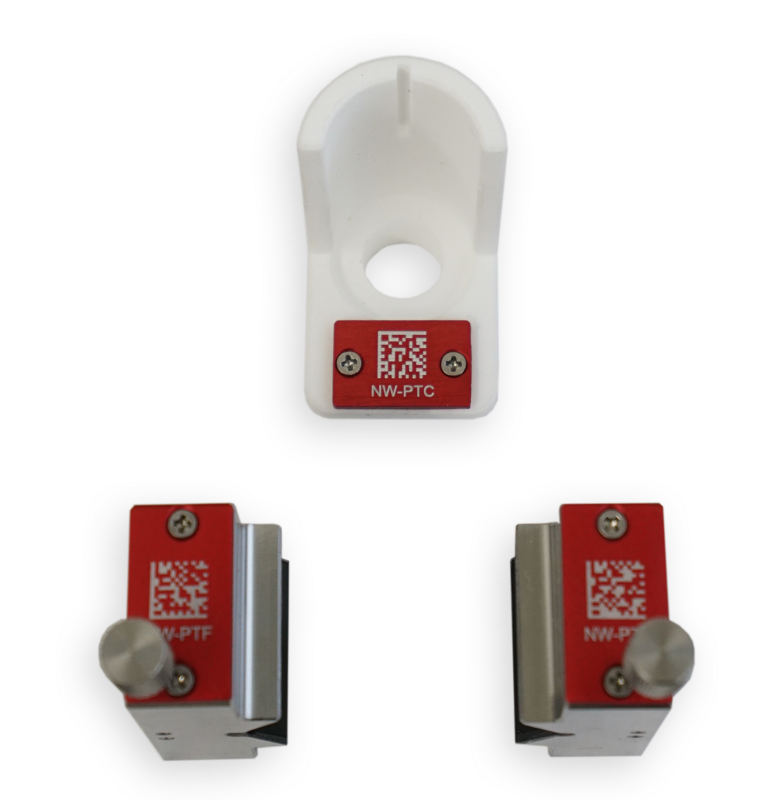
Pen-specific inserts based on the Poka-Yoke principle
The pen is inserted in the pneumatic grips manually or automatically using a robot. The dose window can be aligned toward the camera manually or using pen-specific inserts.
The specimen grips have interchangeable jaw inserts to prevent the pen from slipping, even when using the smallest possible gripping force.
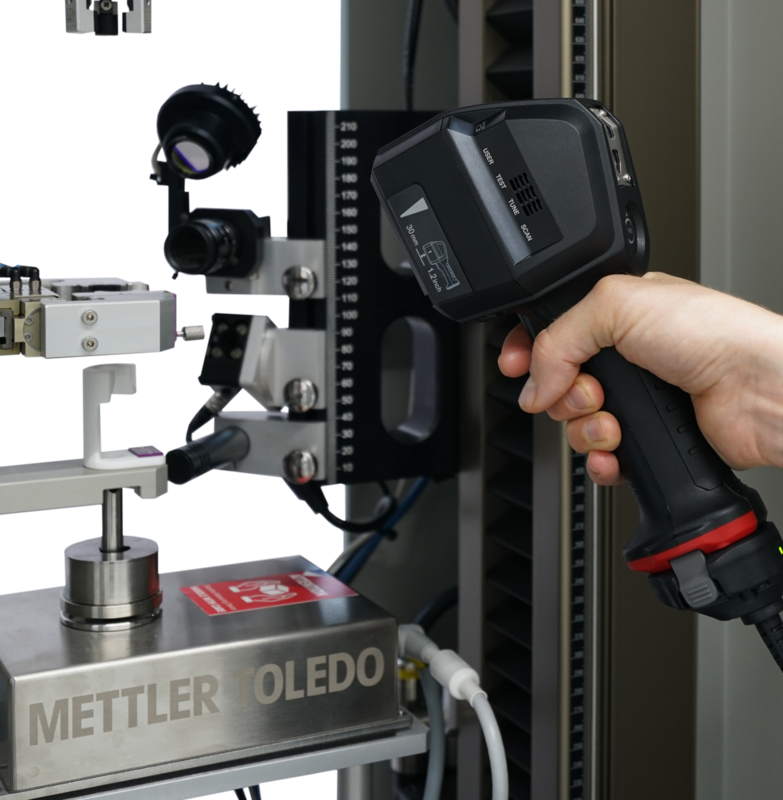
With the use of mistake-proof, injector-specific interchangeable parts based on the Poka-Yoke principle (error prevention through design), use of the intended specimen grip insert for the appropriate specimen is guaranteed. When combined with a handheld scanner that reads the unique markings of the interchangeable parts, you can ensure that the correct interchangeable parts are mounted in the right place. The test can only be started after this has been confirmed.

Optical characters and number recognition
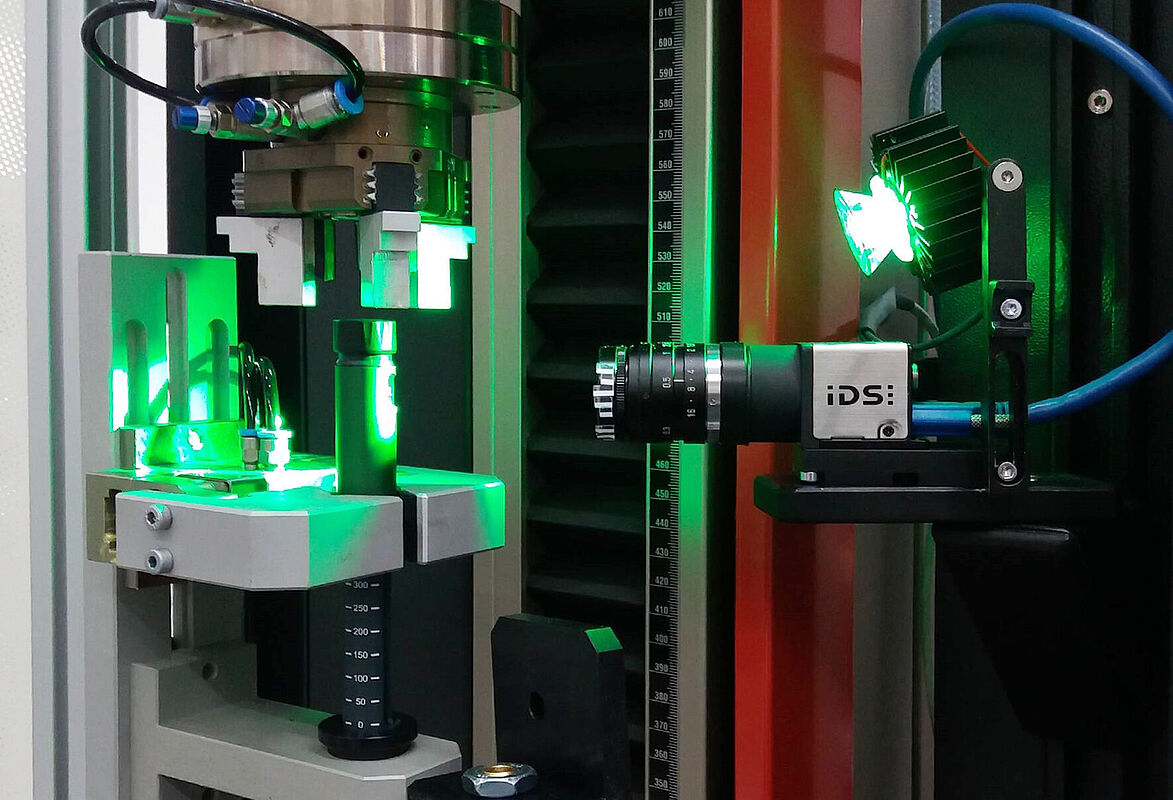
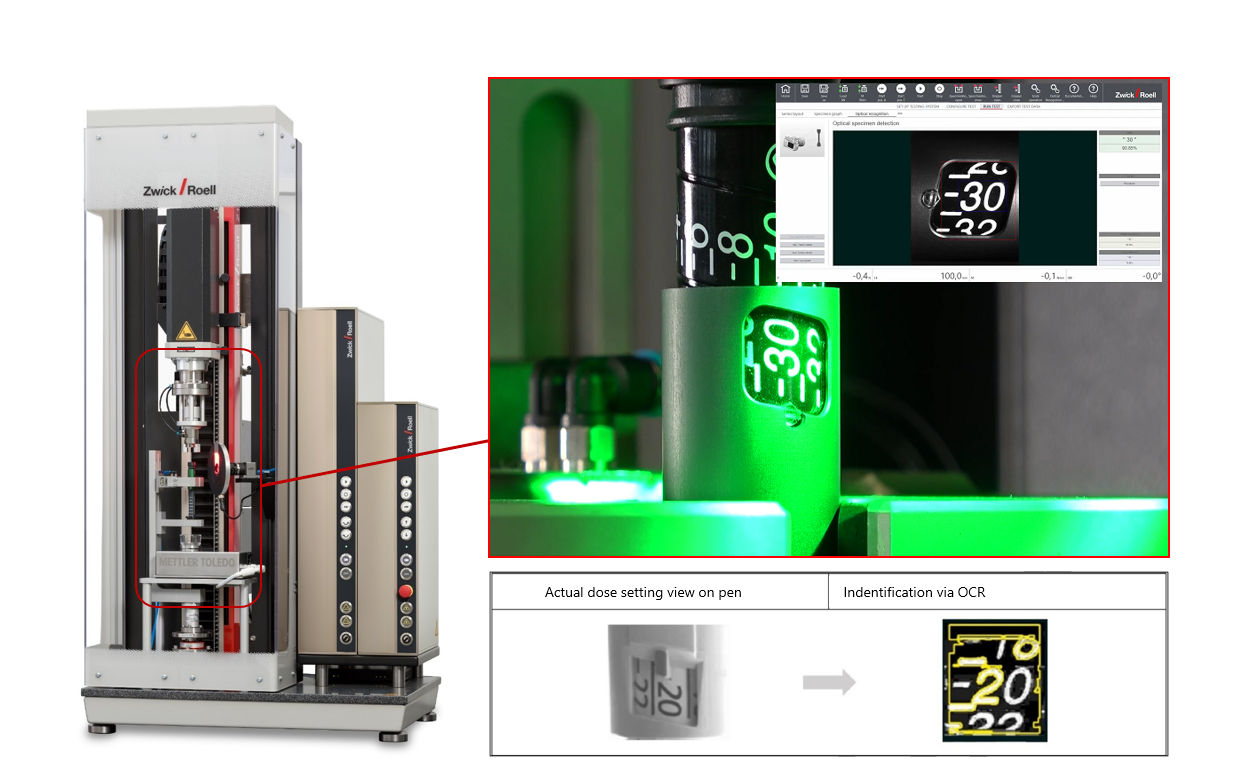
The dose set on the pen can be checked visually by the operator or automatically using a camera system. To meet the individual test requirements of the pharmaceutical industry, optical recognition of numerical values is integrated in testXpert. The two independent evaluation methods (image comparison and contour detection) provide maximum process reliability. Teaching of comparison images also takes place through an automated process:
- For image comparison, an image library covering the entire numerical range is created in testXpert III for each pen type.
During the test sequence, an image is captured at the desired point in testXpert III and compared to the library using pattern matching. If a match is found, the result is output as a percentage. - In parallel with the image comparison, optical character recognition determines the number in the captured image. This result is quantified and output as a percentage.
The result with the closest match is used for the evaluation. The value must not fall below a certain minimum value.
Click detection via microphone
Optionally, a lavalier microphone integrated into the specimen grips can detect pen click sounds, such as those occurring at the start and end of the injection (acoustic feedback), ensuring reliable and operator-independent click detection. Click detection is fully integrated into the test sequence for dose accuracy according to ISO 11608-1.
Color recognition on specimen
The visual color recognition system compares the color on the specimen to the color stored in the sequence or at the beginning of the test.
- Some pharmaceutical pen systems have the same external geometric dimensions but different dose deliveries. These pen systems differ only in the color of the label or outer casing. With this hardware unit, testXpert checks before the start of the test sequence whether the correct pen has been inserted with the corresponding dose unit.
- In some pen systems, a color change in the plunger window indicates that the mechanism has been mechanically released for dose delivery. testXpert III checks during the sequence whether activation has occurred.
High-precision dose accuracy according to ISO 11608-1 – Measurement of the last drop
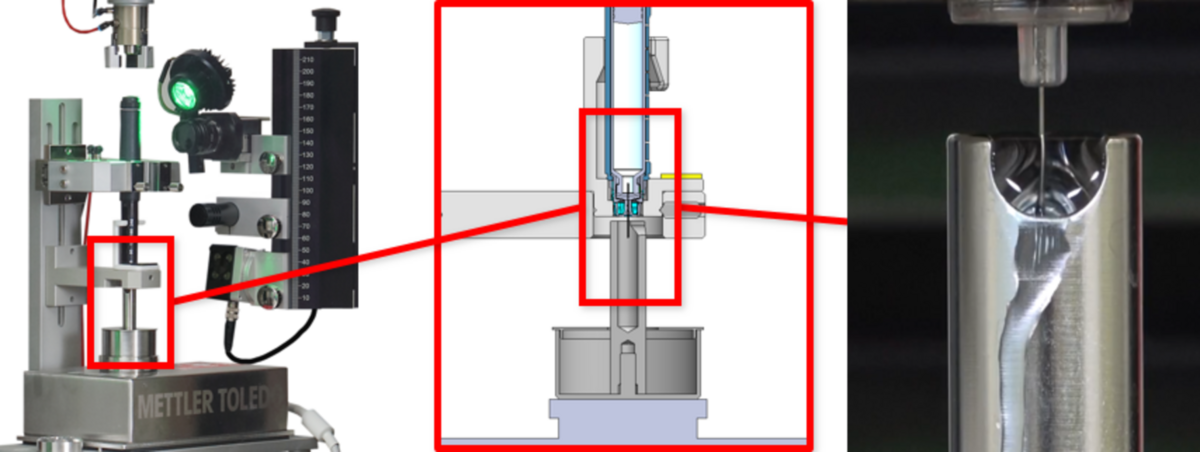
To ensure that even the last drop can be measured on the high-precision scale, the needle tip is immersed in a measuring fluid contained in an antistatic collection vessel. The liquid in the beaker should be the same liquid or have the same density as the product being tested.
Since the needle in pen systems is fixed and does not move out of the injector, as is the case with autoinjectors, the needle can remain in the liquid permanently.
The testing machine turns the dose knob to the preset dose level and measures the force and torque generated during this process. The force required to trigger the subsequent injection is also determined. The amount of liquid dispensed is determined by weighing.
During the test sequence, the scale value is zeroed fully automatically before each dosing procedure to determine the dispensed volume. The test can then be continued with a new dosing value as specified in the ISO 11608-1 standard.
Fully-automated pen life cycle testing with robotic testing system roboTest N
With the semi-automatic pen testing machine, the operator inserts the pen into the testing machine, closes the safety door, and starts the test. All additional test steps are then carried out automatically by the machine.
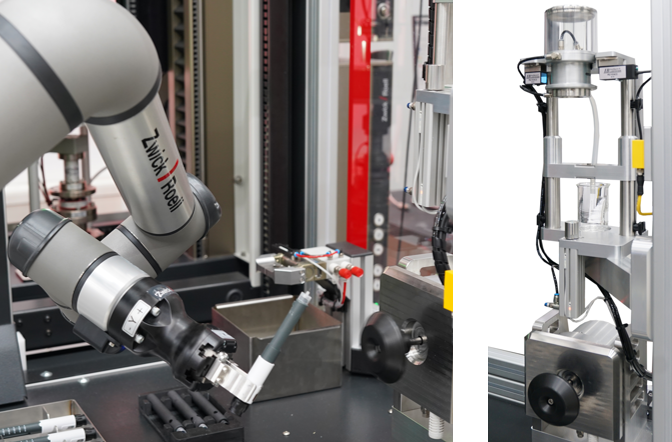
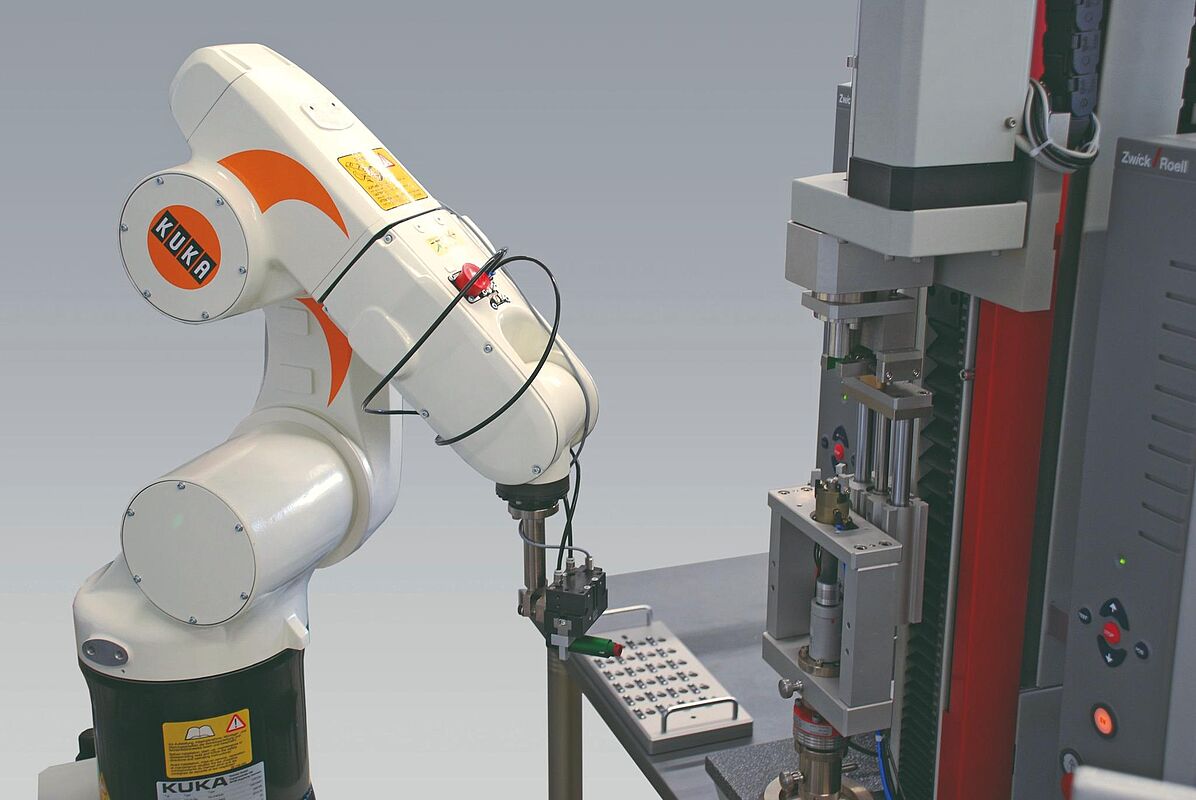
The time required to perform these tests, particularly in life cycle testing, combined with increased specimen volumes, can make full automation with our robot testing system roboTest N worthwhile. The system automatically loads the pen testing system.
With one magazine filling, you can typically automatically test 30 insulin pens or pen injectors. By automatically changing the magazines, you have the ability to test up to 150 pens. The use of multi-tier storage systems with a drawer mechanism allows the number to be increased even further. Standardized or custom magazines (trays) can be used for this purpose.
The testing assistant roboTest N can be easily adapted to changing test requirements with a high level of flexibility, without requiring special programming knowledge. With the help of our autoEdition3 automation software, the insulin pens are fed from the corresponding magazine into the testing machine and then the test is started. Incorrect test results caused by operator influences are therefore eliminated. Our solution makes the test process significantly more efficient thanks to increased specimen throughput.
The mobile docking system allows switching to manual test mode at any time.
The testXpert testing software together with the Expanded Traceability option to FDA 21 CFR Part 11 make it possible to create documentation for the testing process that is complete and tamper proof.
The automated testing system can also be supplemented with a priming station, which enables the removal of the air bubble and the priming of the pen directly before the test, thus making it possible to reproducibly demonstrate true life cycle behavior.

Function tester for pen mechanics (pen testing without medication)
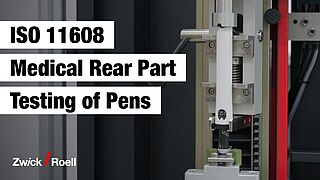
However, since pen injector manufacturers must also verify dose accuracy, and the drug product is often unavailable or prohibitively expensive at this stage of development, ZwickRoell has developed a function tester that, in addition to performing all mechanical tests on the drive unit, enables the indirect determination of dose accuracy (in accordance with ISO 11608-1) without the need for a cartridge or medicinal product.
This test examines only the mechanical drive unit of the pen. The function tester measures the plunger rod travel during dose delivery. The delivered volume can then be directly determined from the plunger movement and the known cross-sectional area.
The function tester is primarily used by plastics and device manufacturers for final inspection after assembly, as well as in research and development to determine the service life of reusable pen systems.
This ensures that the set dose corresponds exactly to the mechanical feed rate – because too low or too high a dose can directly endanger patient safety.
This testing system also offers advantages for the pharmaceutical industry, since testing pens/autoinjectors is costly, primarily due to the expensive medication. Significant savings can be achieved by testing the mechanical components of the pen/autoinjector separately, without medication. This testing system makes it possible, since it can also simulate the medication's viscosity and volume. While this may not replace all regulatory-required tests, it can significantly reduce the number required

Testing of pens with connectivity module
For networked pen injectors, testing mechanical dose accuracy alone is insufficient: the reliable transmission of dosing-relevant data to apps, cloud systems, or clinical information systems is also crucial. ZwickRoell enables the combined testing of mechanical function and digital data transmission – including the analysis of signals, timestamps, and event data. This ensures that dosing information is correctly captured, transmitted, and documented.
Learn more about pen testing with the connectivity module


Downloads
- Industry Brochure: medical industry PDF 6 MB
- Industry brochure: Testing Solutions for Injections Systems PDF 3 MB
- Product Information: Function Tester for Pen Mechanics PDF 3 MB
- Product Information: Traceable and Reliable Test Results in Accordance with FDA 21 CFR Part 11 PDF 1 MB
- Product Information: Qualification of ZwickRoell Testing Systems PDF 1 MB


