
ASTM D638 Tensile Properties of Plastics
The tensile test according to ASTM D638 is one of the most commonly used methods for evaluating the mechanical properties of thermoplastics and thermosetting molding compounds.
In practice, however, significant differences in tensile strength, modulus, yield stress, and elongation are often observed between laboratories, operators, and testing systems. The cause is rarely solely due to the materials testing machine. Deviations in specimen preparation, specimen measurement, extensometer selection, conditioning under environmental conditions, selection of specimen grips, and test speed can influence the test results.
ZwickRoell helps laboratories minimize the scatter of test results through coordinated testing systems, intelligent software, automated workflows, and industry-leading technologies for strain measurement.
Common sources of error Test procedure Areas of application FAQsDownloads Request a consultation
ASTM D638: Key points
- ASTM D638 describes the uniaxial tensile test on reinforced and unreinforced plastics to determine tensile stress, elongation, tensile modulus, tensile strength, yield point, and breaking point, and optionally Poisson's ratio.
- Types of test specimens to be used for thickness ranging between 1 mm and 14 mm. For films less than 1 mm, elastomers, long-fiber composites or foams, other ASTM standards are more relevant.
- The test speed directly influences the measured material properties, since plastics exhibit viscoelastic behavior.
- Precise strain measurement by selecting the appropriate extensometer is crucial for reliable modulus determination.
- Conditioning under environmental conditions can significantly affect the results for moisture-sensitive polymers.
- Automated measurement of the specimen cross-section and test sequence improve the reproducibility of the test results and reduce operator influence.
- ZwickRoell offers complete testing solutions for ASTM D638, including materials testing machines, specimen grips, extensometers, software, and automation.

ASTM D638 in practice: Common sources of error and their effect on test results
Even if the test is formally performed according to ASTM D638, results can differ significantly between laboratories, operators, or test systems. Therefore, not only the conformity of the test sequence to the standard is crucial, but also the controlled implementation of each individual test step:
- Specimen preparation and specimen quality:The quality of the test begins with specimen preparation. Possible causes of deviations are inconsistent molding conditions, influences of the sprue position, internal residual stresses, damage due to mechanical processing, notches or surface defects, and thickness deviations.
- Choosing the right type of specimen:ASTM D638 defines different types of test specimens. If an unsuitable type is used, the fracture cannot occur in the narrow parallel area or the strain measurement becomes unreliable. The selection of the specimen is particularly crucial for small components, soft polymers or thicker sheets.
- Cross-section measurement: All stress-related values are calculated based on the original cross-sectional area of the specimen. Small errors in the measurement of thickness or width directly affect all stress-related results, including tensile strength, modulus, yield strength, and stress-strain curves. Even a thickness measurement error of 0.1 mm can cause an error of 2.5%. Automated or directly connected measuring equipment reduces input errors and improves the traceability of the measurement data.
- Test speed: Unlike most metals, plastics are very sensitive to the strain rate due to their viscoelastic behavior. Different test speeds can affect the tensile modulus, yield stress, tensile strength, and strain at break. Therefore, depending on the material and elongation properties, ASTM D638 specifies different crosshead speeds, which must be consistently set, documented, and implemented to the standard.
- Selection of the extensometer: Strain measurement is one of the most critical aspects of ASTM D638 testing. An unsuitable selection of extensometer can significantly affect the accuracy of the modulus, the yield strain, and the strain measurement. Special challenges arise when testing soft polymers, impact-modified materials, rigid materials, and thin test specimens. The selection of the appropriate technology for strain measurement is often the most important individual decision in the test setup according to ASTM D638.
- Selection of specimen grips and specimen alignment:Incorrect clamping can lead to slippage, premature fractures in the clamping area, flexure stresses, alignment error, and incorrect test speeds due to movement of the specimen grips (wedges, etc.). Selecting the right clamping system ensures that forces are evenly distributed across the specimen and that the fracture occurs within the gauge length.
- Conditioning under defined environmental conditions: Temperature and humidity greatly affect many polymers. Examples include polyamides, PET, PBT, TPU, and bio-based polymers. Inadequate conditioning can lead to significant deviations in stiffness, strength, and elongation.
- Operator influence during the test sequence: Manual processes increase scatter in specimen dimensions, extensometer setup, test arrangement, data analysis, and even data transfer. Standardized sequences, and automation in particular, improve the reliability of test results.
To achieve reproducible results, the specimens, measuring instruments, materials testing machine, specimen grips, extensometer, software, and test conditions must all be coordinated with one another. This is exactly where ZwickRoell's test solutions come in.

Performing the tensile test to ASTM D638 with ZwickRoell
Critical testing steps and recommended ZwickRoell solutions:
Specimen measurement Load frames & load cells Specimen grips Test speed Extensometers Conditioning & environmental conditions Automation options
How ASTM D638 testing is performed:
In a tensile test to ASTM D638, a standardized plastic specimen is subjected to uniaxial stress until it reaches its yield point, a defined level of elongation, or fracture.
- Before testing, the specimen type, width, and thickness are determined, as all stress-related characteristic values are based on the initial cross-section.
- The specimen is then clamped into suitable grips and aligned centrally.
- During the test, the materials testing machine and extensometer record the force, crosshead travel, and specimen strain. The stress-strain curve is used to calculate characteristic values such as tensile stress, tensile modulus, yield stress, yield strain, tensile strength, strain at break, and optionally Poisson's ratio.
- Depending on the material and the test objective, different test speeds, conditioning requirements, and strain measurement methods are relevant.
- With testXpert, you can control and document test parameters, speed changes, measurement data, and evaluations in a standardized way.

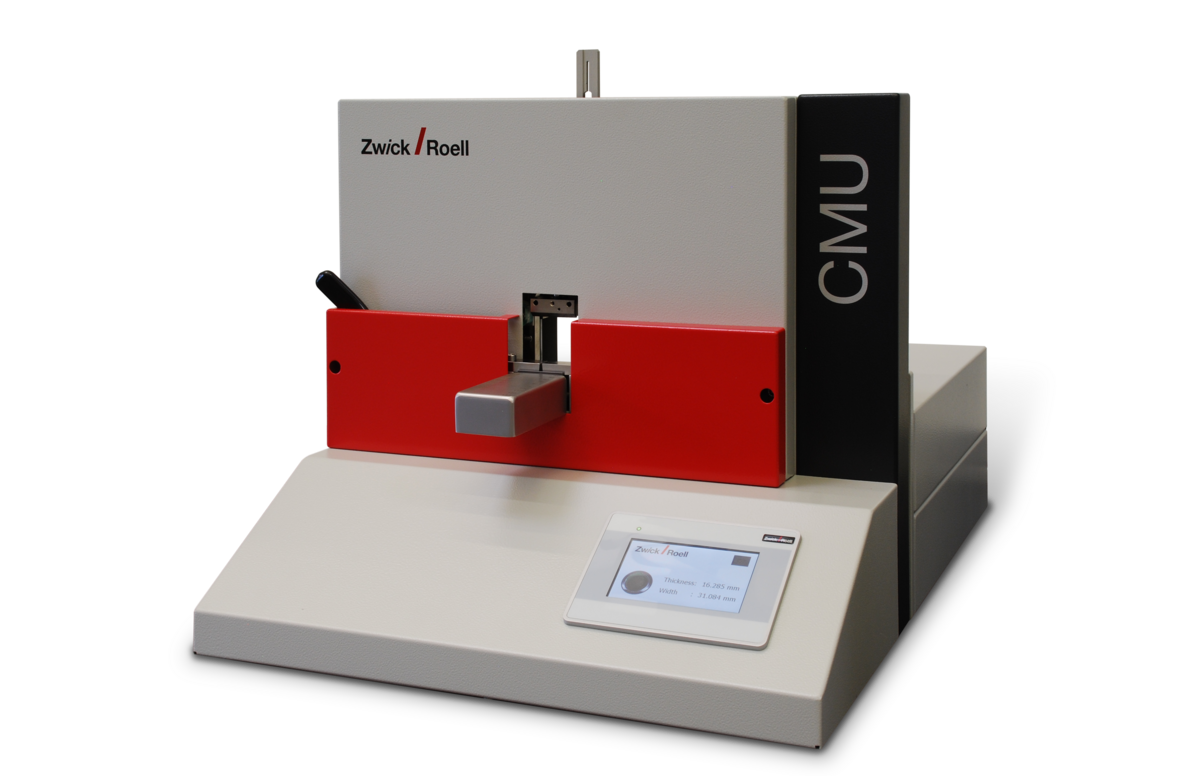
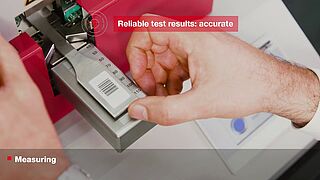
Specimen measurement: Small measurement errors directly affect the characteristic values
Accurate measurement is the foundation for reliable tensile tests. A thickness measurement error of 0.1 mm produces and error of 2.5%!
The CMU 30 cross-section measuring device from ZwickRoell, with its direct data transfer to testXpert, reduces operator transmission errors, speeds up processes, improves traceability, and ensures that all tests are performed with consistent input values.

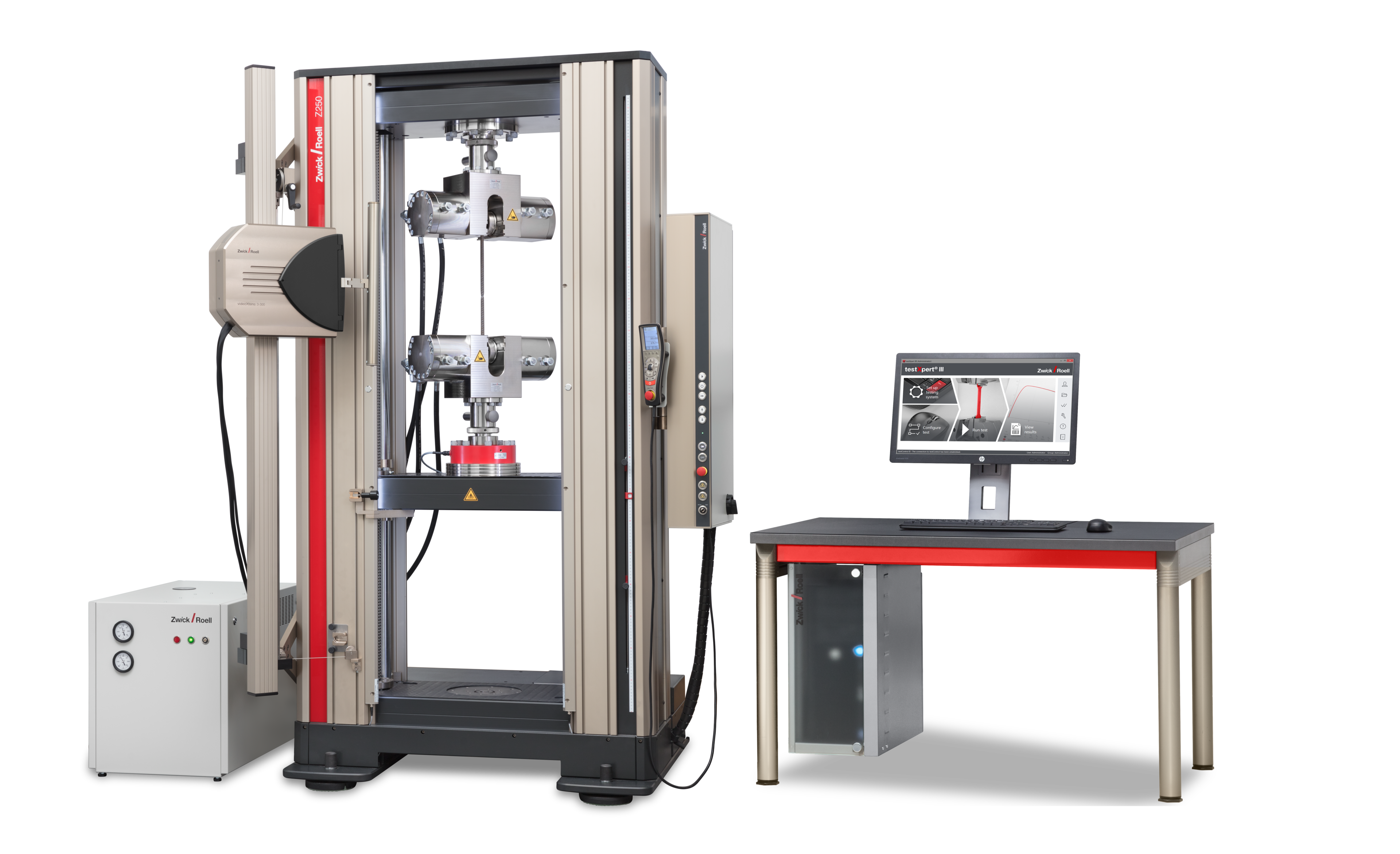
Selection of load frames and load cells
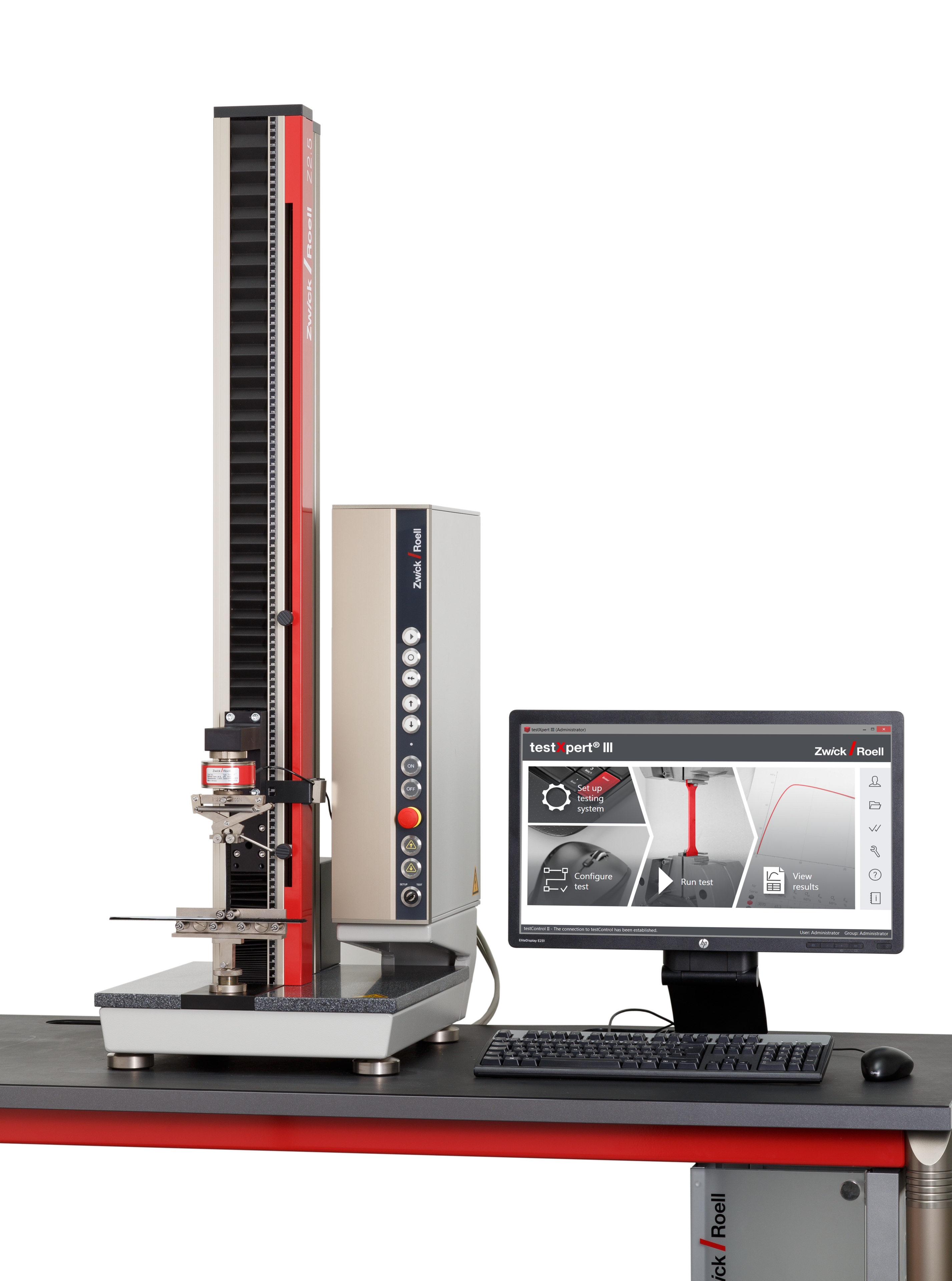
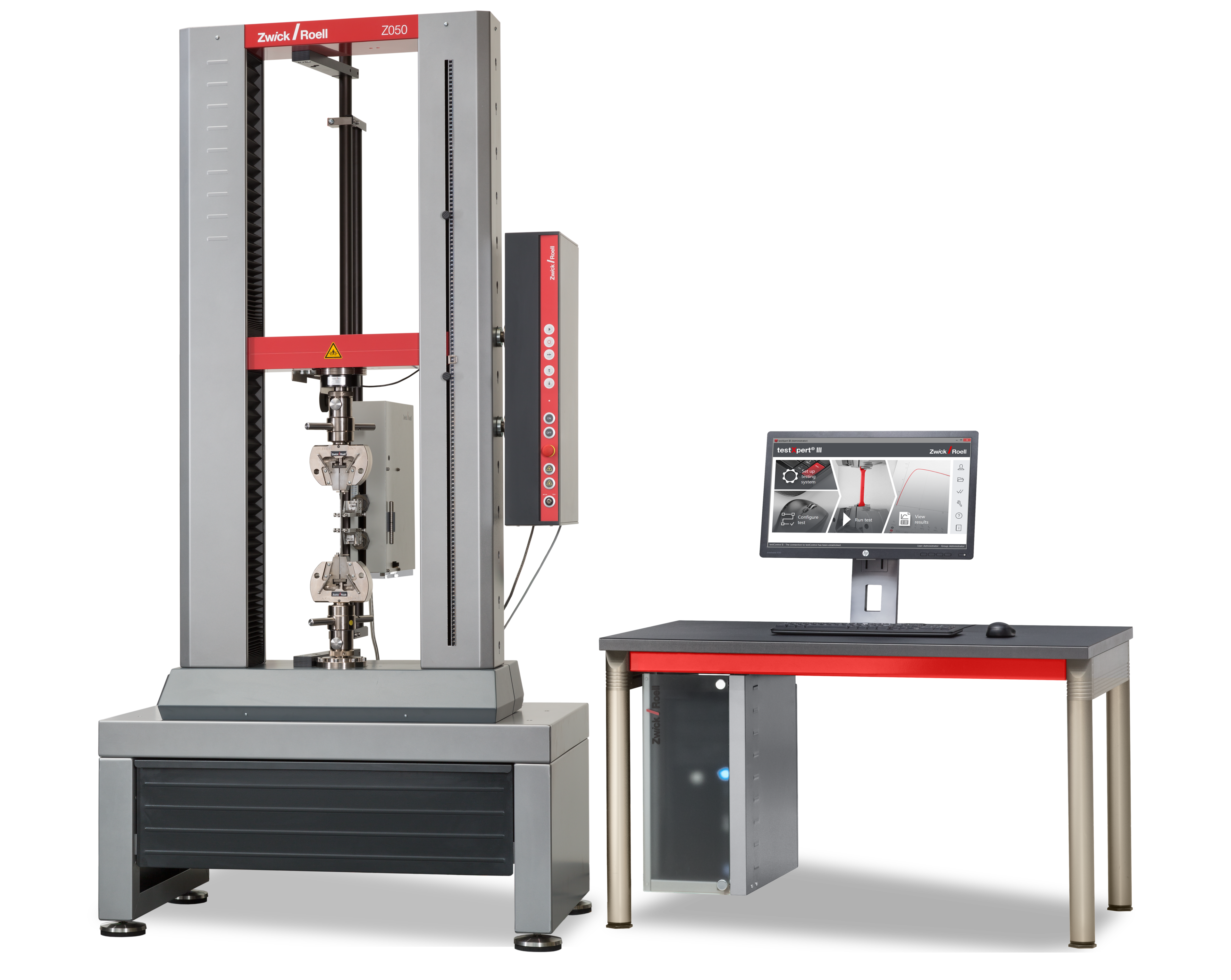
When selecting a testing machine, it's about more than just choosing the maximum test load. The optimal system depends on the material type, the expected force range, the specimen geometry, the desired level of automation, and the extensometer configuration.
The modular universal testing machine from ZwickRoell enable a wide range of plastics applications on a single platform.
However, it's not just the maximum test load that matters, but also the accuracy in the lower force range. The ASTM D638 standard requires a measurement accuracy of ±1% for the respective measured value. ZwickRoell testing machines can achieve the measurement accuracy required starting at 1/1000 of their measurement range. This allows for precise measurement of the modulus values and tensile stresses of many materials using the same test arrangement, without the need for frequent retrofitting of the load cell.
Selecting the specimen grips
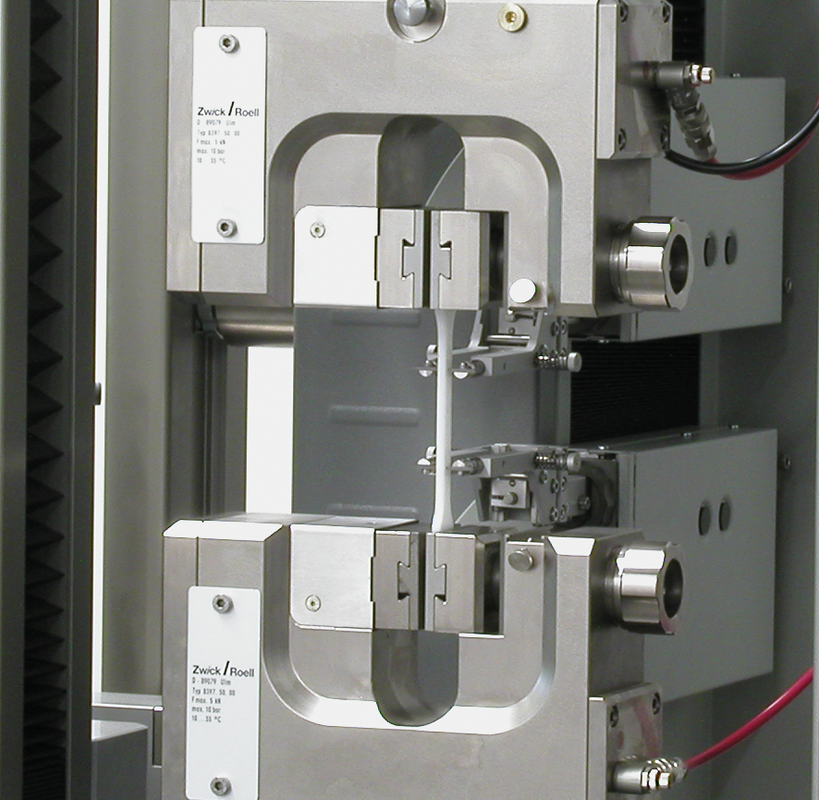
Different materials and testing volumes call for different grip methods. Examples include pneumatic grips, screw grips, and wedge grips. The goal is always to achieve reliable clamping without damaging the specimen:
- Pneumatic grips: Pneumatic grips close at the touch of a button and allow for precisely adjustable gripping force. They cover a very wide range of applications and are suitable for both soft and hard polymers. They support the direct transfer of the crosshead speed to the specimen and are particularly useful when high reproducibility, a large number of tests per day, or automatic specimen feeding are required.
- Screw grips: Screw grips are closed manually with a screwing motion. They are suitable for semi-rigid to rigid plastics and for tests with high reproducibility requirements, provided that the level of manual operation is acceptable.
- Wedge grips: Wedge grips close manually with a lever movement and are suitable for frequent testing. Since the gripping force is built up during the tensile test through the wedge effect, the strain rate on the specimen can change. This should be considered when comparing results and considering reproducibility requirements. They are particularly suitable for internal QA tasks with low requirements for reproducibility with measured values from other laboratories.
- Body-over-wedge grips: Body-over-wedge grips are available in manual or pneumatic versions and are particularly suitable for tensile tests on rigid to high-strength plastics, where secure specimen seating and stable force application are important. The manual version is an affordable, robust, and simple solution for routine testing. The pneumatic version offers advantages for frequent tests or higher specimen throughput, as it reduces operator influence and enables a more uniform gripping force.


Why test speed matters for ASTM D638
The mechanical response of plastics is highly dependent on the strain rate. As the test speed increases, stiffness (modulus) often goes up, strength often goes up, and elongation can go down. ASTM D638 specifies different test speeds based on material behavior and expected elongation. To ensure reliable comparisons, test speeds and speed changes must be consistently implemented and documented.
With testXpert, test speeds and speed changes are stored in the test program, automatically controlled, and documented. This reduces operator errors and ensures that tests are conducted according to the same parameters, compliant with standards.


Selection of extensometers
An unsuitable extensometer can skew modulus values, yield elongation, and strain at break. The risk increases with soft polymers, very thin specimens, large elongations, or specimens that are sensitive to contact forces. Therefore, the extensometer is often the most important component in a test arrangement to ASTM D638.
- Clip-on Extensometer Advantages include cost efficiency, high accuracy and suitability for many rigid plastics. Limitations include manual application and a possible influence on soft materials.
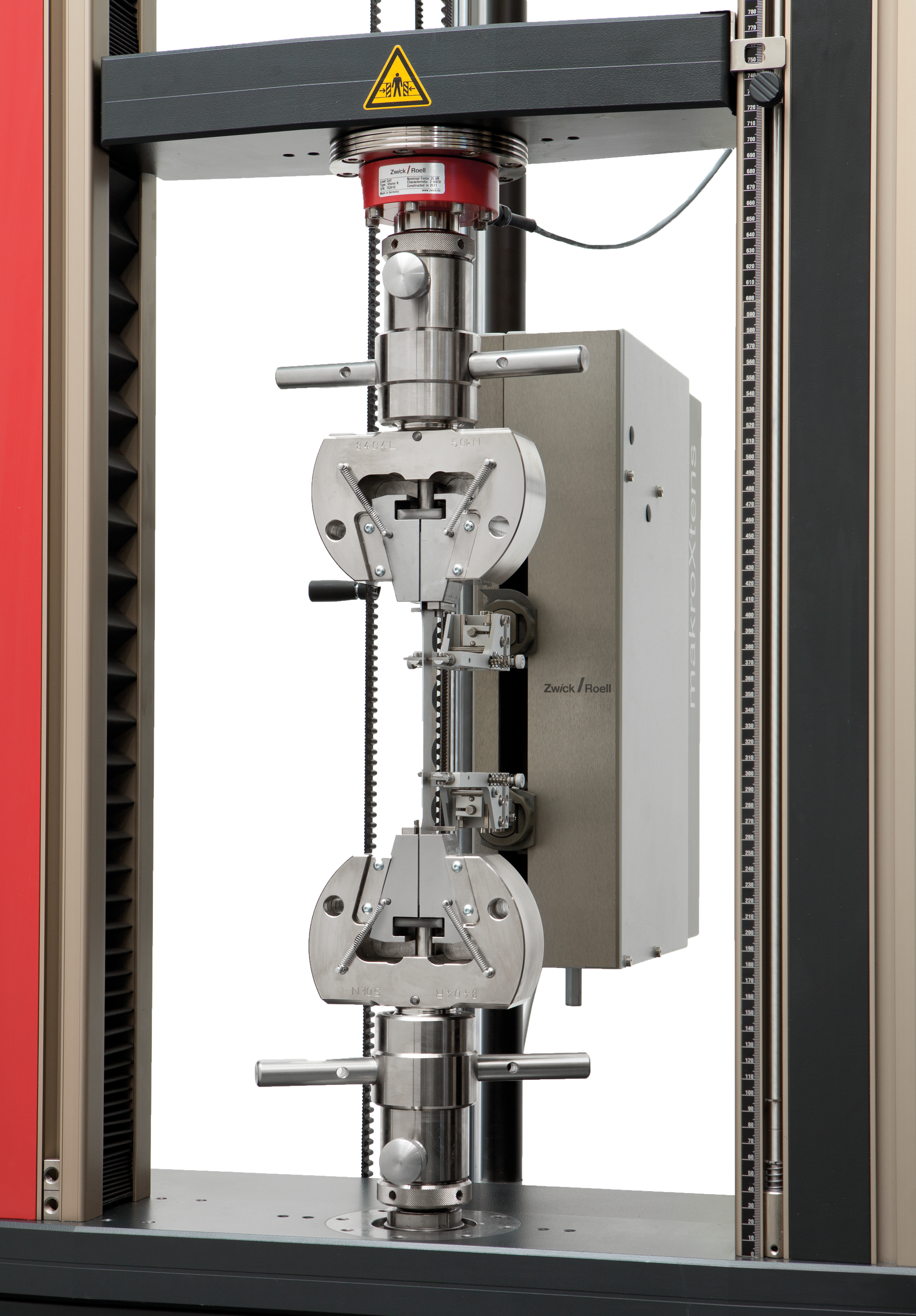
- Sensor arm extensometers: Sensor arm extensometers such as makroXtens offer advantages such as fully automated operation and the ability to remain attached to the specimen until specimen break. You have the option of integrating a transverse strain measurement and usetemperature chambers. When testing very different materials such as brittle plastics and elastomers with very high specimen elongation the multiXtens can be used as an alternative.
- The videoXtens optical extensometer is the preferred solution for many applications in to ASTM D638. The benefits include contactless measurement, which means there is no influence on the specimen, no need for specimen marking, high accuracy in determining the modulus, and suitability for high strains. These are ideal conditions for automation with the option of 2D DIC as well.


ASTM D638 tensile test at low or elevated temperatures
The standard is the measurement of the specimens in a conditioned state according to method A of ASTM D618. The ASTM D638 standard, however, allows for deviations in conditioning and measurement requirements so that tests can also be performed at low or elevated temperatures according to this standard.
The ZwickRoell temperature chamber offers a temperature range of -80°C to +360°C. The fully integrated system ensures efficient, reliable and easy operation. With the door-in-door solution, nitrogen consumption and ice formation are significantly reduced while testing at cold temperatures, allowing you to run your tests more cost effectively.
Automation options for ASTM D638
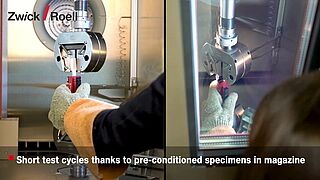
For tensile tests according to ASTM D638, an automated solution may prove to be worthwhile starting at 10 specimens per day. Our ALEX testing system handles simple pick-and-place-tasks and offers cost-effective support in the testing laboratory.
For laboratories with high testing requirements, we recommend our robotic testing system roboTest L. Our workhorse for plastics testing in large quantities can accommodate 450 specimens. It independently performs specimen cross-section measurements and tensile tests according to ASTM D638. After the test, separate disposal grippers remove the specimen remains from the specimen grips.
But other specimen shapes or other test methods are also no problem for our automated testing systems. The roboTest N and roboTest R automated testing systems are more complex and allow you to connect a second or third materials testing machine as well as additional devices like a centering station or a temperature chamber operating in the range of -80°C to +360°C. This not only increases specimen throughput, but also allows you to run multiple tests simultaneously, delivering quick and reliable results.
To roboTest N To roboTest L To roboTest R Why automate?


Looking to Automate ASTM D638 Testing?
Your local ZwickRoell expert can help you select the right level of automation for your application.
Request your no-obligation consultation today

ASTM D638 with testXpert testing software – reliable and efficient testing
The testXpert testing software helps laboratories conduct ASTM D638 tests in a standardized, traceable manner with minimal operator influence:
- Saved standard test program: Characteristic values and parameters defined in the ASTM D638 standard are saved in the standard test program. This simplifies standards-based implementation and reduces the effort required for manual parameterization.
- Step-by-step guide: Users are guided through the test sequence. This facilitates quick onboarding and reduces the risk of forgetting individual test steps.
- User management: With our user management feature you only see the tasks are that relevant to your tasks and functions. This allows for standardized user interfaces and clear management of access rights.
- Connecting peripheral devices: Specimen dimensions can be transferred directly from measuring instruments to testXpert. This saves time and prevents input errors.
- Documentation of test parameters: Test speeds, measurement data, results, and test conditions are clearly documented.
- Comparability across test methods: Test data from tensile, flexure, impact, or extrusion tests can be centrally managed and evaluated, provided the corresponding applications are used in the laboratory.
- Trend analysis and quality monitoring: Evaluations and trend analyses help identify deviations in quality assurance and series testing at an early stage.
More about our testXpert testing software
Typical applications for ASTM D638
ASTM D638 is used wherever the tensile properties of plastics need to be reliably determined, compared, or documented:
- Material development and compound comparison: Different polymers, fillers, additives, or formulations can be compared based on their tensile modulus, yield stress, tensile strength, and strain at break.
- Quality assurance in series production: ASTM D638 tests help monitor consistent mechanical properties and detect deviations between batches, raw materials, or processing conditions at an early stage.
- Goods inwards checks: The mechanical properties of delivered granules, semi-finished products, or molding compounds can be checked.
- Component testing of extracted specimens: Specimens can be extracted from components or moldings to verify the actual material properties within the component.
- Testing small quantities of material: When only a small amount of material is available, such as for prototypes, additively manufactured parts, or damage analyses, smaller test specimens like Type V may be relevant.
- Aging and weathering tests: ASTM D638 is suitable for assessing changes in mechanical properties after aging, heat or media exposure, and weathering.
- Material approval and specification verification: The determined characteristic values serve as the basis for material approvals, supply agreements, and technical specifications.
- Global cross-validation: Companies with international supply chains often require testing capabilities according to ASTM D638 and ISO 527 to meet various customer specifications.

Frequently asked questions regarding ASTM D638
ASTM D638 is used for determination of the tensile properties of reinforced and unreinforced plastics. The standard is often applied to injection-molded, compression-molded, extruded, and machined specimens made from thermoplastics and thermosetting molding compounds.
Typical materials include:
- Polypropylene (PP)
- Polyethylene (PE)
- Polycarbonate (PC)
- ABS
- Polyamide (PA / Nylon)
- PBT
- PET
- PVC
- PEEK
- PPS
- Short fiber reinforced plastics
- Thermosetting molding compounds
ASTM D638 is generally applicable to materials with specimen thicknesses ranging from about 1 mm to 14 mm. Thin films and sheets under 1 mm are typically tested according to ASTM D882, while continuously fiber-reinforced composite materials are usually tested according to ASTM D3039.
Specimens used for tests according to ASTM D638 are classified by type:
- ASTM D638 Type I - The preferred test specimen is the dumbbell Type I, which with a thickness of 3.2 mm (1/8 inch) and a gauge length of 50 mm (2 inches) is still relatively similar to common component material thicknesses and at the same time allows for a good level of strain measurement accuracy.
- ASTM D638 Type II - Provided that by using the test specimen Type I a fracture cannot be produced in the narrow parallel part of the specimen, ASTM D638 recommends the use of a test specimen Type II, in which the width of the narrow parallel section is significantly reduced.
- ASTM D638 Type III - If specimens with material thicknesses of more than 7 mm can be obtained through mechanical processing, then specimen Type III is used. Here, the width of the narrow parallel section, as well as the shoulder width and the overall length are increased so that the specimen thickness remains less than the width. For sheet thickness of more than 14 mm, the thickness is adjusted through mechanical processing.
- ASTM D638 Type IV - The test specimen Type IV is ideal for testing of very soft polymers (e.g., rubber) and is used when comparing soft and more stiff polymers.
- ASTM D638 Type V - If only a small amount of material is available, or if machining the specimen from a component does not allow for a larger specimen, then a Type V specimen is used, which is reduced in every dimension relative to Type I.
According to ASTM D638, Type V specimens are intended for applications where only a limited amount of material is available or where larger specimens cannot be taken from the component under evaluation.
- Typical applications include:
- Material development projects
- Prototype components
- Test specimens from additive manufacturing
- Small molded parts
- Damage analyses
- Machined specimens from finished components
Because Type specimens have a significantly smaller cross-section and a shorter gauge length than the standard Type I test specimens, special attention should be paid to specimen alignment, clamping, and strain measurement to ensure accurate and repeatable results.
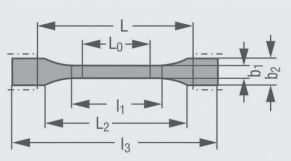
L0 Gauge length
L Grip-to-grip separation
l1Length of the narrow parallel section/inner diameter
l2 Distance between the wide, parallel sections
l3 Total length / outer diameter
b2 Specimen width in shoulder area
b1 Specimen width in gauge length area
h Specimen thickness
| Standard | Specimen type | Note | l3 mm | l1 mm | b2 mm | b1 mm | h mm | L0 mm | L mm |
|---|---|---|---|---|---|---|---|---|---|
| ASTM D638 | Type I | Preferred specimen for rigid plastics | ≥165 | 57±0.5 | 19+6.4 | 13±0.5 | 3.2±0.4 | 50±0.25 | 115±5 |
| ASTM D638 | Type II | Preferred when type I does not break in the narrow cross-section | ≥183 | 57±0.5 | 19+6.4 | 6±0.5 | 3.2±0.4 | 50±0.25 | 135±5 |
| ASTM D638 | Type III | For specimen thickness greater than 7mm (rigid and soft plastics) | ≥246 | 57±0.5 | 29+6.4 | 19±0.5 | 7 ... 14 | 50±0.25 | 115±5 |
| ASTM D638 | Type IV | For comparison of rigid and soft plastics | ≥115 | 33±0.5 | 19+6.4 | 6±0.05 | 3.2±0.4 | 25±0.13 | 65±5 |
| ASTM D638 | Type V | Small specimens from components | ≥63.5 | 9.53 | 9.53+3.1 | 3.18±0.5 | 3.2±0.4 | 7.62 | 25.4±5 |
Proper specimen conditioning is crucial to obtaining consistent and comparable ASTM D638 results. Many polymers are sensitive to moisture content and temperature. Differences in conditioning can significantly affect the following characteristic values:
- Tensile modulus
- Yield stress
- Tensile Strength
- Strain at break
This is especially important for hygroscopic materials like polyamide (PA), PET, PBT, and many bio-based polymers.
ASTM D638 specifies standard laboratory conditions and recommends that specimens be conditioned before testing if required by the material specification. To ensure meaningful comparisons between laboratories, identical conditioning procedures should always be used.
For many routine applications to ASTM D638, an extensometer provides sufficient accuracy and remains a widely used solution.
Clip-on extensometers are particularly well-suited for:
- Quality control applications
- Rigid thermoplastics
- Materials with moderate elongation
- Standard measurements of tensile strength and modulus
However, clip-on extensometers require manual attachment and can sometimes affect the behavior of very soft, thin, or highly extensible specimens. For laboratories that require maximum reproducibility, high throughput, or the testing of demanding materials, strain measurement using sensor arms or optical extensometers often offers significant benefits.
The required materials testing machine capacity primarily depends on the specimen's cross-section and the material's expected tensile strength.
For most applications under ASTM D638, the following applies:
- Systems ranging from 1 kN to 5 kN are suitable for materials with lower strength and small specimens.
- 10 kN systems are commonly used for routine testing of plastics.
- Higher capacities may be needed for highly reinforced materials or unusually large cross-sections.
The most important aspect is not just the maximum force, but also choosing a testing machine and a load cell that provide sufficient measurement resolution and accuracy across the expected force range. A properly sized load cell improves measurement quality, especially when determining modulus and testing materials with lower strength.
ASTM D638 and ISO 527 are the most commonly used standards for tensile testing of plastics. While ASTM D638 presents a pragmatic characterization of tensile properties, the guiding principle of the ISO 527 standard is the high level of reproducibility of test results across laboratories, companies and national borders. Although both determine similar mechanical properties, the test methods are not directly interchangeable.
The most important differences are:
- Specimen geometries & gauge lengths: ASTM D638 Type I is the preferred specimen for rigid plastics in the shape of a dumbbell with a total length for 165 mm, a thickness of 3.2 mm (1/8 inch) and a gauge length of 50 mm (2 inches), this is still relatively similar to common component material thicknesses and at the same time supports a good level of strain measurement accuracy. The preferred dumbbell specimen compliant with ISO 527-2 is Type 1A (injection molded) with a total length of 170 mm, a thickness of 4 mm and a gauge length of 75 or 50 mm. While the ASTM standard describes five specimen types, ISO limits the specimens to two types in order to achieve a high degree of comparative precision.
- Requirements for strain measurement
- Definitions of test speed
- Method for determining specific results
ASTM D638 is primarily used in North America, while ISO 527 is more commonly specified internationally.
Since these differences can affect measured values such as modulus, yield stress, tensile strength, and elongation, results obtained according to ASTM D638 should not be directly compared with results obtained according to ISO 527 unless the methodological differences are fully understood and documented.
For companies that ship products globally, it is common practice to maintain testing capabilities for both ASTM D638 and ISO 527.
Long fiber reinforced plastics such as CFK are measured in the tensile test to ASTM D3039. These materials can have very different properties depending on the direction and structure of the laminate or fabric. Therefore, they often require special specimens and test methods.
For brittle plastics and plastics, which do not exhibit a yield point, strain at break is measured directly with a mechanical or non-contact measuring extensometer. In the case of thermoplastics that do present a yield point, the nominal strain at break is measured from the travel of the testing machine’s pulling grip.
Tensile strength is the highest tensile stress that a specimen can reach during a tensile test. This tensile strength can occur at a yield point, in which case it is referred to as tensile strength at the yield point. If the tensile strength occurs shortly before failure of the specimen, it is referred to as tensile strength at break.
The ASTM E132 standard specifies a suitable test method to measure Poisson’s ratio at ambient temperature. In the case of unreinforced plastics, however, a fixed value for Poisson’s ratio can usually be used for calculation purposes, since it is largely constant.
In addition to the specimen shapes, ASTM D638 also describes the accuracy with which the specimen dimensions must be measured.
- The width of the plastic specimens can be determined using a caliper, a micrometer or a cross-section measuring device
- The thickness of plastic specimens is measure with a micrometer or a cross-section measuring device
- The measuring force is between 5 and 15 N, the measuring surfaces are circular and flat, usually with a diameter of 6.35 mm (6.5 mm). Other contact elements are possible
- The measurement is carried out in the center of the specimen and within the gauge length. Injection-molded specimens are measured within 5 mm of the center of the gauge length.
- A thickness measurement error of 0.1 mm produces and error of 2.5%!
Values to be measured according to ASTM D638 include the crosshead travel, or the change in clamping distance and the directly measured specimen elongation. For measurement of the crosshead travel, ASTM D638 requires an accuracy of ± 10% relative to the respective measured value. The crosshead travel is especially used for determination of the nominal strain at break, so that the distances to be measured are relatively large.
The tensile modulus is determined with direct measuring extensometers. The permitted error in strain determination is specified at 0.0002 [mm/mm]. This corresponds with a strain error of 0.02% or—at a gauge length of 50 mm—a permitted displacement error of 0.01 mm.
For the measurement of yield points and small elongations up to approximately 20%, ASTM D638 requires compliance with class C according to the calibration standard ASTM E83. For elongations up to 10% this means a set maximum permitted error value in the strain determination of 0.001 [mm/mm], which corresponds to 0.1% elongation. For the measurement of higher elongations, the relative error of the respective measured value may not exceed ± 1%.
For the measurement of elongations higher than 20%, ASTM D638 permits a relative measurement error of ± 20%, which can be achieved even with relatively simple extensometers.


Downloads related to ASTM D638
- Industry Brochure: Plastics & Rubber PDF 9 MB
- Product Information: CMU 30 and CMU 80 PDF 718 KB
- Product information: zwickiLine Up to Fmax 5 kN PDF 820 KB
- Product Information: ProLine, Fmax 5-100 kN PDF 1 MB
- Product Information: AllroundLine, Fmax 5-100 kN PDF 1 MB
- Product Information: Pneumatic Grips, Fmax 10 kN/20 kN PDF 2 MB
- Product Information: Screw Grips, Fmax 5 kN/10 kN PDF 485 KB
- Product Information: Wedge Grips, Fmax 10 kN/20 kN PDF 713 KB
- Product Information: Wedge Grips “Body Over Wedge”, Fmax 10 kN PDF 690 KB
- Product information: digiClip PDF 590 KB
- Product Information: Clip-on extensometers PDF 525 KB
- Product Information on makroXtens extensometer PDF 637 KB
- Product information: videoXtens 2-150 HP PDF 1 MB
